

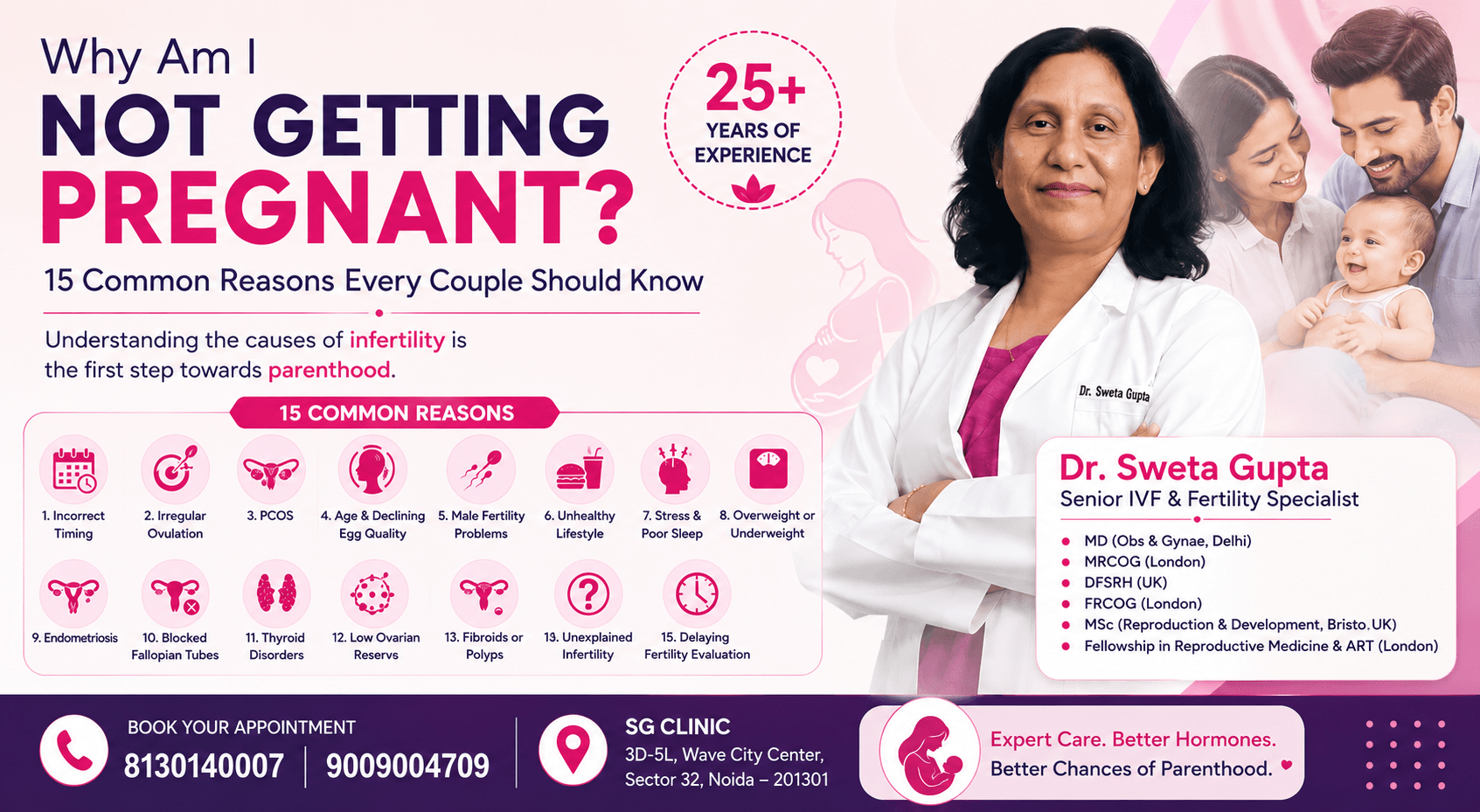
For many couples, the decision to start a family marks one of the happiest phases of life. Naturally, they expect pregnancy to happen within a few months of trying. However, when month after month passes without a positive pregnancy test, excitement often turns into anxiety, disappointment, and countless unanswered questions. One of the most common concerns couples have is, “Why am I not getting pregnant even after trying regularly?”
The truth is that getting pregnant is a complex biological process that depends on several factors working perfectly together. Healthy eggs, healthy sperm, regular ovulation, balanced hormones, open fallopian tubes, proper timing of intercourse, and a receptive uterus all play important roles in successful conception. Even in healthy couples, pregnancy does not always occur immediately. For women under the age of 35, the chance of conceiving naturally in a single menstrual cycle is generally around 20–25%, meaning it is perfectly normal for pregnancy to take several months.
However, when pregnancy continues to be delayed despite regular unprotected intercourse, it may indicate an underlying fertility issue that deserves medical attention. Fortunately, many causes of infertility are treatable, and early diagnosis significantly improves the chances of successful conception.
With over 25 years of experience in Obstetrics, Gynaecology, IVF, and Reproductive Medicine, Dr. Sweta Gupta has helped thousands of couples overcome fertility challenges through accurate diagnosis, personalized treatment plans, and compassionate care. Whether the issue lies with ovulation, hormonal imbalance, age-related fertility decline, male fertility factors, or unexplained infertility, identifying the root cause is the first step toward achieving parenthood.
In this comprehensive guide, we explore the 15 most common reasons why pregnancy may not be happening and what couples can do to improve their chances of conceiving naturally.
Understanding Fertility: Why Pregnancy Doesn’t Always Happen Immediately
Many couples assume that pregnancy should occur as soon as they stop using contraception. In reality, conception is a carefully coordinated process that requires precise timing and healthy reproductive function in both partners.
Each month, a woman’s ovary releases a mature egg through ovulation. This egg survives for only about 12 to 24 hours. During this short window, healthy sperm must reach and fertilize the egg within the fallopian tube. The fertilized embryo then travels to the uterus, where it must successfully implant into the uterine lining for pregnancy to begin.
A disruption at any stage of this process can delay conception. Hormonal imbalance may prevent ovulation, blocked fallopian tubes may stop the egg and sperm from meeting, poor sperm quality may reduce fertilization, or implantation may fail due to uterine abnormalities.
Understanding these biological steps helps couples appreciate why fertility is influenced by multiple factors rather than a single issue.
When Should You Be Concerned About Delayed Pregnancy?
It is important to understand that infertility is not defined by a few months of unsuccessful attempts. Medical guidelines generally recommend seeking evaluation if:
- You are under 35 years of age and have been trying to conceive for 12 months without success.
- You are 35 years or older and have been trying for 6 months.
- You have irregular menstrual cycles or absent periods.
- You have experienced recurrent miscarriages.
- You have a known diagnosis such as PCOS, endometriosis, thyroid disease, or previous pelvic infections.
- Your partner has known male fertility concerns.
Early consultation with a fertility specialist allows timely diagnosis and can prevent unnecessary delays in treatment.
How Fertility Is a Shared Responsibility
One of the biggest misconceptions surrounding infertility is that it is primarily a woman’s problem. In reality, fertility is a shared responsibility between both partners.
Research shows that:
- Female factors contribute to approximately 35–40% of infertility cases.
- Male factors contribute to another 35–40%.
- Combined factors affect around 20% of couples.
- The remaining cases may be classified as unexplained infertility.
This is why comprehensive fertility evaluation should always include both partners. Focusing only on the woman may delay diagnosis and treatment if male fertility issues are also present.
1. Incorrect Timing of Intercourse
One of the simplest yet most common reasons couples struggle to conceive is incorrect timing of intercourse.
Pregnancy can only occur during the fertile window, which includes the five days before ovulation and the day of ovulation itself. Since the egg survives for only about 24 hours after release, missing this fertile period significantly reduces the chances of conception.
Many women incorrectly assume they ovulate exactly on the 14th day of every cycle. In reality, ovulation varies depending on cycle length, hormonal balance, stress, illness, and other factors.
Couples who have intercourse only after ovulation or infrequently throughout the month may unintentionally miss the most fertile days.
How to Improve Your Chances
Tracking menstrual cycles, observing cervical mucus changes, using ovulation predictor kits, or undergoing follicular monitoring under the guidance of a fertility specialist can help accurately identify ovulation and improve conception rates.
2. Irregular Ovulation
Regular ovulation is essential for natural pregnancy. If the ovaries fail to release a mature egg consistently, conception becomes difficult.
Women with irregular ovulation may experience:
- Irregular menstrual cycles
- Very long or very short cycles
- Missed periods
- Unpredictable bleeding
- Difficulty identifying fertile days
Several medical conditions can interfere with ovulation, including hormonal imbalance, thyroid disorders, elevated prolactin levels, excessive exercise, severe weight changes, and chronic stress.
Many women remain unaware that they are not ovulating regularly until they begin trying to conceive.
Fortunately, ovulation disorders can often be diagnosed through hormonal testing and ultrasound monitoring, allowing effective treatment and significantly improving pregnancy chances.
3. Polycystic Ovary Syndrome (PCOS)
PCOS is one of the leading causes of female infertility worldwide and affects a significant number of women during their reproductive years.
In PCOS, hormonal imbalance interferes with the normal development and release of eggs. Instead of one mature egg being released each month, multiple small follicles remain in the ovaries without ovulation occurring.
Women with PCOS commonly experience:
- Irregular periods
- Weight gain
- Acne
- Excess facial or body hair
- Hair thinning
- Difficulty conceiving
Insulin resistance is also common in women with PCOS and contributes to hormonal imbalance.
The encouraging news is that many women with PCOS successfully conceive through lifestyle modification, weight management, ovulation induction, or assisted reproductive techniques when required.
Dr. Sweta Gupta develops individualized treatment plans based on each patient’s hormonal profile, reproductive goals, and overall health, ensuring that treatment is tailored rather than standardized.
4. Age and Declining Egg Quality
Age plays one of the most significant roles in female fertility.
Women are born with a finite number of eggs, and both the quantity and quality of these eggs decline over time. Fertility gradually decreases after the age of 30 and more rapidly after 35. As egg quality declines, the chances of successful fertilization and healthy embryo development also decrease.
Advanced maternal age may increase the risk of:
- Difficulty conceiving
- Miscarriage
- Chromosomal abnormalities
- Pregnancy complications
This does not mean pregnancy is impossible after 35. Many women have healthy pregnancies later in life. However, early fertility evaluation becomes increasingly important for women who delay pregnancy.
Dr. Sweta Gupta emphasizes timely reproductive planning and appropriate fertility assessment for women considering pregnancy in their mid-to-late thirties.
5. Male Fertility Problems
Infertility is not solely a female concern. Male fertility factors contribute to a substantial proportion of infertility cases.
Healthy sperm are essential for successful conception. Problems with sperm count, motility (movement), morphology (shape), or DNA integrity can reduce the likelihood of fertilization.
Several factors may affect male fertility, including:
- Smoking
- Excessive alcohol consumption
- Obesity
- Diabetes
- Hormonal disorders
- Varicocele
- Certain medications
- Environmental toxins
- Excessive heat exposure
A semen analysis is a simple yet valuable investigation that helps assess male reproductive health.
Dr. Sweta Gupta recommends evaluating both partners early in the fertility journey to ensure that all potential contributing factors are identified and managed appropriately.
6. Unhealthy Lifestyle Habits
Modern lifestyles can significantly impact fertility without many couples realizing it.
Poor dietary habits, sedentary routines, smoking, excessive alcohol intake, inadequate sleep, and chronic stress can all interfere with reproductive health.
Women may experience hormonal imbalance, irregular ovulation, or weight-related fertility issues, while men may experience reduced sperm quality and hormonal changes.
Small but consistent lifestyle improvements often produce meaningful benefits.
Healthy fertility habits include:
- Eating a balanced diet rich in fruits, vegetables, whole grains, lean proteins, and healthy fats.
- Exercising regularly.
- Maintaining a healthy body weight.
- Avoiding tobacco products.
- Limiting alcohol intake.
- Getting sufficient sleep.
These changes not only improve fertility but also prepare the body for a healthy pregnancy.
7. Chronic Stress and Poor Sleep
Although stress alone is rarely the sole cause of infertility, prolonged emotional stress may influence reproductive hormones, menstrual cycles, libido, and overall well-being.
Couples trying to conceive often experience significant emotional pressure, especially after repeated unsuccessful cycles. Poor sleep further compounds hormonal imbalance and affects metabolic health.
Creating healthy coping strategies is essential.
Activities such as meditation, yoga, mindfulness, regular physical activity, spending time with loved ones, and maintaining a consistent sleep routine may support overall reproductive health.
Dr. Sweta Gupta encourages couples to view emotional wellness as an important part of fertility care rather than focusing only on medical treatment.
8. Being Overweight or Underweight
Body weight has a profound effect on fertility.
Excess body fat may contribute to insulin resistance, hormonal imbalance, inflammation, and irregular ovulation. Conversely, being significantly underweight may suppress reproductive hormones and prevent ovulation altogether.
Maintaining a healthy Body Mass Index (BMI) supports:
- Regular menstrual cycles
- Better ovulation
- Improved egg quality
- Healthy hormone production
- Better pregnancy outcomes
For men, obesity can reduce testosterone levels, impair sperm production, and negatively affect sperm quality.
Achieving a healthy weight through balanced nutrition and regular exercise often improves fertility naturally and enhances the success of fertility treatments when needed.
9. Endometriosis
Endometriosis is one of the most overlooked yet significant causes of female infertility. It occurs when tissue similar to the lining of the uterus (endometrium) grows outside the uterus, commonly affecting the ovaries, fallopian tubes, pelvic lining, and surrounding organs. These abnormal tissue deposits respond to hormonal changes during each menstrual cycle, leading to inflammation, scarring, and adhesions that may interfere with fertility.
Many women with endometriosis experience severe menstrual pain, chronic pelvic pain, pain during intercourse, painful bowel movements during periods, or prolonged menstrual bleeding. However, some women may have no obvious symptoms and discover the condition only during a fertility evaluation.
Endometriosis can affect fertility by reducing egg quality, damaging ovarian tissue, causing blockage or distortion of the fallopian tubes, altering the pelvic environment, and interfering with embryo implantation. Fortunately, advances in reproductive medicine have significantly improved pregnancy outcomes for women with endometriosis.
Dr. Sweta Gupta believes that early diagnosis is essential. Through detailed medical history, pelvic examination, ultrasound evaluation, and additional investigations when necessary, she develops a personalized treatment strategy that focuses on preserving fertility while managing symptoms effectively.
10. Blocked Fallopian Tubes
The fallopian tubes play a vital role in natural conception because they are the meeting point where sperm fertilizes the egg. If one or both fallopian tubes become blocked or damaged, fertilization may not occur naturally.
Tubal blockage may result from:
- Previous pelvic infections
- Pelvic inflammatory disease (PID)
- Endometriosis
- Previous abdominal or pelvic surgery
- Tuberculosis affecting the reproductive organs
- Ectopic pregnancy
- Severe pelvic adhesions
Women with blocked tubes often do not experience noticeable symptoms. Many continue to have regular menstrual cycles and normal ovulation, making the condition difficult to recognize without proper fertility testing.
Investigations such as Hysterosalpingography (HSG), sonosalpingography, or laparoscopy help assess tubal patency.
Depending on the severity and location of the blockage, treatment options may include surgical correction or assisted reproductive techniques such as IVF.
Early evaluation helps couples avoid unnecessary delays and choose the most appropriate fertility treatment.
11. Thyroid Disorders
The thyroid gland produces hormones that regulate metabolism, energy levels, and reproductive hormones. Even mild thyroid imbalance can interfere with fertility.
Both hypothyroidism (underactive thyroid) and hyperthyroidism (overactive thyroid) may cause:
- Irregular menstrual cycles
- Absent ovulation
- Difficulty conceiving
- Recurrent miscarriages
- Pregnancy complications
Many women attribute symptoms such as fatigue, weight changes, hair loss, or menstrual irregularities to stress without realizing that thyroid dysfunction may be the underlying cause.
Fortunately, thyroid disorders are usually easy to diagnose through blood tests and can often be managed effectively with medication. Restoring normal thyroid hormone levels frequently improves fertility and supports healthy pregnancy outcomes.
Dr. Sweta Gupta routinely evaluates thyroid function as part of comprehensive fertility assessment, ensuring that hormonal imbalances are identified before they affect conception.
12. Low Ovarian Reserve
Every woman is born with a fixed number of eggs. As age increases, both the quantity and quality of these eggs gradually decline. However, some women experience a reduction in ovarian reserve earlier than expected.
Low ovarian reserve does not necessarily mean pregnancy is impossible, but it may reduce the likelihood of natural conception and influence fertility treatment planning.
Possible causes include:
- Increasing maternal age
- Genetic factors
- Previous ovarian surgery
- Endometriosis
- Chemotherapy or radiation
- Autoimmune conditions
Women with diminished ovarian reserve may continue to have regular menstrual cycles, making early diagnosis particularly important.
Evaluation usually includes:
- Anti-Müllerian Hormone (AMH)
- Follicle Stimulating Hormone (FSH)
- Antral Follicle Count (AFC) by ultrasound
Dr. Sweta Gupta carefully interprets these investigations along with age and reproductive goals to recommend the most suitable treatment strategy.
13. Uterine Fibroids and Polyps
The uterus must provide a healthy environment for embryo implantation and pregnancy. Structural abnormalities inside the uterus may reduce implantation success or increase miscarriage risk.
Uterine Fibroids
Fibroids are non-cancerous growths that develop from the muscular wall of the uterus. While many fibroids do not affect fertility, certain types—particularly those that distort the uterine cavity—may interfere with implantation.
Endometrial Polyps
Polyps are small growths arising from the lining of the uterus. Large or multiple polyps may prevent successful embryo implantation or contribute to abnormal uterine bleeding.
Symptoms may include:
- Heavy menstrual bleeding
- Irregular periods
- Pelvic discomfort
- Difficulty conceiving
Ultrasound, hysteroscopy, and saline infusion sonography help diagnose these conditions accurately.
Treatment is individualized based on the size, location, symptoms, and reproductive plans of the patient.
14. Unexplained Infertility
One of the most frustrating situations for couples is being told that all fertility investigations appear normal, yet pregnancy has not occurred.
This condition is known as unexplained infertility.
Although routine tests may show:
- Regular ovulation
- Healthy sperm
- Open fallopian tubes
- Normal uterus
there may still be subtle biological factors that current investigations cannot detect.
These may include:
- Egg quality issues
- Sperm DNA fragmentation
- Fertilization defects
- Embryo development problems
- Implantation abnormalities
Unexplained infertility does not mean there is no hope. Many couples conceive naturally with lifestyle optimization, while others benefit from ovulation induction, IUI, or IVF depending on their age and duration of infertility.
Dr. Sweta Gupta believes that individualized treatment planning is particularly important in unexplained infertility, avoiding unnecessary interventions while maximizing pregnancy chances.
15. Delaying Fertility Evaluation
Perhaps one of the most preventable reasons couples struggle with infertility is delaying medical evaluation.
Many couples spend years trying home remedies, internet advice, or unverified supplements before consulting a fertility specialist. While patience is important, delaying evaluation may reduce treatment success, particularly for women over 35 years of age.
Seeking timely medical advice allows early identification of:
- Ovulation disorders
- Hormonal imbalance
- Male fertility problems
- Tubal disease
- Uterine abnormalities
- Age-related fertility decline
Early diagnosis often means simpler treatment options and better pregnancy outcomes.
When Should You Consult a Fertility Specialist?
Consulting a fertility specialist does not necessarily mean IVF will be required. In many cases, early diagnosis allows simple lifestyle changes or medical treatment to restore fertility.
You should seek expert advice if:
- You are under 35 and have been trying to conceive for more than one year.
- You are 35 years or older and have been trying for six months.
- Your menstrual cycles are irregular or absent.
- You have PCOS, endometriosis, thyroid disease, or recurrent miscarriages.
- You have undergone pelvic surgery or treatment affecting reproductive organs.
- Your partner has abnormal semen analysis or known fertility concerns.
Why Choose Dr. Sweta Gupta for Fertility Care?
Choosing the right fertility specialist can significantly influence your journey toward parenthood.
Dr. Sweta Gupta is recognized for combining extensive clinical expertise with compassionate, patient-centered care.
International Qualifications
- MD (Obs & Gynae, Delhi)
- MRCOG (London)
- DFSRH (UK)
- FRCOG (London)
- MSc (Reproduction & Development, Bristol, UK)
- Fellowship in Reproductive Medicine & ART (London)
Over 25 Years of Clinical Experience
Her extensive experience enables accurate diagnosis and personalized treatment for a wide range of fertility challenges, including PCOS, recurrent pregnancy loss, ovulation disorders, and unexplained infertility.
Personalized Treatment Plans
Every couple has unique reproductive needs. Treatment recommendations are based on age, fertility goals, medical history, diagnostic findings, and overall health rather than following a one-size-fits-all approach.
Ethical and Evidence-Based Care
Dr. Sweta Gupta prioritizes the least invasive and most effective treatment. IVF is recommended only when clinically appropriate after careful evaluation of all available options.
Why Couples Trust SG Clinic, Noida
At SG Clinic, fertility care goes beyond treatment. The clinic provides a supportive environment where couples receive clear information, individualized guidance, and comprehensive reproductive care.
Services include:
- Fertility Evaluation
- Pregnancy Planning
- PCOS Management
- Ovulation Monitoring
- IUI Consultation
- IVF Consultation
- Recurrent Miscarriage Evaluation
- Male Fertility Assessment
- Hormonal Evaluation
- Preconception Counseling
Every patient is treated with compassion, respect, and transparency throughout their fertility journey.
Frequently Asked Questions
1. Is it normal not to get pregnant immediately?
Yes. Even healthy couples may take several months to conceive naturally.
2. Can stress alone cause infertility?
Stress rarely causes infertility by itself, but it can affect hormonal balance, sleep, and overall reproductive health.
3. Can PCOS prevent pregnancy permanently?
No. Many women with PCOS successfully conceive with appropriate treatment and lifestyle modifications.
4. Does age affect male fertility?
Yes. Although more gradual than in women, increasing age can reduce sperm quality and fertility.
5. Should both partners undergo fertility testing?
Yes. Fertility evaluation should always include both partners because male factors contribute to a significant proportion of infertility cases.
6. When should IVF be considered?
IVF is considered when simpler treatments are unsuccessful or when specific medical conditions make it the most appropriate option.
Conclusion
If you’ve been asking yourself, “Why am I not getting pregnant?”, remember that you are not alone. Difficulty conceiving is more common than many people realize, and in most cases, there is an identifiable reason that can be evaluated and managed with expert care.
Whether the challenge is related to ovulation, PCOS, age, thyroid disorders, male fertility, endometriosis, or unexplained infertility, early diagnosis offers the best opportunity for successful treatment. Delaying evaluation can reduce options, especially as age advances.
With more than 25 years of experience, international training, and a compassionate approach, Dr. Sweta Gupta provides comprehensive fertility care designed around each couple’s unique needs. At SG Clinic, Noida, the goal is not only to help you achieve pregnancy but also to support your overall reproductive health with evidence-based, ethical, and personalized treatment.
If you have been trying to conceive without success, taking the first step by consulting an experienced fertility specialist may bring you closer to realizing your dream of parenthood.
Book Your Consultation Today
Dr. Sweta Gupta – Senior IVF & Fertility Specialist
📍 SG Clinic
3D-5L, Wave City Center, Sector 32, Noida – 201301
📞 Appointments:
8130140007 | 9009004709