

Natural pregnancy after age 35 is possible for many women, but fertility begins to decline due to reduced ovarian reserve, lower egg quality, and an increased risk of chromosomal abnormalities. Lifestyle improvements, timely fertility evaluation, ovulation tracking, and early consultation with a fertility expert significantly improve the chances of conception. If pregnancy does not occur within six months, fertility investigations and treatments such as ovulation induction, IUI, or IVF may be recommended depending on the couple’s condition.
One of the most common questions fertility specialists hear today is:
“Can I still get pregnant naturally after the age of 35?”
The answer is encouraging—yes, natural pregnancy after 35 is absolutely possible. Every year, thousands of women conceive naturally and deliver healthy babies well into their late thirties and even early forties.
However, fertility is not solely determined by age. It is influenced by multiple factors including ovarian reserve, egg quality, hormonal balance, uterine health, sperm quality, body weight, lifestyle, genetics, stress levels, and pre-existing medical conditions.
As more women choose to pursue higher education, establish careers, or marry later in life, pregnancies after 35 have become increasingly common. This makes it even more important to understand how age affects fertility and when professional guidance becomes necessary.
According to global reproductive medicine data, female fertility begins a gradual decline around the age of 30, with a more noticeable reduction after 35. This does not mean pregnancy is impossible—it simply means the probability of conception each month becomes lower, and the risk of miscarriage and chromosomal abnormalities increases.
The encouraging news is that advances in reproductive medicine have transformed fertility care. Today, accurate fertility testing, ovulation monitoring, minimally invasive treatments, IUI, IVF, ICSI, embryo freezing, and fertility preservation provide couples with more options than ever before.
With timely evaluation and individualized treatment, many couples achieve successful pregnancies even after years of infertility.
Why Does Female Fertility Decline After 35?
Understanding fertility begins with understanding the ovaries.
Unlike men, who continuously produce sperm throughout life, women are born with all the eggs they will ever have.
At birth:
- Around 1–2 million immature eggs
By puberty:
- Approximately 300,000–500,000 eggs remain
By age 30:
- The ovarian reserve begins to decline more rapidly.
By age 35:
- Both egg quantity and egg quality decrease significantly.
By age 40:
- Fertility declines more sharply, making conception more challenging without medical assistance.
Each menstrual cycle naturally results in the loss of hundreds of follicles, although only one egg typically matures and is released during ovulation. Over time, the remaining eggs are fewer in number and more likely to have chromosomal abnormalities, which can reduce fertility and increase miscarriage risk.
What Happens to Egg Quality?
Egg quality refers to the likelihood that an egg has the correct number of chromosomes and can develop into a healthy embryo.
As women age:
- Chromosomal abnormalities become more common.
- Fertilization rates decline.
- Embryo quality may decrease.
- Implantation becomes less efficient.
- Miscarriage risk increases.
- IVF success rates gradually reduce with age, though many women still achieve successful outcomes.
Hormonal Changes That Affect Fertility
Several hormones play a key role in fertility:
- AMH (Anti-Müllerian Hormone): Indicates ovarian reserve.
- FSH (Follicle-Stimulating Hormone): Higher levels may suggest reduced ovarian reserve.
- LH (Luteinizing Hormone): Supports ovulation.
- Estradiol: Reflects ovarian function.
- Progesterone: Essential for implantation and maintaining pregnancy.
- TSH: Thyroid disorders can interfere with ovulation and fertility.
A fertility evaluation typically includes these hormone tests along with an ultrasound to assess ovarian reserve and reproductive health.
Does Age Affect Men Too?
While women experience a more pronounced age-related decline in fertility, male fertility also changes over time.
After age 40–45, men may experience:
- Reduced sperm count
- Lower sperm motility
- Increased DNA fragmentation
- Longer time to conception
- Slightly higher risk of certain genetic conditions
Therefore, infertility should always be evaluated as a couple’s concern rather than focusing only on the woman.
Monthly Chances of Natural Pregnancy by Age
Although every individual is different, average conception rates per menstrual cycle are approximately:
| Age | Chance of Natural Pregnancy per Month |
|---|---|
| Under 30 | 40–55% |
| 30–34 | 25–40% |
| 35–37 | 20–35% |
| 38–40 | 10–20% |
| Above 40 | Less than 10% |
These figures represent population averages and do not determine an individual’s chances. Many women over 35 conceive naturally, while some younger women may face fertility challenges due to conditions such as PCOS, endometriosis, blocked fallopian tubes, thyroid disorders, diminished ovarian reserve, or male factor infertility.
Should You Worry If You’re 35?
Not necessarily.
If you:
- have regular menstrual cycles,
- maintain a healthy lifestyle,
- have no history of pelvic infections or endometriosis,
- and your partner has normal semen parameters,
you may still conceive naturally.
However, because fertility declines more rapidly after 35, medical societies recommend seeking evaluation after 6 months of trying rather than waiting a full year.
Early assessment allows doctors to identify treatable issues and recommend the most effective approach, whether that involves lifestyle changes, medication, IUI, or IVF.
Fertility Chances, Warning Signs, Fertility Tests & Natural Ways to Improve Fertility
By Dr. Sweta Gupta | IVF Specialist in Noida
Understanding Your Fertility After 35: Age-by-Age Guide
One of the biggest misconceptions is that turning 35 suddenly makes pregnancy impossible. In reality, fertility declines gradually, and many women conceive naturally in their mid-to-late thirties.
Let’s understand what typically happens at different ages.
Pregnancy at Age 35
At 35, many women continue to have regular ovulation and healthy reproductive function.
If you have:
- Regular menstrual cycles
- Healthy BMI
- Good ovarian reserve
- Open fallopian tubes
- Normal sperm parameters in your partner
Your chances of natural conception remain encouraging.
Average Monthly Pregnancy Chance
Approximately 15–20% per cycle
Expert Advice
If pregnancy hasn’t occurred after 6 months of regular unprotected intercourse, schedule a consultation with an experienced IVF Specialist in Noida to evaluate your fertility rather than waiting another six months.
Early diagnosis often prevents years of unnecessary delay.
Pregnancy at Age 36
At 36, egg quality begins declining more noticeably than egg quantity.
Common fertility issues that may appear include:
- Reduced ovarian reserve
- Thyroid disorders
- Vitamin D deficiency
- Mild endometriosis
- PCOS
- Male factor infertility
Many women still become pregnant naturally.
However, fertility investigations become increasingly valuable if conception is delayed.
Pregnancy at Age 37
By 37:
- Egg quality decreases further
- Miscarriage risk rises
- Chromosomal abnormalities become more common
- IVF success rates remain good but begin declining
Doctors usually recommend a complete fertility work-up after six months of unsuccessful attempts.
Pregnancy at Age 38
At 38, ovarian reserve often declines more rapidly.
Many women can still conceive naturally, but waiting several years may significantly reduce future options.
This is an age where fertility preservation or IVF may be discussed depending on ovarian reserve.
Pregnancy at Age 39
At 39:
- Egg quality declines significantly
- Time required for conception increases
- Miscarriage risk is higher
- IVF success depends heavily on ovarian reserve
If natural conception hasn’t occurred within six months, treatment should generally not be delayed.
Pregnancy at Age 40 and Above
Pregnancy after 40 is absolutely possible.
Thousands of healthy babies are born every year to women over 40.
However:
- Natural conception rates are lower.
- Miscarriage risk increases.
- Chromosomal abnormalities become more common.
- Fertility treatments may improve success rates.
An experienced IVF Doctor in Noida can guide couples toward the most appropriate fertility treatment based on individual test results.
Factors That Influence Natural Pregnancy After 35
Age is important—but it isn’t the only factor.
Many women older than 35 conceive naturally because other aspects of reproductive health remain favorable.
Important factors include:
1. Egg Quality
Healthy eggs are essential for:
- Fertilization
- Healthy embryos
- Successful implantation
- Lower miscarriage risk
Egg quality naturally declines with age.
2. Ovarian Reserve
Ovarian reserve refers to the number of eggs remaining in the ovaries.
Doctors evaluate ovarian reserve using:
- AMH blood test
- AFC (Antral Follicle Count)
- Ultrasound
- FSH levels
A woman with good ovarian reserve at 38 may have better fertility than someone with diminished reserve at 32.
3. Ovulation
Regular ovulation is necessary for natural pregnancy.
Irregular ovulation may occur because of:
- PCOS
- Thyroid disease
- Obesity
- Stress
- Excessive exercise
- Hormonal imbalance
4. Fallopian Tube Health
Even healthy eggs cannot meet sperm if the tubes are blocked.
Tubal blockage may result from:
- Pelvic infections
- Endometriosis
- Previous surgery
- Tuberculosis
- Pelvic inflammatory disease
5. Uterine Health
The uterus must support implantation.
Common uterine issues include:
- Fibroids
- Polyps
- Septate uterus
- Adenomyosis
- Thin endometrium
Many of these conditions are treatable.
6. Male Fertility
Around 40–50% of infertility cases involve male factors.
A semen analysis is often one of the simplest and most informative fertility tests.
Doctors evaluate:
- Sperm count
- Motility
- Morphology
- Volume
- DNA fragmentation (if needed)
Signs You Should Consult a Fertility Specialist
You should not wait if you experience any of the following:
Women Above 35
✔ Trying for 6 months without pregnancy
✔ Irregular menstrual cycles
✔ Severe menstrual pain
✔ Endometriosis
✔ Previous miscarriages
✔ PCOS
✔ Fibroids
✔ Blocked tubes
✔ Previous ovarian surgery
✔ Family history of early menopause
✔ Previous chemotherapy
✔ Thyroid disorders
✔ Autoimmune diseases
Early consultation with an IVF Specialist in Noida allows timely diagnosis and expands your treatment options.
Common Causes of Infertility After Age 35
Several conditions can reduce fertility after 35.
1. Diminished Ovarian Reserve
One of the most common reasons.
Symptoms may not be obvious.
Diagnosis includes:
- AMH
- AFC
- FSH
2. Endometriosis
Endometriosis can:
- Damage ovaries
- Affect egg quality
- Cause inflammation
- Block tubes
- Reduce implantation
Many women experience:
- Painful periods
- Pain during intercourse
- Pelvic pain
- Infertility
3. PCOS
Women with PCOS often have:
- Irregular ovulation
- Weight gain
- Acne
- Excess facial hair
Treatment can restore ovulation in many cases.
4. Fibroids
Large fibroids may interfere with:
- Implantation
- Pregnancy
- Blood supply to the uterus
5. Blocked Fallopian Tubes
Blocked tubes prevent sperm from reaching the egg.
HSG testing helps diagnose tubal blockage.
6. Thyroid Disorders
Both hypothyroidism and hyperthyroidism may affect:
- Ovulation
- Implantation
- Pregnancy outcomes
TSH testing is recommended during fertility evaluation.
7. Male Infertility
Often overlooked.
Male fertility problems may include:
- Low sperm count
- Poor motility
- Abnormal morphology
- DNA damage
Male evaluation is equally important.
Fertility Tests Every Woman Should Consider
A complete fertility evaluation helps identify the cause of delayed conception.
AMH Test
Measures ovarian reserve.
Lower AMH generally suggests fewer remaining eggs.
AFC Scan
Ultrasound measures small follicles in both ovaries.
Higher counts generally indicate better ovarian reserve.
Hormonal Profile
Usually includes:
- FSH
- LH
- Estradiol
- Progesterone
- Prolactin
- TSH
- AMH
Ultrasound Scan
Evaluates:
- Ovaries
- Uterus
- Fibroids
- Endometrial thickness
- Ovarian cysts
HSG Test
Checks whether fallopian tubes are open.
Hysteroscopy
Allows direct visualization of the uterine cavity if abnormalities are suspected.
Fertility Tests for Men
Male evaluation is simple and should never be delayed.
Recommended tests include:
Semen Analysis
Evaluates:
- Count
- Motility
- Morphology
- Volume
- Liquefaction
- White blood cells
Hormone Testing
When indicated:
- Testosterone
- FSH
- LH
- Prolactin
DNA Fragmentation Test
Recommended for:
- Recurrent IVF failure
- Recurrent miscarriage
- Older male age
Can Lifestyle Improve Fertility?
Yes.
Although lifestyle cannot reverse age-related decline, it can significantly improve reproductive health and overall pregnancy outcomes.
Maintain a Healthy Weight
Being overweight or underweight can affect ovulation and hormone balance.
Aim for a BMI in the healthy range through a balanced diet and regular physical activity.
Eat a Fertility-Friendly Diet
Focus on:
- Fresh fruits
- Green leafy vegetables
- Whole grains
- Nuts
- Seeds
- Beans
- Lentils
- Eggs
- Fish (where appropriate)
- Healthy fats such as olive oil and avocado
Limit:
- Ultra-processed foods
- Sugary beverages
- Excess trans fats
Exercise Regularly
Moderate activity such as brisk walking, yoga, swimming, or cycling supports overall health.
Avoid excessive, high-intensity exercise if it disrupts menstrual cycles.
Sleep Well
Aim for 7–8 hours of quality sleep each night. Poor sleep can affect hormones involved in ovulation and overall well-being.
Reduce Stress
Stress alone does not directly cause infertility, but it can influence lifestyle, hormone balance, and treatment adherence.
Helpful practices include:
- Meditation
- Yoga
- Mindfulness
- Counseling
- Support groups
- Deep breathing exercises
Avoid Smoking and Excess Alcohol
Smoking is associated with reduced ovarian reserve and poorer egg quality. Excessive alcohol intake may also negatively affect fertility in both men and women.
Don’t Delay Evaluation
One of the most important steps after age 35 is seeking timely medical advice if pregnancy does not occur within six months. Early assessment often allows for less invasive and more effective treatment options.
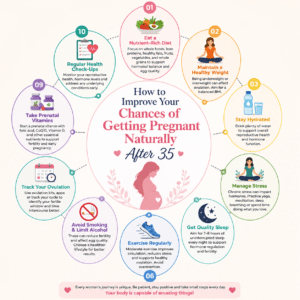
How to Improve Your Chances of Getting Pregnant Naturally After 35
Although age is one of the most significant factors affecting fertility, it is not the only one. Many couples can improve their chances of natural conception by optimizing their overall reproductive health before considering assisted reproductive treatments.
Improving fertility naturally requires a combination of healthy lifestyle habits, timely medical evaluation, and understanding your body’s ovulation cycle.
At SG Clinic, Noida, Dr. Sweta Gupta believes that every fertility journey should begin with identifying the root cause of infertility. While IVF is an excellent option for many couples, not everyone requires IVF immediately. Depending on your age, ovarian reserve, hormone levels, and overall reproductive health, natural conception or simpler fertility treatments may still be possible.
1. Track Your Ovulation Accurately
One of the most common reasons couples fail to conceive is simply missing the fertile window.
Ovulation usually occurs about 14 days before the start of the next menstrual period, but this varies depending on cycle length.
Common Signs of Ovulation
- Clear, stretchy cervical mucus (similar to egg white)
- Mild pelvic pain (Mittelschmerz)
- Increased libido
- Slight rise in basal body temperature after ovulation
- Positive Ovulation Predictor Kit (OPK)
Best Time for Intercourse
The fertile window includes:
- Five days before ovulation
- Ovulation day
- One day after ovulation
Having intercourse every 1–2 days during this window provides the best chance of conception.
2. Understand Your Menstrual Cycle
Regular menstrual cycles often indicate regular ovulation.
Typical Cycle Length
- 21–35 days
If your periods are:
- Irregular
- Extremely heavy
- Painful
- Absent for months
Consult an IVF Specialist in Noida for evaluation, as these may indicate underlying hormonal or reproductive conditions.
3. Maintain a Fertility-Friendly Diet
Nutrition plays an important role in reproductive health.
Include More of These Foods
Fruits
- Blueberries
- Oranges
- Kiwi
- Berries
- Pomegranate
These provide antioxidants that help protect eggs from oxidative stress.
Vegetables
- Spinach
- Broccoli
- Kale
- Beetroot
- Bell peppers
Rich in folate, vitamins, and minerals essential for fertility.
Healthy Proteins
- Eggs
- Fish
- Chicken
- Lentils
- Chickpeas
- Paneer
- Tofu
Protein supports hormone production and egg health.
Healthy Fats
Include:
- Avocados
- Olive oil
- Walnuts
- Almonds
- Chia seeds
- Flaxseeds
Healthy fats support hormone balance.
Whole Grains
Choose:
- Oats
- Brown rice
- Millets
- Quinoa
- Whole wheat
These help stabilize blood sugar and support hormonal health.
Foods to Limit
Avoid excessive intake of:
- Sugary drinks
- Processed snacks
- Refined carbohydrates
- Deep-fried foods
- Excessive fast food
- Trans fats
4. Vitamins That Support Fertility
Certain nutrients are essential for reproductive health. Supplements should be taken only after consultation with your doctor.
Commonly recommended nutrients include:
- Folic Acid (before conception)
- Vitamin D (if deficient)
- Vitamin B12 (if deficient)
- Iron (when indicated)
- Omega-3 fatty acids (where appropriate)
- Coenzyme Q10 (selected cases)
- Zinc and Selenium (especially in male infertility)
A personalized supplement plan is preferable to self-medication.
5. Maintain a Healthy Body Weight
Both obesity and being underweight can affect ovulation and fertility.
Healthy weight management may improve:
- Ovulation
- Hormonal balance
- Egg quality
- IVF success
- Pregnancy outcomes
6. Exercise the Right Way
Regular moderate exercise benefits fertility.
Recommended activities include:
- Brisk walking
- Yoga
- Swimming
- Cycling
- Light strength training
Aim for 150 minutes of moderate exercise per week. Excessive high-intensity exercise may disrupt ovulation in some women.
7. Manage Stress
Stress alone is not usually the direct cause of infertility, but it can contribute to:
- Sleep disturbances
- Hormonal imbalance
- Reduced libido
- Difficulty adhering to treatment plans
Helpful strategies include:
- Meditation
- Deep breathing exercises
- Yoga
- Journaling
- Counseling
- Support groups
8. Prioritize Quality Sleep
Sleep influences hormones involved in ovulation and overall health.
Aim for 7–8 hours of consistent, quality sleep each night.
9. Avoid Smoking and Excess Alcohol
Smoking is associated with:
- Faster decline in ovarian reserve
- Reduced egg quality
- Earlier menopause
Excessive alcohol intake may also negatively affect fertility in both men and women. Avoid tobacco, recreational drugs, and limit or abstain from alcohol when trying to conceive.
Fertility Supplements: What Works?
Many over-the-counter products claim to boost fertility, but not all are supported by strong evidence. Supplements should complement—not replace—a thorough medical evaluation.
Coenzyme Q10 (CoQ10)
CoQ10 is an antioxidant that may support mitochondrial function in eggs. Some studies suggest it may benefit women with diminished ovarian reserve, but it should be taken only under medical guidance.
DHEA
DHEA is prescribed in select fertility cases and should never be started without specialist supervision, as it is not suitable for everyone.
Myo-Inositol
Often recommended for women with PCOS, Myo-Inositol may help improve insulin sensitivity and support regular ovulation.
Prenatal Vitamins
A prenatal vitamin containing folic acid is recommended before conception to reduce the risk of neural tube defects in the baby.
When Natural Pregnancy May Be Difficult
Even with a healthy lifestyle, some conditions significantly reduce the chances of natural conception and require medical treatment.
These include:
- Both fallopian tubes blocked
- Very low AMH with poor ovarian reserve
- Severe endometriosis
- Premature ovarian insufficiency
- Severe male factor infertility
- Persistent absence of ovulation despite treatment
- Advanced maternal age with prolonged infertility
In such situations, delaying evaluation may reduce future treatment options.
Is Egg Freezing a Good Option?
Women who wish to delay pregnancy due to education, career, or personal reasons may consider egg freezing after consultation with a fertility specialist.
Egg freezing allows mature eggs to be collected and preserved for future use. In general, outcomes tend to be better when eggs are frozen at a younger age, though individual circumstances vary.
IUI vs. IVF: Which Treatment Is Right?
Intrauterine Insemination (IUI)
IUI involves placing prepared sperm directly into the uterus around the time of ovulation.
It may be considered for:
- Mild male factor infertility
- Unexplained infertility
- Ovulation disorders
- Cervical factor infertility
IUI is less invasive and less expensive than IVF but has lower success rates in certain age groups and conditions.
In Vitro Fertilization (IVF)
IVF involves stimulating the ovaries, retrieving eggs, fertilizing them with sperm in the laboratory, and transferring an embryo into the uterus.
IVF may be recommended for:
- Blocked fallopian tubes
- Severe male infertility
- Advanced maternal age
- Low ovarian reserve
- Endometriosis
- Recurrent IUI failure
- Certain genetic conditions requiring embryo testing
The decision between IUI and IVF should be individualized after a complete fertility evaluation.
IVF Success Depends on More Than Age
While age is an important factor, IVF outcomes are also influenced by:
- Egg quality
- Embryo quality
- Uterine health
- Sperm quality
- Ovarian reserve
- Underlying medical conditions
- Lifestyle factors
- Laboratory standards
- Individualized treatment protocols
An experienced IVF Doctor in Noida will assess these factors before recommending the most appropriate treatment plan.
Common Myths About Pregnancy After 35
Myth 1: “You cannot get pregnant naturally after 35.”
Fact: Many women conceive naturally after 35, although fertility gradually declines with age.
Myth 2: “Everyone over 35 needs IVF.”
Fact: Many couples conceive naturally or with simpler treatments such as ovulation induction or IUI. IVF is recommended only when appropriate based on the underlying diagnosis.
Myth 3: “If my periods are regular, my fertility is normal.”
Fact: Regular periods do not guarantee normal egg quality, ovarian reserve, or open fallopian tubes.
Myth 4: “Infertility is always the woman’s problem.”
Fact: Male factors contribute to infertility in a substantial proportion of couples. Both partners should be evaluated.
Myth 5: “Stress alone causes infertility.”
Fact: Stress may affect overall well-being and treatment adherence, but infertility usually has identifiable medical, hormonal, anatomical, or male-factor causes.
When Should You See a Fertility Specialist?
Seek medical advice promptly if:
- You are over 35 and have been trying to conceive for six months without success.
- Your menstrual cycles are irregular or absent.
- You have severe menstrual pain or known endometriosis.
- You have experienced recurrent miscarriages.
- You have a history of pelvic infections or reproductive surgery.
- Your partner has abnormal semen analysis results.
Early evaluation can improve the chances of identifying treatable conditions and selecting the most effective treatment.
Why Choose Dr. Sweta Gupta?
Dr. Sweta Gupta is a highly experienced IVF Specialist in Noida with over 25 years of experience in obstetrics, gynaecology, and reproductive medicine.
Qualifications
- MD (Obs & Gynae), Delhi
- MRCOG (London)
- DFSRH (UK)
- FRCOG (London)
- MSc (Reproduction & Development), Bristol, UK
- Fellowship in Reproductive Medicine & ART (London)
At SG Clinic, Sector 32, Noida, she offers evidence-based, compassionate fertility care tailored to each couple’s needs.
IVF Success Rates After 35
One of the most frequently asked questions by couples is:
“What are my chances of getting pregnant with IVF after 35?”
The answer depends on several factors—not just age. Egg quality, ovarian reserve, sperm health, uterine condition, embryo quality, and overall health all play important roles in treatment outcomes.
While fertility naturally declines with age, modern reproductive medicine has significantly improved the chances of conception through individualized treatment plans.
Factors That Influence IVF Success
- Age of the woman
- Anti-Müllerian Hormone (AMH) level
- Antral Follicle Count (AFC)
- Egg quality
- Sperm quality
- Embryo quality
- Uterine health
- Endometrial thickness
- Lifestyle habits
- Underlying medical conditions
- Experience of the fertility team
It is important to understand that every couple’s journey is unique. A comprehensive fertility assessment helps determine the most appropriate treatment and expected outcomes.
Pregnancy Risks After Age 35
Many women over 35 have healthy pregnancies and healthy babies. However, certain risks increase with advancing maternal age, making timely prenatal care especially important.
Possible age-related pregnancy risks include:
- Miscarriage
- Gestational diabetes
- Pregnancy-induced hypertension
- Preeclampsia
- Placental complications
- Preterm birth
- Chromosomal abnormalities
- Caesarean delivery
- Low birth weight
The good news is that regular antenatal care, appropriate screening tests, a healthy lifestyle, and close monitoring by an experienced obstetrician can help reduce many of these risks.
How to Have a Healthy Pregnancy After 35
Planning your pregnancy before conception can improve maternal and fetal outcomes.
Before Pregnancy
- Schedule a preconception consultation.
- Maintain a healthy body weight.
- Start folic acid supplementation as advised.
- Manage thyroid disorders, diabetes, or hypertension.
- Stop smoking and avoid alcohol.
- Review medications with your doctor.
- Ensure vaccinations are up to date if recommended.
During Pregnancy
- Attend all prenatal appointments.
- Eat a balanced, nutrient-rich diet.
- Stay physically active as advised.
- Get adequate sleep.
- Monitor blood pressure and blood sugar if indicated.
- Take prescribed prenatal vitamins.
- Report any concerning symptoms promptly.
Why Early Fertility Evaluation Matters
One of the biggest mistakes many couples make is waiting too long before seeking help.
If you are 35 years or older, professional societies generally recommend a fertility evaluation after 6 months of regular, unprotected intercourse without conception.
Early evaluation may:
- Identify treatable conditions sooner
- Improve treatment options
- Reduce emotional stress
- Prevent unnecessary delays
- Increase the likelihood of successful pregnancy
Why Choose Dr. Sweta Gupta?
Choosing the right fertility specialist is one of the most important decisions in your parenthood journey.
Dr. Sweta Gupta combines decades of clinical experience with evidence-based reproductive medicine and compassionate, patient-centered care.
About Dr. Sweta Gupta
Experience
- 25+ Years in Obstetrics, Gynaecology & Fertility Care
Qualifications
- MD (Obs & Gynae), Delhi
- MRCOG (London)
- DFSRH (UK)
- FRCOG (London)
- MSc (Reproduction & Development), Bristol, UK
- Fellowship in Reproductive Medicine & ART (London)
Areas of Expertise
- IVF Treatment
- ICSI
- IUI
- Female Infertility
- Male Infertility
- Recurrent Pregnancy Loss
- PCOS
- Endometriosis
- Low AMH
- Poor Ovarian Reserve
- Egg Freezing
- High-Risk Pregnancy
- Reproductive Endocrinology
Why Patients Trust SG Clinic, Noida
At SG Clinic, fertility care goes beyond medical treatment. Every couple receives personalized attention and a treatment plan tailored to their unique needs.
Our Approach
- Individualized fertility evaluation
- Evidence-based treatment protocols
- Advanced reproductive technology
- International standards of care
- Ethical and transparent counseling
- Compassionate patient support
- Comprehensive fertility services under one roof
Frequently Asked Questions (FAQ)
1. Can I get pregnant naturally at 35?
Yes. Many women conceive naturally at 35. However, fertility gradually declines with age, so if pregnancy does not occur after six months of trying, consult an IVF Specialist in Noida for evaluation.
2. Is 35 considered a high-risk pregnancy?
Not necessarily. Many women have healthy pregnancies after 35, but closer prenatal monitoring is often recommended because some pregnancy-related risks increase with age.
3. How long should I try naturally before seeing a fertility doctor?
If you are 35 years or older, seek evaluation after 6 months of regular, unprotected intercourse without pregnancy.
4. What is the best fertility test after 35?
There is no single best test. A fertility evaluation may include:
- AMH
- AFC Scan
- Hormone Profile
- Ultrasound
- HSG
- Semen Analysis
The appropriate tests depend on your medical history and symptoms.
5. Can low AMH prevent pregnancy?
Not always. Low AMH indicates reduced ovarian reserve but does not necessarily mean pregnancy is impossible. Natural conception and IVF are still possible for many women with low AMH.
6. Does IVF guarantee pregnancy?
No. IVF improves the chance of pregnancy for many couples but cannot guarantee success. Outcomes depend on several individual factors.
7. Can PCOS cause infertility after 35?
Yes. PCOS may interfere with ovulation, making conception more difficult. With appropriate treatment, many women with PCOS achieve successful pregnancies.
8. Does male age affect fertility?
Yes. Increasing paternal age can affect sperm quality, DNA integrity, and time to conception. Male evaluation is an essential part of infertility assessment.
9. Is IVF painful?
Most IVF procedures involve only mild discomfort. Egg retrieval is typically performed under sedation or anesthesia, and many patients resume normal activities within a short period.
10. When should I consider egg freezing?
Women who wish to delay pregnancy due to personal, educational, or career reasons may consider egg freezing after discussing the benefits and limitations with a fertility specialist.
11. Can stress alone cause infertility?
Stress does not usually cause infertility by itself, but it can affect overall health and may contribute to factors that influence fertility.
12. Which treatment is better: IUI or IVF?
The choice depends on the cause of infertility, age, ovarian reserve, sperm quality, and previous treatment history. Your fertility specialist will recommend the most suitable option.
13. Can lifestyle changes improve fertility?
Healthy eating, maintaining a healthy weight, regular exercise, adequate sleep, and avoiding smoking can support fertility and overall reproductive health, although they cannot reverse age-related decline in egg quality.
14. What if all fertility reports are normal but pregnancy is not happening?
This situation is known as unexplained infertility. Treatment options may include continued observation, ovulation induction, IUI, or IVF, depending on your age and clinical circumstances.
15. Who is the best IVF specialist in Noida?
When choosing a fertility specialist, consider qualifications, experience, ethical practices, individualized care, and transparent counseling. Dr. Sweta Gupta has over 25 years of experience in reproductive medicine and provides evidence-based fertility care at SG Clinic, Noida.
Key Takeaways
- Natural pregnancy after 35 is possible for many women.
- Fertility declines gradually with age, but early evaluation can improve treatment options.
- A healthy lifestyle supports reproductive health but does not replace medical evaluation when needed.
- Both partners should undergo fertility assessment if conception is delayed.
- Personalized treatment plans provide the best opportunity for achieving pregnancy.
Conclusion
Age is an important factor in fertility, but it is not the only determinant of your ability to conceive. Many women over the age of 35 become mothers naturally, while others benefit from timely medical evaluation and fertility treatments such as ovulation induction, IUI, or IVF.
The key is not to lose valuable time. If you have been trying to conceive without success, seeking early guidance from an experienced fertility specialist can help identify the underlying cause and provide a personalized treatment plan.
At SG Clinic, Noida, Dr. Sweta Gupta and her team are committed to providing compassionate, evidence-based fertility care tailored to each couple’s unique journey. Whether you are planning your first pregnancy, facing recurrent pregnancy loss, managing PCOS or endometriosis, or exploring advanced fertility treatments, expert guidance can make a meaningful difference.
Book Your Fertility Consultation Today
Dr. Sweta Gupta
IVF Specialist in Noida | IVF Doctor in Noida
SG Clinic
3D-5L, Wave City Center,
Sector 32, Noida – 201301
Call for Appointment:
📞 8130140007
📞 9009004709
Take the first step toward parenthood with expert fertility care and personalized guidance.