

able of Contents
- Introduction
- Quick Answer: Can Women with PCOS Get Pregnant Naturally?
- What is PCOS?
- How Does PCOS Affect Fertility?
- Understanding Ovulation in Women with PCOS
- Why PCOS Can Make Pregnancy More Challenging
- Common Symptoms of PCOS
- Can Women with PCOS Get Pregnant Naturally?
- What Are the Chances of Natural Pregnancy with PCOS?
- How is PCOS Diagnosed?
- Lifestyle Changes That Improve Fertility in PCOS
- Best Diet for Women with PCOS Trying to Conceive
- Foods to Eat and Foods to Avoid
- Weight Management and PCOS Fertility
- Exercise Tips for Improving Ovulation
- Vitamins and Supplements That May Support Fertility
- How to Track Ovulation with PCOS
- Best Time to Conceive Naturally
- Medical Treatments Before IVF
- Ovulation Induction Medications
- Metformin and PCOS Fertility
- IUI vs IVF for Women with PCOS
- IVF Success Rates in Women with PCOS
- Pregnancy After PCOS: What to Expect
- Pregnancy Risks Associated with PCOS
- Tips for a Healthy Pregnancy with PCOS
- Can PCOS Increase the Risk of Miscarriage?
- When Should You Consult an IVF Specialist in Noida?
- Why Choose Dr. Sweta Gupta – IVF Specialist in Noida?
- Frequently Asked Questions (FAQs)
- Key Takeaways
- Expert Opinion by Dr. Sweta Gupta
- Conclusion
- Book Your Consultation at SG Clinic, Noida
Can women with PCOS get pregnant naturally?
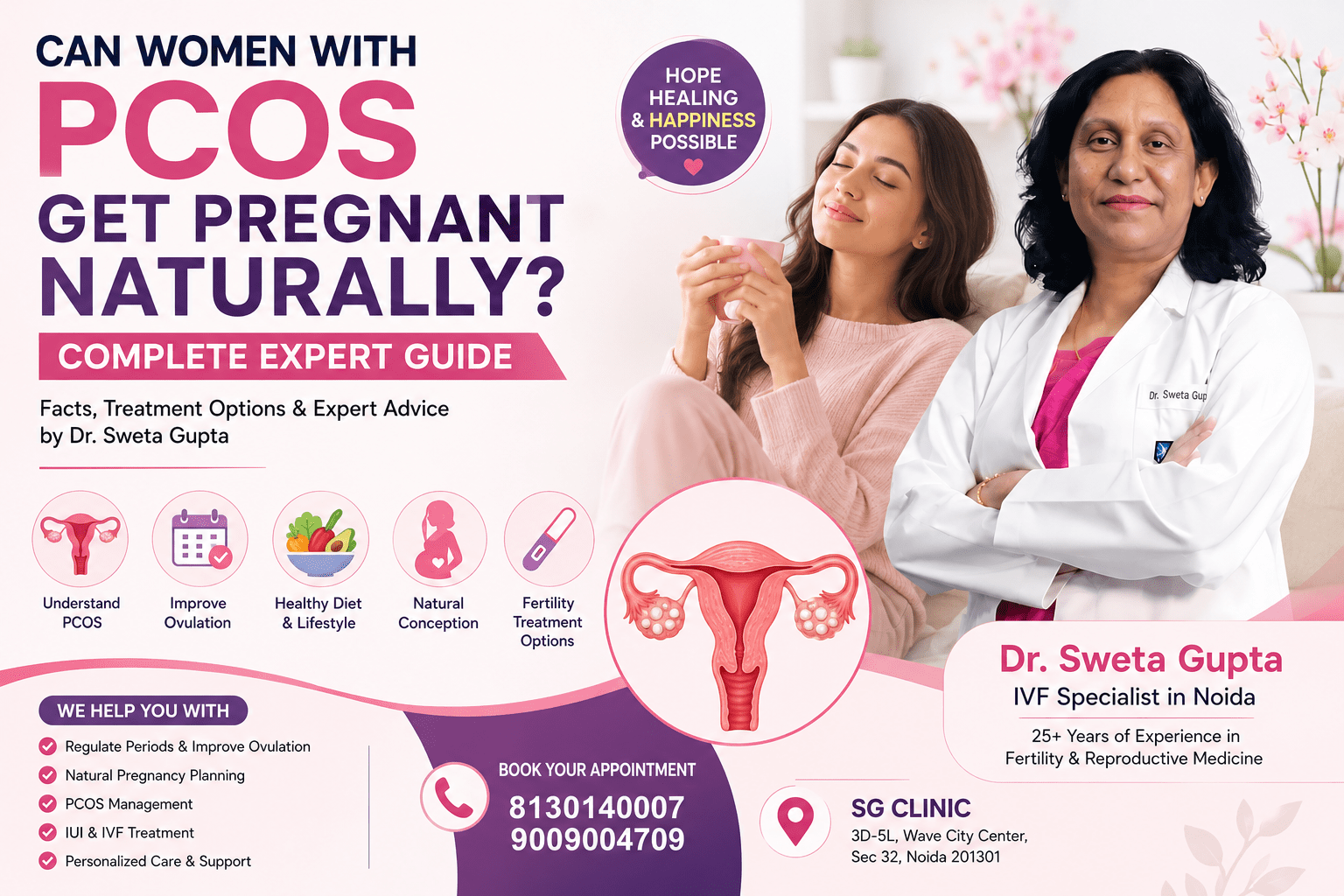
Yes. Many women with PCOS can become pregnant naturally, especially if they ovulate regularly or improve ovulation through healthy lifestyle changes and appropriate medical care. For women who continue to experience difficulty conceiving, treatments such as ovulation induction, IUI, or IVF may be recommended by an experienced fertility specialist. Dr. Sweta Gupta, IVF Specialist in Noida, provides personalized fertility care to help women with PCOS achieve healthy pregnancies.
If you have recently been diagnosed with Polycystic Ovary Syndrome (PCOS), one of the first questions that may come to your mind is:
“Can I still get pregnant naturally?”
The answer is yes—many women with PCOS conceive naturally and go on to have healthy pregnancies. However, the journey can be more challenging because PCOS often affects ovulation, making it difficult to predict fertile days and conceive without medical support.
The good news is that advances in fertility care, lifestyle management, and reproductive medicine have significantly improved pregnancy outcomes for women with PCOS. Whether you’re trying to conceive naturally or considering fertility treatments, understanding your body is the first step toward parenthood.
At SG Clinic, Noida, Dr. Sweta Gupta, an internationally trained IVF Specialist in Noida with over 25 years of experience, has helped countless couples navigate fertility challenges associated with PCOS through evidence-based treatment plans tailored to each patient’s needs.
In this comprehensive guide, you’ll learn:
- What PCOS really is
- How PCOS affects fertility
- Whether natural pregnancy is possible
- Ways to improve your chances of conception
- When to consult an IVF Doctor in Noida
- Common myths and facts about PCOS and pregnancy
Whether you’ve just been diagnosed or have been trying to conceive for months or years, this guide aims to provide clarity, hope, and practical advice.
What is PCOS?
Polycystic Ovary Syndrome (PCOS) is one of the most common hormonal disorders affecting women of reproductive age. It impacts the normal functioning of the ovaries, leading to hormonal imbalances that interfere with regular ovulation.
Worldwide, PCOS affects approximately 8–13% of women, though many remain undiagnosed for years because symptoms vary significantly from person to person.
PCOS is not just a reproductive condition—it can also influence metabolic health, emotional well-being, and long-term risks for diabetes, cardiovascular disease, and endometrial health.
Understanding Healthy Ovulation
To understand how PCOS affects fertility, it’s important to know how ovulation normally works.
Every month:
- The brain releases hormones (FSH and LH).
- The ovaries develop several follicles.
- One follicle becomes dominant.
- The mature egg is released (ovulation).
- If sperm fertilizes the egg, pregnancy occurs.
- If not, menstruation begins.
This process repeats approximately every 28–35 days in women with regular menstrual cycles.
What Happens in PCOS?
In women with PCOS:
- Multiple follicles begin developing.
- None reach complete maturity.
- Ovulation may not occur.
- Eggs remain inside the ovaries.
- Hormonal imbalance continues.
Instead of releasing one mature egg every month, the ovaries often contain many small immature follicles, giving the appearance of “polycystic ovaries” on ultrasound.
Contrary to popular belief, these are not true ovarian cysts.
Why Does PCOS Occur?
There is no single cause of PCOS. Instead, several factors work together.
1. Hormonal Imbalance
Women with PCOS often produce higher levels of androgen hormones.
These hormones may cause:
- Acne
- Facial hair
- Hair thinning
- Irregular periods
- Difficulty ovulating
2. Insulin Resistance
Nearly 50–70% of women with PCOS experience insulin resistance.
When the body becomes resistant to insulin:
- Blood sugar increases.
- More insulin is produced.
- Higher insulin stimulates androgen production.
- Ovulation becomes less frequent.
This creates a cycle that affects fertility.
3. Genetics
PCOS often runs in families.
If your mother or sister has PCOS, diabetes, or irregular menstrual cycles, your chances of developing PCOS are higher.
4. Lifestyle Factors
Although lifestyle alone doesn’t cause PCOS, it can worsen symptoms.
Contributing factors include:
- Obesity
- Lack of exercise
- Poor dietary habits
- Chronic stress
- Sleep disturbances
Common Symptoms of PCOS
Every woman experiences PCOS differently.
Some may have only mild symptoms, while others struggle with multiple health issues.
Common symptoms include:
- Irregular periods
- Missed periods
- Long menstrual cycles
- Difficulty conceiving
- Weight gain
- Acne
- Excess facial or body hair
- Hair loss
- Darkened skin around the neck or underarms
- Oily skin
- Mood changes
- Pelvic discomfort
Some women discover they have PCOS only after trying to conceive.
Does Every Woman with PCOS Have Difficulty Getting Pregnant?
No.
This is one of the biggest misconceptions.
Many women with PCOS:
- Conceive naturally
- Have healthy pregnancies
- Deliver healthy babies
Others may require:
- Lifestyle modifications
- Ovulation induction medications
- IUI
- IVF
The need for treatment depends on:
- Age
- Weight
- Hormone levels
- Ovulation pattern
- Partner’s fertility
- Overall reproductive health
This is why consulting an experienced IVF Specialist in Noida is important if pregnancy is delayed.
Can Women with PCOS Get Pregnant Naturally?
Yes—Many Women Do.
PCOS does not mean infertility.
Instead, it means that pregnancy may take longer because ovulation is irregular.
Women who ovulate occasionally can still conceive naturally if intercourse occurs during their fertile window.
Several studies have shown that many women with mild PCOS achieve pregnancy without IVF after improving lifestyle habits and receiving appropriate medical guidance.
Why Pregnancy Takes Longer in PCOS
Natural conception depends on regular ovulation.
In PCOS:
- Eggs may not mature.
- Ovulation may occur only a few times a year.
- Fertile days become unpredictable.
For example:
A woman with regular cycles ovulates about 12 times per year.
A woman with PCOS may ovulate only 3–6 times annually.
Fewer ovulations mean fewer opportunities for pregnancy.
How Does PCOS Affect Fertility?
PCOS affects several stages of reproduction.
Irregular Ovulation
Without ovulation, pregnancy cannot occur naturally.
This is the primary reason women with PCOS experience infertility.
Poor Egg Maturation
Eggs may begin developing but fail to reach maturity.
Immature eggs cannot be fertilized successfully.
Hormonal Imbalance
High androgen levels interfere with normal follicle growth and egg release.
Thickened Ovarian Capsule
Some women develop a thicker ovarian surface, making ovulation more difficult.
Metabolic Issues
Insulin resistance may:
- Reduce egg quality
- Affect implantation
- Increase miscarriage risk
Signs That You May Not Be Ovulating
Many women are unaware they are not ovulating.
Common signs include:
- Periods more than 35 days apart
- Missing periods for months
- Very light bleeding
- No menstrual cycles
- Negative ovulation kits
- Difficulty conceiving after one year
- Hormonal acne
- Increased facial hair
If you notice these symptoms, consulting an IVF Doctor in Noida can help identify the underlying cause and recommend appropriate treatment.
How is PCOS Diagnosed?
Doctors typically use the Rotterdam Criteria, where at least two of the following are present:
Irregular or absent ovulation
Examples include:
- Missed periods
- Long cycles
- No ovulation
High androgen levels
Either through:
- Blood tests
- Physical symptoms
Polycystic ovaries on ultrasound
An ultrasound may show multiple small follicles arranged around the ovary.
Additional investigations may include:
- Thyroid function tests
- Prolactin levels
- AMH
- Fasting insulin
- Blood sugar
- HbA1c
- Vitamin D
- Lipid profile
These tests help rule out other conditions and provide a comprehensive picture of reproductive health.
Myth vs Fact About PCOS and Pregnancy
Myth: Women with PCOS can never become pregnant.
Fact: Many women with PCOS conceive naturally or with simple fertility treatments.
Myth: IVF is the only option.
Fact: Lifestyle changes and ovulation induction medications are often the first line of treatment. IVF is recommended only when indicated.
Myth: Weight is the only reason for infertility.
Fact: Even lean women can have PCOS-related ovulation problems.
Myth: Irregular periods mean pregnancy is impossible.
Fact: Irregular ovulation reduces the chances of conception but does not eliminate them.
Myth: PCOS affects every woman the same way.
Fact: PCOS is a spectrum disorder. Symptoms and fertility outcomes vary significantly from one woman to another.
Expert Insights from Dr. Sweta Gupta
According to Dr. Sweta Gupta, internationally trained fertility specialist:
“One of the biggest misconceptions I see is that a diagnosis of PCOS means a woman will never become pregnant. This simply isn’t true. Many women conceive naturally with the right lifestyle modifications, timely evaluation, and personalized treatment. The key is not to delay seeking expert guidance if pregnancy isn’t happening as expected.”
Dr. Gupta emphasizes that early intervention can improve outcomes by identifying ovulation issues, correcting hormonal imbalances, and recommending the most appropriate fertility plan—whether that involves lifestyle changes, medication, IUI, or IVF.
Why Early Fertility Evaluation Matters
If you have PCOS and are planning a pregnancy, don’t wait too long before seeking medical advice.
Consider consulting a fertility specialist if:
- You are under 35 and have been trying to conceive for 12 months without success.
- You are 35 or older and have been trying for 6 months.
- Your menstrual cycles are highly irregular or absent.
- You have experienced recurrent pregnancy loss.
- You have additional conditions such as endometriosis, thyroid disorders, or male-factor infertility.
A timely consultation with an experienced IVF Specialist in Noida can help identify the underlying issues and improve your chances of achieving a healthy pregnancy.
Lifestyle Changes That Can Improve Your Chances of Natural Pregnancy
For many women diagnosed with Polycystic Ovary Syndrome (PCOS), the journey toward parenthood begins with simple but powerful lifestyle modifications. While medications and fertility treatments are important in certain cases, lifestyle improvements are often the first recommendation because they address the root causes of hormonal imbalance and insulin resistance.
At SG Clinic, Dr. Sweta Gupta, an experienced IVF Specialist in Noida, emphasizes that even small, consistent changes can improve ovulation, regulate menstrual cycles, and increase the chances of conceiving naturally.
1. Maintain a Healthy Weight
One of the strongest links between PCOS and infertility is excess body weight. Fat tissue is hormonally active and can worsen insulin resistance, increase androgen production, and interfere with normal ovulation.
Research has shown that losing just 5–10% of body weight can significantly improve fertility in overweight women with PCOS.
Benefits of Healthy Weight Management
- Improved ovulation
- Better egg quality
- More regular menstrual cycles
- Reduced insulin resistance
- Lower miscarriage risk
- Higher chances of natural conception
- Improved IVF success rates if fertility treatment becomes necessary
Women with lean PCOS can also benefit from maintaining a healthy body composition through balanced nutrition and regular exercise.
2. Follow a Fertility-Friendly PCOS Diet
There is no single “PCOS diet,” but choosing foods that support hormonal balance and blood sugar control can make a significant difference.
Foods to Include
High-Fibre Foods
Fiber slows sugar absorption and improves insulin sensitivity.
Examples include:
- Oats
- Brown rice
- Quinoa
- Whole wheat
- Barley
- Lentils
- Chickpeas
- Beans
Lean Protein
Protein helps regulate blood sugar and supports hormone production.
Good choices include:
- Eggs
- Fish
- Chicken
- Tofu
- Paneer
- Greek yogurt
- Lentils
Healthy Fats
Healthy fats support hormone production and reduce inflammation.
Choose:
- Avocados
- Almonds
- Walnuts
- Flaxseeds
- Chia seeds
- Olive oil
Fresh Fruits
Prefer fruits with a lower glycemic index.
Examples:
- Apples
- Pears
- Berries
- Kiwi
- Oranges
- Guava
Consume fruit whole rather than as juice.
Vegetables
Vegetables should make up half of every meal.
Especially beneficial are:
- Spinach
- Broccoli
- Cauliflower
- Bell peppers
- Carrots
- Cucumber
- Tomatoes
Foods to Limit
Certain foods may worsen insulin resistance and inflammation.
Try to reduce:
- Sugary beverages
- Cakes
- Pastries
- White bread
- White rice (in excess)
- Deep-fried snacks
- Processed foods
- Fast food
- Packaged juices
- Excess sweets
Moderation is key—occasional treats are acceptable within an overall healthy eating pattern.
Sample One-Day PCOS Diet Plan
Breakfast
- Vegetable oats with boiled eggs
- Unsweetened green tea
Mid-Morning
- Apple
- Handful of almonds
Lunch
- Brown rice
- Dal
- Mixed vegetables
- Grilled chicken or paneer
- Salad
Evening Snack
- Greek yogurt
- Roasted chana
Dinner
- Vegetable soup
- Grilled fish or tofu
- Whole wheat roti
Bedtime
- Warm turmeric milk (if tolerated)
3. Exercise Regularly
Exercise improves insulin sensitivity, helps regulate hormones, and supports healthy ovulation.
Aim for 150–300 minutes of moderate exercise per week.
Recommended Activities
- Brisk walking
- Cycling
- Swimming
- Yoga
- Pilates
- Strength training
- Dancing
Adding resistance training two to three times per week can further improve insulin sensitivity and metabolic health.
4. Reduce Stress
Stress increases cortisol levels, which can affect reproductive hormones and ovulation.
Consider incorporating:
- Deep breathing exercises
- Meditation
- Yoga
- Journaling
- Reading
- Spending time outdoors
- Talking with supportive friends or family
If stress becomes overwhelming, seeking professional counseling may also be beneficial.
5. Prioritize Quality Sleep
Sleep is essential for hormonal regulation.
Aim for 7–9 hours of uninterrupted sleep each night.
Good sleep habits include:
- Maintaining a consistent sleep schedule
- Avoiding screens before bedtime
- Limiting caffeine late in the day
- Creating a cool, dark sleeping environment
Vitamins and Supplements That May Support Fertility
Some women with PCOS may benefit from supplements, but these should always be taken under medical supervision.
Commonly recommended supplements include:
- Folic acid
- Vitamin D
- Vitamin B12
- Omega-3 fatty acids
- Myo-inositol
- D-Chiro Inositol
- Iron (if deficient)
Dr. Sweta Gupta advises individualized supplementation based on laboratory evaluation rather than self-medication.
How to Track Ovulation with PCOS
Irregular cycles can make ovulation difficult to predict, but several methods may help.
Ovulation Predictor Kits
These detect the luteinizing hormone (LH) surge. However, in PCOS, consistently elevated LH levels may produce misleading results.
Basal Body Temperature (BBT)
Measuring body temperature every morning can help identify ovulation retrospectively through a slight temperature rise.
Cervical Mucus Monitoring
Around ovulation, cervical mucus often becomes clear, stretchy, and slippery, resembling egg whites.
Ultrasound Follicular Monitoring
For women undergoing fertility treatment, ultrasound monitoring is one of the most accurate methods to track follicle development and ovulation.
Best Time to Conceive Naturally
For women with regular cycles, intercourse every 2–3 days throughout the cycle generally provides good coverage of the fertile window.
If ovulation is being monitored, having intercourse during the 2–3 days before ovulation and on the day of ovulation offers the highest chance of conception.
For women with irregular cycles due to PCOS, professional guidance can help identify the optimal timing.
When Lifestyle Changes Are Not Enough
Some women continue to experience anovulation despite healthy habits.
If pregnancy has not occurred after an appropriate period of trying, medical treatment may be recommended.
This does not necessarily mean IVF is required immediately.
Medical Treatments Before IVF
Ovulation Induction
The goal of ovulation induction is to stimulate the ovaries to release a mature egg.
Common medications include:
- Letrozole (often considered first-line for many women with PCOS)
- Clomiphene citrate
- Gonadotropin injections (in selected cases)
Treatment should always be supervised to reduce the risk of multiple pregnancy and ovarian hyperstimulation.
Metformin
Metformin is commonly prescribed for women with insulin resistance.
Potential benefits include:
- Improved insulin sensitivity
- Better menstrual regularity
- Enhanced ovulation
- Reduced androgen levels
It is not suitable for everyone and should only be used under medical advice.
Monitoring During Treatment
Women receiving ovulation induction usually undergo:
- Ultrasound scans
- Hormone monitoring
- Follicle tracking
- Endometrial assessment
- Timed intercourse guidance
Close monitoring helps improve pregnancy rates while minimizing complications.
IUI vs IVF for Women with PCOS
Many patients ask whether they need Intrauterine Insemination (IUI) or In Vitro Fertilization (IVF).
The answer depends on multiple factors.
When IUI May Be Considered
IUI may be suitable if:
- Ovulation can be induced successfully
- Fallopian tubes are open
- Semen analysis is normal or shows mild abnormalities
- The woman is relatively young
- Duration of infertility is shorter
When IVF May Be Recommended
IVF may be advised when:
- Ovulation induction has not resulted in pregnancy
- IUI cycles have been unsuccessful
- Age is a significant factor
- Tubal disease is present
- Severe male-factor infertility exists
- There are additional fertility conditions such as endometriosis
- Fertility preservation or genetic testing is needed
An experienced IVF Doctor in Noida can determine the most appropriate treatment pathway after a thorough fertility assessment.
IVF Success in Women with PCOS
Women with PCOS often have a good ovarian reserve, which can be an advantage during IVF.
With individualized treatment protocols and careful monitoring, many women achieve excellent outcomes.
Success rates depend on several factors, including:
- Age
- Egg quality
- Sperm quality
- Embryo quality
- Uterine health
- Overall medical condition
- Lifestyle factors
Rather than focusing on averages, personalized treatment planning is the best predictor of success.
Fertility Preservation for Women with PCOS
Some women choose to delay pregnancy for education, career, or personal reasons.
Options such as egg freezing (oocyte cryopreservation) may be discussed with a fertility specialist, especially if future fertility is a concern.
Early consultation allows women to make informed decisions based on their reproductive goals.
Expert Tips from Dr. Sweta Gupta
“PCOS is a manageable condition, not a barrier to motherhood. The key is early diagnosis, healthy lifestyle habits, and timely medical guidance. Every woman deserves a personalized fertility plan based on her age, hormonal profile, and reproductive goals. There is no one-size-fits-all approach.”
Dr. Sweta Gupta emphasizes that delaying evaluation for years can reduce treatment options, particularly as age advances. Seeking guidance early often leads to better outcomes and less invasive treatment.
Pregnancy After PCOS: What to Expect
Congratulations! If you’ve conceived naturally or through fertility treatment, that’s a significant milestone. However, pregnancy in women with PCOS may require closer monitoring because of certain health risks.
It’s important to remember that most women with PCOS have healthy pregnancies and deliver healthy babies, especially with regular prenatal care and guidance from an experienced obstetrician and fertility specialist.
At SG Clinic, Noida, Dr. Sweta Gupta provides personalized pregnancy care, monitoring both maternal and fetal health throughout the pregnancy journey.
Is Pregnancy with PCOS Considered High Risk?
Not every pregnancy affected by PCOS is high risk. However, women with PCOS have a slightly increased chance of developing certain complications.
These may include:
- Early miscarriage
- Gestational diabetes
- Pregnancy-induced hypertension
- Preeclampsia
- Preterm birth
- Higher likelihood of cesarean delivery
- Large baby (Macrosomia)
The risk varies depending on:
- Age
- Body weight
- Blood sugar levels
- Blood pressure
- Lifestyle
- Existing medical conditions
With proper medical supervision, many of these risks can be minimized.
How to Have a Healthy Pregnancy with PCOS
Following healthy habits before and during pregnancy can significantly improve outcomes.
Eat a Balanced Diet
Choose foods rich in:
- Protein
- Iron
- Calcium
- Folate
- Fiber
- Healthy fats
Limit refined sugar and processed foods to help maintain stable blood glucose levels.
Stay Physically Active
After consulting your doctor, safe activities may include:
- Walking
- Prenatal yoga
- Swimming
- Pregnancy stretching
- Light strength exercises
Regular movement supports healthy weight gain and improves insulin sensitivity.
Attend Every Prenatal Appointment
Regular check-ups allow your healthcare provider to monitor:
- Baby’s growth
- Blood pressure
- Blood sugar
- Weight gain
- Placental health
- Fetal development
Early detection of any complication leads to better outcomes.
Take Prescribed Supplements
Common prenatal supplements include:
- Folic acid
- Iron
- Calcium
- Vitamin D
- DHA (if recommended)
Avoid taking additional supplements without medical advice.
Manage Stress
Pregnancy itself can be emotionally demanding.
Helpful techniques include:
- Meditation
- Deep breathing
- Reading
- Music therapy
- Family support
- Adequate sleep
Mental well-being plays an important role in overall pregnancy health.
Can PCOS Increase the Risk of Miscarriage?
Some studies suggest that women with PCOS may have a slightly higher miscarriage risk, particularly if insulin resistance, obesity, or poorly controlled diabetes is present.
However, this does not mean miscarriage is inevitable.
Many women with PCOS have successful pregnancies after receiving appropriate medical care.
Factors that may reduce miscarriage risk include:
- Healthy weight management
- Blood sugar control
- Timely prenatal care
- Following prescribed medications
- Avoiding smoking and alcohol
- Managing thyroid disorders if present
When Should You See an IVF Specialist?
Many couples wait too long before seeking fertility advice.
You should consider consulting an IVF Specialist in Noida if:
- You’re under 35 and haven’t conceived after 12 months of regular, unprotected intercourse.
- You’re 35 or older and have been trying for 6 months.
- You have highly irregular or absent periods.
- You’ve experienced repeated miscarriages.
- You have severe pelvic pain or suspected endometriosis.
- Your partner has abnormal semen parameters.
- You wish to understand fertility preservation options.
Early evaluation often leads to simpler and more effective treatment.
Why Choose Dr. Sweta Gupta for PCOS and Fertility Treatment?
Choosing the right fertility specialist can make a significant difference in your treatment experience.
Dr. Sweta Gupta is recognized for combining advanced reproductive medicine with compassionate, patient-centered care.
Highlights
✔ 25+ Years of Clinical Experience
✔ Internationally Trained Fertility Specialist
✔ MD (Obs & Gynae, Delhi)
✔ MRCOG (London)
✔ FRCOG (London)
✔ DFSRH (UK)
✔ MSc (Reproduction & Development), Bristol (UK)
✔ Fellowship in Reproductive Medicine & ART (London)
Areas of Expertise
- PCOS & PCOD Management
- Infertility Evaluation
- IVF
- ICSI
- IUI
- Egg Freezing
- Recurrent Pregnancy Loss
- High-Risk Pregnancy Care
- Fertility Preservation
- Reproductive Endocrinology
At SG Clinic, every patient receives an individualized treatment plan based on medical history, investigations, age, ovarian reserve, and reproductive goals.
Why Early Fertility Consultation Matters
One of the most common mistakes couples make is delaying evaluation while hoping pregnancy will happen naturally.
Age remains one of the strongest factors affecting fertility.
Seeking guidance from an experienced IVF Doctor in Noida allows timely diagnosis and helps preserve future treatment options.
Frequently Asked Questions (FAQs)
1. Can women with PCOS become pregnant naturally?
Yes. Many women with PCOS conceive naturally, especially after improving lifestyle habits and addressing ovulation problems.
2. Does PCOS always cause infertility?
No. PCOS affects fertility but does not mean permanent infertility.
3. Is IVF necessary for every woman with PCOS?
No. Many women conceive through lifestyle changes, ovulation induction medications, or IUI before IVF is considered.
4. Which age is best for pregnancy with PCOS?
Fertility generally declines with age, so earlier planning often improves the chances of conception.
5. Can weight loss improve fertility?
Yes. Even modest weight reduction can improve ovulation and menstrual regularity in many women with PCOS.
6. What is the best exercise for PCOS?
Walking, cycling, swimming, strength training, and yoga are commonly recommended.
7. Can lean women also have PCOS?
Yes. PCOS can affect women of all body types.
8. Is pregnancy safe with PCOS?
Most women have healthy pregnancies with proper prenatal care and monitoring.
9. Can irregular periods still result in pregnancy?
Yes. Ovulation may occur unpredictably, making pregnancy possible even with irregular cycles.
10. Does PCOS increase miscarriage risk?
There may be a slightly increased risk in some women, but appropriate medical care can help reduce it.
11. What foods are good for PCOS?
Whole grains, vegetables, fruits, lean proteins, legumes, nuts, and healthy fats support hormonal balance.
12. Should I avoid carbohydrates completely?
No. Choose complex carbohydrates instead of refined sugars and processed foods.
13. Can stress worsen PCOS symptoms?
Stress may affect hormonal balance and overall well-being. Stress management is an important part of treatment.
14. What tests help diagnose PCOS?
Diagnosis may involve menstrual history, hormone testing, ultrasound, and metabolic evaluation.
15. Can PCOS return after treatment?
PCOS is a long-term condition, but symptoms can often be managed effectively through lifestyle changes and medical care.
16. Is metformin used for every woman with PCOS?
Not necessarily. It is recommended selectively based on insulin resistance and individual clinical needs.
17. Can PCOS affect egg quality?
Some women may experience altered egg maturation, but many produce healthy eggs and achieve successful pregnancies.
18. How long should I try naturally before seeing a fertility specialist?
Generally, after 12 months if under 35 years, or after 6 months if 35 years or older.
19. Does PCOS increase the chance of twins?
Certain fertility medications may increase the likelihood of multiple pregnancy, which is why treatment should always be supervised.
20. Which doctor should I consult for PCOS-related infertility?
Consult an experienced IVF Specialist in Noida or fertility specialist for comprehensive evaluation and individualized treatment.
Final Thoughts
A diagnosis of PCOS does not mean you cannot become a mother. While the condition can make conception more challenging, many women successfully achieve pregnancy through healthy lifestyle changes, timely medical evaluation, and personalized fertility care.
The most important step is not to lose hope or delay seeking guidance. Every woman’s fertility journey is unique, and the right treatment approach depends on factors such as age, ovulation status, overall health, and reproductive goals.
Whether you are trying to conceive naturally or considering fertility treatment, working with an experienced fertility specialist can help you make informed decisions and improve your chances of a healthy pregnancy.
Consult Dr. Sweta Gupta – IVF Specialist in Noida
If you have irregular periods, difficulty conceiving, or have been diagnosed with PCOS, expert evaluation can help identify the most appropriate treatment plan.
Dr. Sweta Gupta
IVF Specialist & Fertility Expert
Qualifications
- MD (Obs & Gynae, Delhi)
- MRCOG (London)
- FRCOG (London)
- DFSRH (UK)
- MSc (Reproduction & Development, Bristol, UK)
- Fellowship in Reproductive Medicine & ART (London)
Clinic:
SG Clinic
3D-5L, Wave City Center, Sector 32, Noida – 201301
Appointments:
📞 8130140007
📞 9009004709