

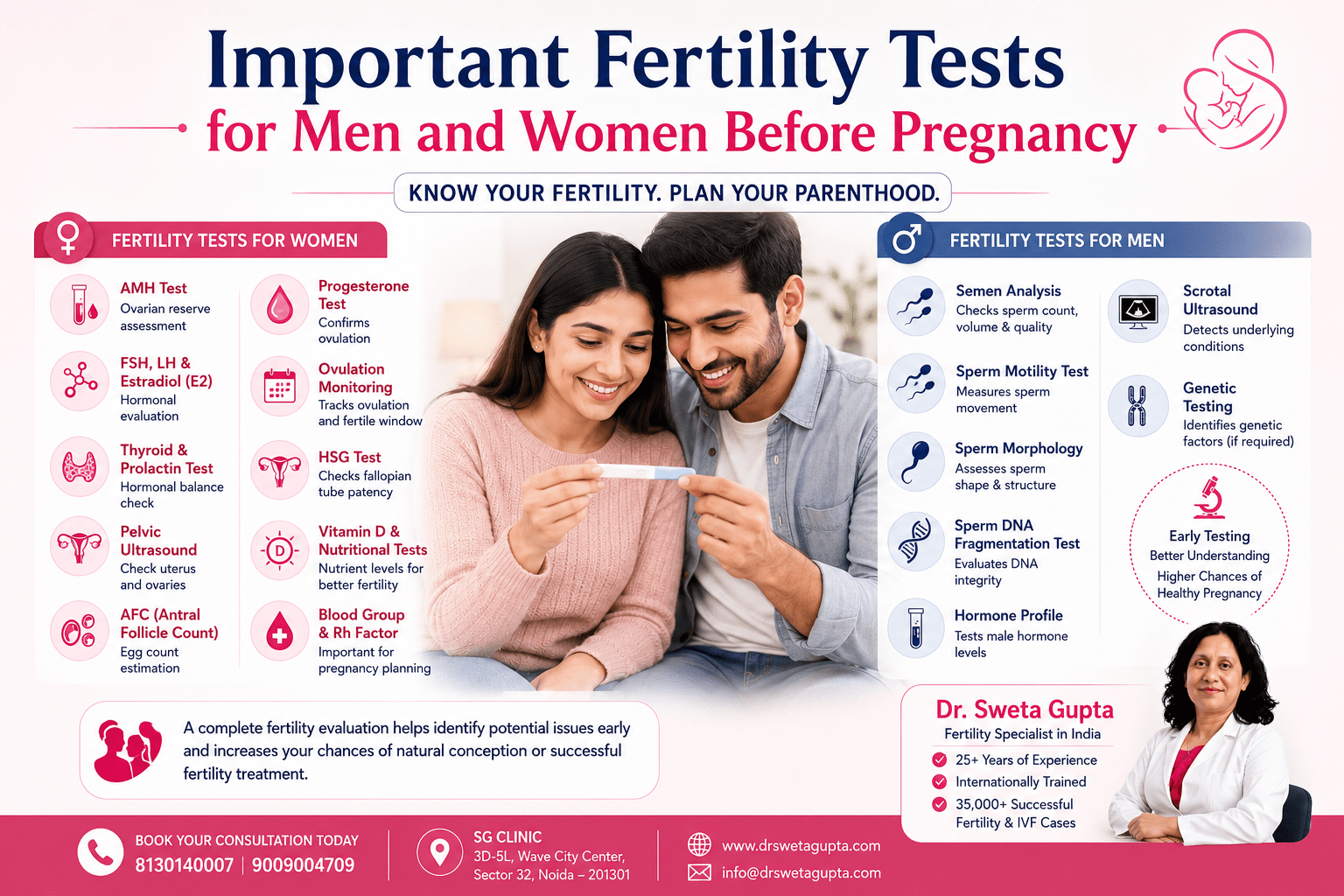
Planning a pregnancy is one of the most exciting milestones in life. While many couples focus on diet, exercise, and prenatal vitamins before trying to conceive, one crucial step is often overlooked—a fertility evaluation.
A fertility check-up before pregnancy helps identify potential reproductive health concerns in both men and women before they become major obstacles to conception. Early fertility testing not only provides peace of mind but also allows timely treatment if any issues are detected.
Many couples believe fertility testing is only necessary after struggling to conceive for years. However, reproductive health is influenced by multiple factors such as age, hormonal balance, ovarian reserve, sperm quality, lifestyle, genetics, and underlying medical conditions. Detecting these factors early can help couples make informed decisions and improve their chances of a healthy pregnancy.
As an internationally trained Fertility Specialist in India with over 25 years of experience, Dr. Sweta Gupta has helped thousands of couples understand their fertility health and create personalized treatment plans that support their dream of parenthood.
In this comprehensive guide, you’ll learn about the most important fertility tests for both men and women before pregnancy, why they matter, when they should be performed, and how they contribute to successful natural conception and assisted reproductive treatments like IUI and IVF.
Why Fertility Testing Before Pregnancy Is Important
Many fertility conditions develop silently and may not produce noticeable symptoms until pregnancy becomes difficult.
A fertility evaluation helps:
- Assess reproductive health before trying to conceive.
- Detect hormonal imbalances.
- Evaluate egg and sperm quality.
- Identify ovulation problems.
- Assess ovarian reserve.
- Check uterine and fallopian tube health.
- Detect male fertility concerns.
- Guide personalized pregnancy planning.
- Reduce unnecessary delays in conception.
- Improve treatment planning if fertility treatment becomes necessary.
Seeking a fertility evaluation early does not mean something is wrong. Instead, it provides valuable information that helps couples make informed reproductive decisions.
What Is a Fertility Evaluation?
A fertility evaluation is a comprehensive medical assessment of both partners to understand their reproductive health and identify factors that may affect pregnancy.
Since infertility can involve male, female, or combined factors, evaluating both partners together provides the most complete picture.
A fertility evaluation generally includes:
Medical History
Your fertility specialist will discuss:
- Menstrual history
- Pregnancy history
- Previous miscarriages
- Medical conditions
- Surgical history
- Current medications
- Family history
- Lifestyle habits
- Previous fertility treatments
- Sexual health
Physical Examination
A general and reproductive health examination may identify conditions affecting fertility.
Laboratory Tests
Blood investigations evaluate hormone levels and reproductive function.
Imaging Studies
Ultrasound and other imaging tests assess reproductive organs.
Male Fertility Assessment
A semen analysis evaluates sperm health and fertility potential.
Who Should Consider Fertility Testing Before Pregnancy?
Although every couple may benefit from understanding their reproductive health, fertility testing is particularly recommended for:
Women Planning Pregnancy After Age 35
Female fertility naturally declines with age.
Couples Trying to Conceive for More Than 12 Months
Women over 35 should generally seek evaluation after six months of trying.
Women with Irregular Menstrual Cycles
Irregular ovulation may reduce the chances of pregnancy.
Couples with Previous Pregnancy Loss
Recurrent miscarriages warrant further evaluation.
Individuals with PCOS or Endometriosis
These conditions may affect fertility and pregnancy planning.
Men with Fertility Concerns
Male infertility contributes to nearly half of infertility cases.
Couples Planning IVF or IUI
Comprehensive testing helps create an individualized treatment plan.
When Is the Best Time for Fertility Testing?
Ideally, fertility testing should be performed before actively trying to conceive, especially if risk factors are present.
Testing is strongly recommended for:
- Women over 35
- Couples with known reproductive disorders
- Previous infertility
- Previous miscarriages
- Family history of early menopause
- Male fertility concerns
Early evaluation allows timely intervention and better family planning.
Important Fertility Tests for Women Before Pregnancy
1. AMH (Anti-Müllerian Hormone) Test
One of the most important fertility investigations is the AMH test.
AMH is produced by small follicles within the ovaries and helps estimate ovarian reserve.
Why Is AMH Important?
AMH provides information about:
- Remaining egg supply
- Ovarian reserve
- Response to fertility treatment
- IVF planning
Does AMH Measure Egg Quality?
No.
AMH estimates the quantity of eggs remaining but does not directly measure egg quality.
Who Should Consider an AMH Test?
- Women over 30 planning pregnancy
- Women with PCOS
- Women with irregular periods
- Women with previous ovarian surgery
- Women considering IVF
- Women delaying pregnancy
2. FSH (Follicle Stimulating Hormone) Test
FSH plays an important role in ovarian function and follicle development.
It is usually measured early in the menstrual cycle.
Why Is FSH Tested?
FSH helps assess:
- Ovarian reserve
- Ovarian response
- Hormonal balance
Higher FSH levels may suggest reduced ovarian reserve in some women, although interpretation depends on age and other test results.
3. LH (Luteinizing Hormone) Test
LH regulates ovulation.
Abnormal LH levels may occur in:
- PCOS
- Ovulation disorders
- Hormonal imbalance
FSH and LH are often interpreted together.
4. Estradiol (E2) Test
Estradiol is one of the body’s primary estrogen hormones.
It helps assess:
- Ovarian function
- Follicle development
- Hormonal balance
This hormone is particularly useful during fertility treatment monitoring.
5. Progesterone Test
Progesterone confirms whether ovulation has occurred.
Why Is Progesterone Important?
After ovulation, progesterone prepares the uterus for embryo implantation.
Low progesterone levels may indicate:
- Delayed ovulation
- Anovulation
- Luteal phase abnormalities
Timing of this test is important and depends on the menstrual cycle.
6. Thyroid Function Test (TSH)
Thyroid hormones influence many reproductive processes.
Even mild thyroid dysfunction may affect:
- Ovulation
- Menstrual regularity
- Pregnancy outcomes
A thyroid evaluation is commonly included in fertility assessment.
7. Prolactin Test
Prolactin is a hormone primarily associated with breastfeeding.
Elevated prolactin levels may interfere with:
- Ovulation
- Menstrual cycles
- Fertility
Abnormal results require further medical evaluation.
8. Pelvic Ultrasound
Pelvic ultrasound provides valuable information about reproductive organs.
The scan evaluates:
Uterus
Doctors assess:
- Shape
- Size
- Fibroids
- Polyps
- Congenital abnormalities
Ovaries
The ultrasound examines:
- Ovarian size
- Follicles
- Ovarian cysts
- PCOS appearance
Endometrial Lining
The thickness and appearance of the uterine lining are also evaluated.
9. Antral Follicle Count (AFC)
AFC is measured during pelvic ultrasound.
Small follicles visible within the ovaries are counted.
Why Is AFC Important?
It helps estimate:
- Ovarian reserve
- IVF response
- Egg production potential
AMH and AFC together provide valuable information regarding ovarian reserve.
10. Ovulation Monitoring
Successful pregnancy depends on regular ovulation.
Ovulation monitoring may include:
- Ultrasound scans
- Hormone testing
- Ovulation prediction methods
This helps determine:
- Whether ovulation occurs
- Timing of ovulation
- Follicle growth
11. HSG (Hysterosalpingography)
HSG evaluates the fallopian tubes and uterine cavity.
Why Is It Important?
Blocked fallopian tubes may prevent sperm from meeting the egg.
HSG can identify:
- Tubal blockage
- Uterine abnormalities
- Adhesions
- Congenital uterine changes
This test is often recommended when pregnancy has not occurred despite regular attempts.
12. Vitamin D and Nutritional Assessment
Overall health contributes to reproductive health.
Depending on individual circumstances, your doctor may recommend assessing:
- Vitamin D
- Vitamin B12
- Iron levels
- Blood sugar
- General nutritional status
These tests help optimize health before pregnancy.
13. Blood Group and Rh Factor
Knowing your blood group and Rh factor before pregnancy helps with future pregnancy planning and medical management.
Important Fertility Tests for Men Before Pregnancy
Many couples are surprised to learn that male fertility contributes to approximately half of infertility cases.
Male fertility testing is simple, non-invasive, and extremely valuable.
1. Semen Analysis
Semen analysis is the first and most important male fertility test.
It evaluates:
- Sperm count
- Sperm concentration
- Motility
- Morphology
- Semen volume
- Overall sperm health
The results help determine whether additional investigations or treatments are needed.
2. Sperm Motility Assessment
Sperm must swim efficiently to reach and fertilize the egg.
Motility testing measures:
- Progressive movement
- Total motility
- Overall sperm movement patterns
Reduced motility may affect natural conception.
3. Sperm Morphology
Morphology evaluates the size and shape of sperm.
Normally shaped sperm are more likely to fertilize an egg successfully.
Abnormal morphology does not necessarily mean pregnancy is impossible, but it may influence fertility treatment planning.
4. Sperm DNA Fragmentation Test
In selected cases, your fertility specialist may recommend evaluating sperm DNA integrity.
This test may be considered when there is:
- Recurrent miscarriage
- Repeated IVF failure
- Unexplained infertility
- Advanced paternal age
Not every patient requires this investigation.
5. Male Hormone Profile
Hormonal evaluation may include tests for:
- Testosterone
- FSH
- LH
- Prolactin
These hormones help assess sperm production and reproductive function.
6. Scrotal Ultrasound
If indicated, ultrasound may identify conditions such as:
- Varicocele
- Testicular abnormalities
- Blockages
- Structural changes
7. Genetic Testing
Genetic testing may be recommended in selected patients with severe male infertility or a family history of inherited conditions.
These tests are performed only when clinically appropriate.
When Should Men Undergo Fertility Testing?
Male fertility assessment should be considered if:
- Pregnancy has not occurred after 12 months of trying.
- The woman is over 35 and pregnancy has not occurred after 6 months.
- There is a history of testicular injury or surgery.
- Previous semen analysis was abnormal.
- There is erectile or ejaculatory dysfunction.
- There is a family history of infertility.
- The couple is planning IVF or ICSI.
Early evaluation of both partners helps avoid delays and supports a more accurate diagnosis.
Why Both Partners Should Be Tested Together
A common misconception is that fertility testing should begin with the woman alone.
However, evaluating both partners simultaneously can:
- Save valuable time.
- Identify male and female factors together.
- Avoid unnecessary investigations.
- Help develop a personalized treatment plan.
- Improve decision-making for natural conception, IUI, or IVF.
Genetic Carrier Screening Before Pregnancy
Genetic carrier screening helps identify whether one or both partners carry genes for certain inherited conditions that could be passed on to their child.
Although most couples have no family history of genetic disorders, carrier screening may still be recommended in selected situations.
Who Should Consider Carrier Screening?
- Couples planning pregnancy
- Couples with a family history of inherited diseases
- Couples with recurrent pregnancy loss
- Couples undergoing IVF
- Consanguineous (blood-related) marriages
- Previous child with a genetic disorder
Common Conditions Screened
Depending on medical history and ethnicity, testing may include screening for inherited conditions such as:
- Thalassemia
- Sickle Cell Disease
- Cystic Fibrosis
- Spinal Muscular Atrophy (SMA)
- Other inherited disorders
Your fertility specialist will recommend testing only when appropriate.
Infection Screening Before Pregnancy
Certain infections may affect fertility, pregnancy, or the health of the developing baby.
Routine screening before conception helps ensure a safer pregnancy.
Common Screening Tests
Depending on your medical history, your doctor may recommend testing for:
- Hepatitis B
- Hepatitis C
- HIV
- Rubella immunity
- Varicella immunity
- Syphilis
- Urine infection
- Cervical infections (when indicated)
Early diagnosis allows appropriate treatment or preventive care before pregnancy.
Fertility Tests After Age 35
Female fertility naturally declines with age, especially after 35.
If you’re planning pregnancy after 35, your fertility specialist may recommend a comprehensive fertility assessment rather than waiting several months.
Important tests often include:
AMH Test
To evaluate ovarian reserve.
AFC (Antral Follicle Count)
Performed through ultrasound to estimate remaining egg supply.
Hormone Profile
FSH, LH, Estradiol, Progesterone, TSH, and Prolactin.
Ultrasound Evaluation
To assess uterine health and ovarian structure.
Tubal Patency Test
To determine whether the fallopian tubes are open.
Early fertility evaluation provides valuable information for family planning and treatment decisions.
Fertility Tests for Women with PCOS
Polycystic Ovary Syndrome (PCOS) is one of the most common causes of infertility due to irregular ovulation.
Women with PCOS may benefit from:
- Hormonal evaluation
- Ultrasound examination
- AMH assessment
- Ovulation monitoring
- Blood sugar testing
- Thyroid evaluation
- Weight and metabolic assessment
Treatment is individualized based on symptoms, fertility goals, and overall health.
Fertility Evaluation After Recurrent Miscarriage
Experiencing repeated pregnancy loss can be emotionally challenging.
A detailed fertility assessment may help identify contributing factors.
Possible investigations include:
- Hormonal profile
- Uterine imaging
- Thyroid function
- Antiphospholipid antibody testing (when indicated)
- Genetic evaluation (selected cases)
- Semen analysis
- Lifestyle assessment
Each case is unique, and recommendations depend on individual medical history.
Fertility Testing Before IVF or IUI
Before beginning assisted reproductive treatments such as IUI or IVF, a complete fertility evaluation helps optimize treatment planning.
Testing may include:
Female Partner
- AMH
- AFC
- Hormone profile
- Ultrasound
- HSG (if appropriate)
- Infection screening
Male Partner
- Semen analysis
- Hormone testing (when indicated)
- Additional investigations if required
A thorough evaluation helps create a personalized treatment plan and supports informed decision-making.
Lifestyle Assessment Before Pregnancy
Medical tests are only one part of fertility evaluation.
Lifestyle also plays an important role in reproductive health.
Your fertility specialist may discuss:
Body Weight
Maintaining a healthy BMI supports ovulation and sperm health.
Nutrition
A balanced diet rich in fruits, vegetables, whole grains, lean proteins, and healthy fats contributes to overall reproductive health.
Physical Activity
Moderate exercise supports general health, while excessive exercise may affect fertility in some individuals.
Smoking
Smoking has been associated with reduced fertility in both men and women.
Alcohol
Discuss alcohol intake with your healthcare provider when planning pregnancy.
Stress Management
Although stress alone does not cause infertility, maintaining emotional well-being is beneficial during pregnancy planning.
Common Myths About Fertility Testing
Myth 1: Fertility Testing Is Only for Women
Fact: Male factors contribute to approximately half of infertility cases. Both partners should be evaluated.
Myth 2: Fertility Testing Means IVF Is Necessary
Fact: Many couples conceive naturally or with simpler treatments after identifying and managing underlying issues.
Myth 3: Regular Periods Mean Fertility Is Normal
Fact: Regular cycles often indicate ovulation but do not guarantee normal fertility.
Myth 4: Fertility Declines Only After 40
Fact: Female fertility gradually declines with age, particularly after 35.
Myth 5: Male Fertility Never Changes with Age
Fact: Male fertility can also be affected by age, medical conditions, lifestyle, and sperm quality.
Why Choose Dr. Sweta Gupta?
Choosing the right fertility specialist is one of the most important decisions on your journey to parenthood.
International Qualifications
Dr. Sweta Gupta has advanced training in reproductive medicine, including:
- MD (Obs & Gynae, Delhi)
- MRCOG (London)
- DFSRH (UK)
- FRCOG (London)
- MSc (Reproduction & Development, Bristol, UK)
- Fellowship in Reproductive Medicine & ART (London)
25+ Years of Experience
With over 25 years of experience, Dr. Sweta Gupta has helped thousands of couples achieve their dream of parenthood through evidence-based and compassionate fertility care.
Comprehensive Fertility Services
- Fertility Evaluation
- Pregnancy Planning
- IVF
- ICSI
- IUI
- Frozen Embryo Transfer (FET)
- Fertility Preservation
- PCOS Management
- Endometriosis Treatment
- Male Fertility Evaluation
- Recurrent Pregnancy Loss Care
Personalized Fertility Care
Every couple receives an individualized treatment plan based on:
- Medical history
- Age
- Hormonal profile
- Ovarian reserve
- Semen analysis
- Fertility goals
Frequently Asked Questions (FAQs)
1. Why should couples get fertility tests before pregnancy?
Early fertility testing can identify potential reproductive issues, support pregnancy planning, and guide timely treatment if needed.
2. Do both partners need fertility testing?
Yes. Fertility concerns can involve either partner or both, so evaluating both provides a more complete assessment.
3. What is the most important fertility test for women?
There is no single test. AMH, hormone evaluation, pelvic ultrasound, and ovulation assessment each provide different information.
4. What is the first fertility test for men?
Semen analysis is usually the first investigation to assess sperm count, motility, morphology, and overall semen quality.
5. Is an AMH test enough to determine fertility?
No. AMH estimates ovarian reserve but does not assess egg quality or guarantee fertility.
6. At what age should fertility testing be considered?
Women over 35 who are planning pregnancy or have difficulty conceiving should consider early evaluation. Men with known fertility concerns should also seek assessment.
7. Is fertility testing painful?
Most blood tests and ultrasounds are minimally invasive. Some procedures, such as HSG, may cause temporary discomfort.
8. Can lifestyle affect fertility test results?
Lifestyle influences overall reproductive health, but laboratory results should always be interpreted by a fertility specialist.
9. Can fertility problems exist without symptoms?
Yes. Many reproductive conditions are silent and are only identified during fertility evaluation.
10. Will fertility testing tell me if I need IVF?
Not necessarily. Test results help identify the underlying cause and determine the most appropriate treatment, which may range from lifestyle changes to medication, IUI, or IVF.
Final Thoughts
Preparing for pregnancy involves more than simply trying to conceive—it begins with understanding your reproductive health.
A comprehensive fertility evaluation can identify potential challenges early, provide reassurance when everything is normal, and help couples make informed decisions about natural conception or fertility treatment.
Whether you’re planning your first pregnancy, delaying parenthood, or have concerns about fertility, timely evaluation offers the opportunity to address issues before they become more complex.
Early awareness, expert guidance, and personalized care can make a meaningful difference in your journey to parenthood.
Book Your Fertility Consultation
If you’re planning a pregnancy or would like to understand your fertility health, schedule a consultation with Dr. Sweta Gupta, an internationally trained Fertility Specialist with over 25 years of experience.
Dr. Sweta Gupta
SG Clinic
3D-5L, Wave City Center, Sector 32, Noida – 201301📞 8130140007
📞 9009004709