

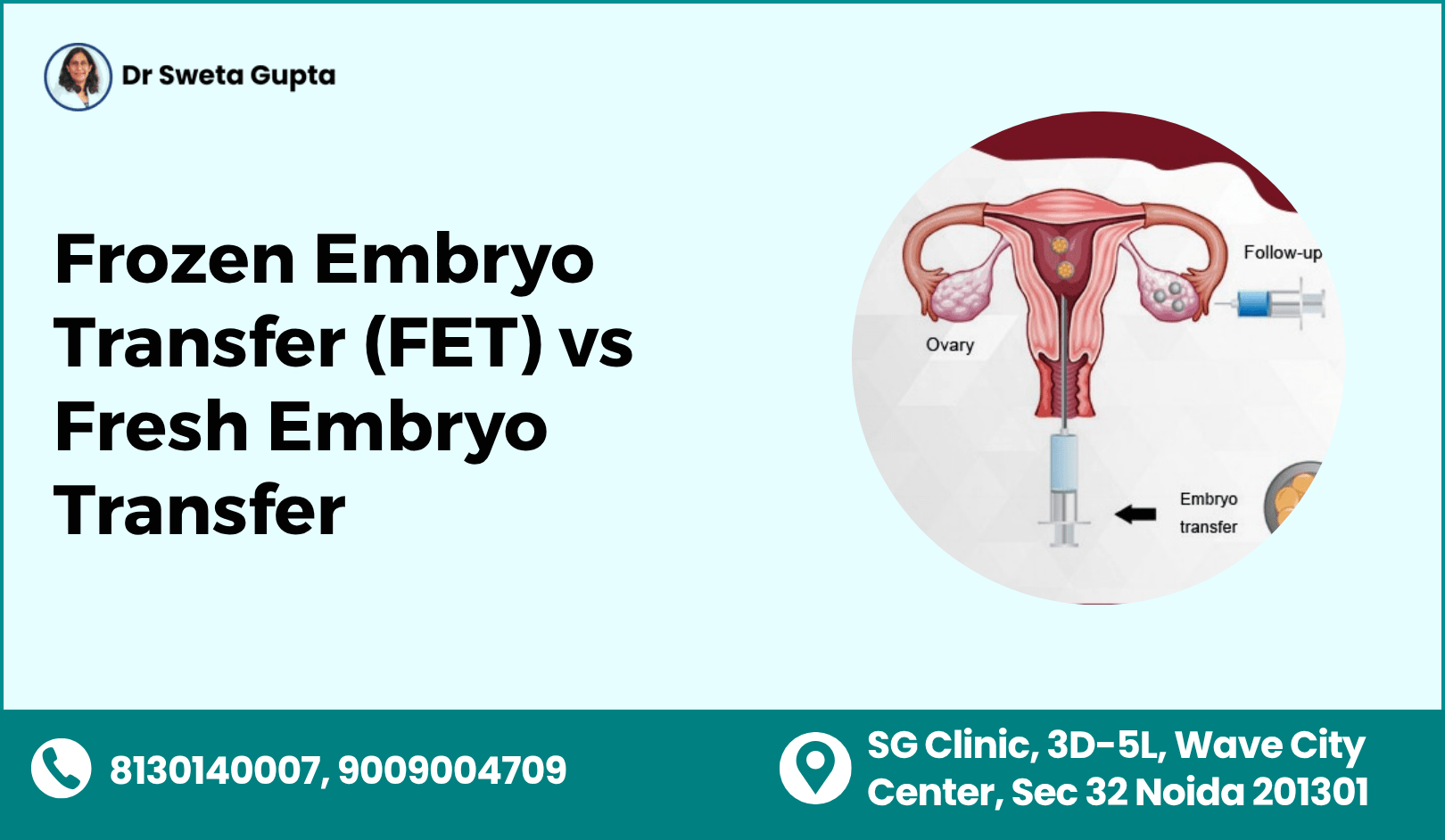
Infertility treatment has evolved dramatically over the past two decades, and one of the most debated topics in modern reproductive medicine is the choice between Frozen Embryo Transfer (FET) and Fresh Embryo Transfer. What once seemed like a straightforward procedural decision has now become a highly individualized clinical strategy driven by patient profile, hormonal environment, and embryology advancements.
Dr. Sweta Gupta, a leading fertility expert, emphasizes that the decision between fresh and frozen embryo transfer is no longer about which is “better” universally, but rather which is optimal for a specific patient at a specific time.
With improvements in cryopreservation techniques like vitrification, the success rates of frozen embryo transfers have significantly improved, often matching or even surpassing fresh transfers in certain patient groups.
Understanding the Basics: What Are Fresh and Frozen Embryo Transfers?
Fresh Embryo Transfer
Fresh embryo transfer occurs within the same IVF cycle in which eggs are retrieved, fertilized, and embryos are developed in the lab. Typically, embryos are transferred into the uterus 3–5 days after fertilization.
Frozen Embryo Transfer (FET)
Frozen embryo transfer involves cryopreserving embryos (freezing them) and transferring them in a later cycle after thawing. This allows the body to recover from ovarian stimulation and prepares the uterus in a more controlled environment.
The Science Behind the Difference
Hormonal Environment
One of the most significant differences lies in the uterine environment:
- Fresh cycles are influenced by high hormone levels due to ovarian stimulation
- FET cycles allow transfer in a more natural or hormonally controlled environment
Research suggests that the uterus may be more receptive in frozen cycles due to the absence of supraphysiological hormone levels.
Success Rates: What Does the Evidence Say?
The success rate debate is complex and varies depending on patient condition.
Key Clinical Findings
- Many studies show higher pregnancy and live birth rates with FET
- Some studies show no significant difference between the two methods
- In specific populations (low ovarian reserve), fresh transfer may perform better
Clinical Interpretation by Dr. Sweta Gupta
- FET is often superior in PCOS, high responders, or hormonal imbalance cases
- Fresh transfer may be beneficial in low responders or poor ovarian reserve patients
👉 Conclusion: There is no one-size-fits-all answer
Advantages of Frozen Embryo Transfer (FET)
1. Better Endometrial Receptivity
FET allows the uterus to recover, creating a more optimal implantation environment.
2. Reduced Risk of OHSS
Ovarian Hyperstimulation Syndrome (OHSS) is significantly reduced in FET cycles.
3. Higher Success in Specific Groups
Particularly effective for:
- PCOS patients
- High estrogen levels
- Recurrent implantation failure
4. Genetic Testing Compatibility
FET allows time for PGT (Preimplantation Genetic Testing) before transfer.
5. Improved Perinatal Outcomes
Studies show:
- Lower risk of preterm birth
- Better birth weight outcomes
Advantages of Fresh Embryo Transfer
1. Faster Treatment Timeline
No need to wait for freezing and thawing cycles.
2. Lower Cost (in some cases)
Avoids additional cryopreservation costs.
3. Suitable for Specific Patients
- Low responders
- Patients with fewer embryos
4. Avoids Freezing Risks
Though minimal, freezing and thawing may affect some embryos.
Risks and Limitations
Frozen Embryo Transfer Risks
- Potential embryo loss during thawing (rare)
- Slightly increased risk of certain complications like preeclampsia (in some cases)
Fresh Embryo Transfer Risks
- Higher risk of OHSS
- Less optimal uterine environment
- Higher risk of low birth weight in some studies
Advanced Clinical Factors Influencing Choice
1. Age of the Patient
- Younger patients → Both options viable
- Older patients → FET may provide better outcomes with genetic testing
2. Ovarian Response
- High response → FET preferred
- Low response → Fresh transfer may be better
3. Endometrial Thickness
- Poor lining → Delay and opt for FET
4. Hormonal Levels
- High estrogen → FET recommended
5. Embryo Quality
- High-quality embryos benefit from freezing and selection
Role of Technology in FET Success
Modern IVF labs use vitrification, a rapid freezing method that prevents ice crystal formation and preserves embryo integrity.
This advancement has made FET:
- Highly reliable
- Comparable or superior to fresh transfer
Personalized IVF: The Future Approach
Dr. Sweta Gupta strongly advocates for individualized treatment protocols:
Instead of asking:
👉 “Which is better?”
Ask:
👉 “Which is better for YOU?”
Case-Based Clinical Insights
Case 1: PCOS Patient
- High estrogen levels
- Risk of OHSS
✔ Recommended: Frozen Embryo Transfer
Case 2: Low Ovarian Reserve
- Limited embryos
- Urgency for implantation
✔ Recommended: Fresh Transfer
Case 3: Recurrent IVF Failure
✔ Recommended: FET with PGT
Case 4: Genetic Concerns
✔ Recommended: FET after embryo screening
Emotional and Psychological Aspects
The waiting period in FET cycles can be emotionally challenging, but it often leads to:
- Better preparedness
- Reduced stress during transfer
Fresh cycles may feel faster but can be physically and emotionally intense.
Cost Considerations
| Factor | Fresh Transfer | Frozen Transfer |
|---|---|---|
| Initial Cost | Lower | Slightly higher |
| Flexibility | Limited | High |
| Long-term Value | Moderate | High |
Latest Trends in IVF Practice
- Increasing adoption of freeze-all strategy
- Rise of single embryo transfer
- Integration of AI in embryo selection
Modern clinics are moving toward FET as a preferred approach, but not universally.
What Do Experts Say?
According to multiple fertility studies:
- FET often provides equal or higher success rates
- Outcomes depend heavily on patient condition and treatment protocol
Dr. Sweta Gupta’s Expert Recommendation
“The best embryo transfer strategy is not determined by trends but by patient-specific factors. A personalized approach always delivers the best outcomes.”
Final Verdict: FET vs Fresh – Which Should You Choose?
Choose Frozen Embryo Transfer (FET) if:
- You have PCOS
- High hormone levels
- Need genetic testing
- Want better uterine conditions
Choose Fresh Embryo Transfer if:
- You have low ovarian reserve
- Limited embryos
- Prefer faster treatment
Conclusion
The debate between Frozen and Fresh Embryo Transfer is not about superiority – it is about precision medicine.
With advancements in reproductive technology and clinical research, fertility specialists like Dr. Sweta Gupta are now able to tailor treatment plans that maximize success rates while minimizing risks.