

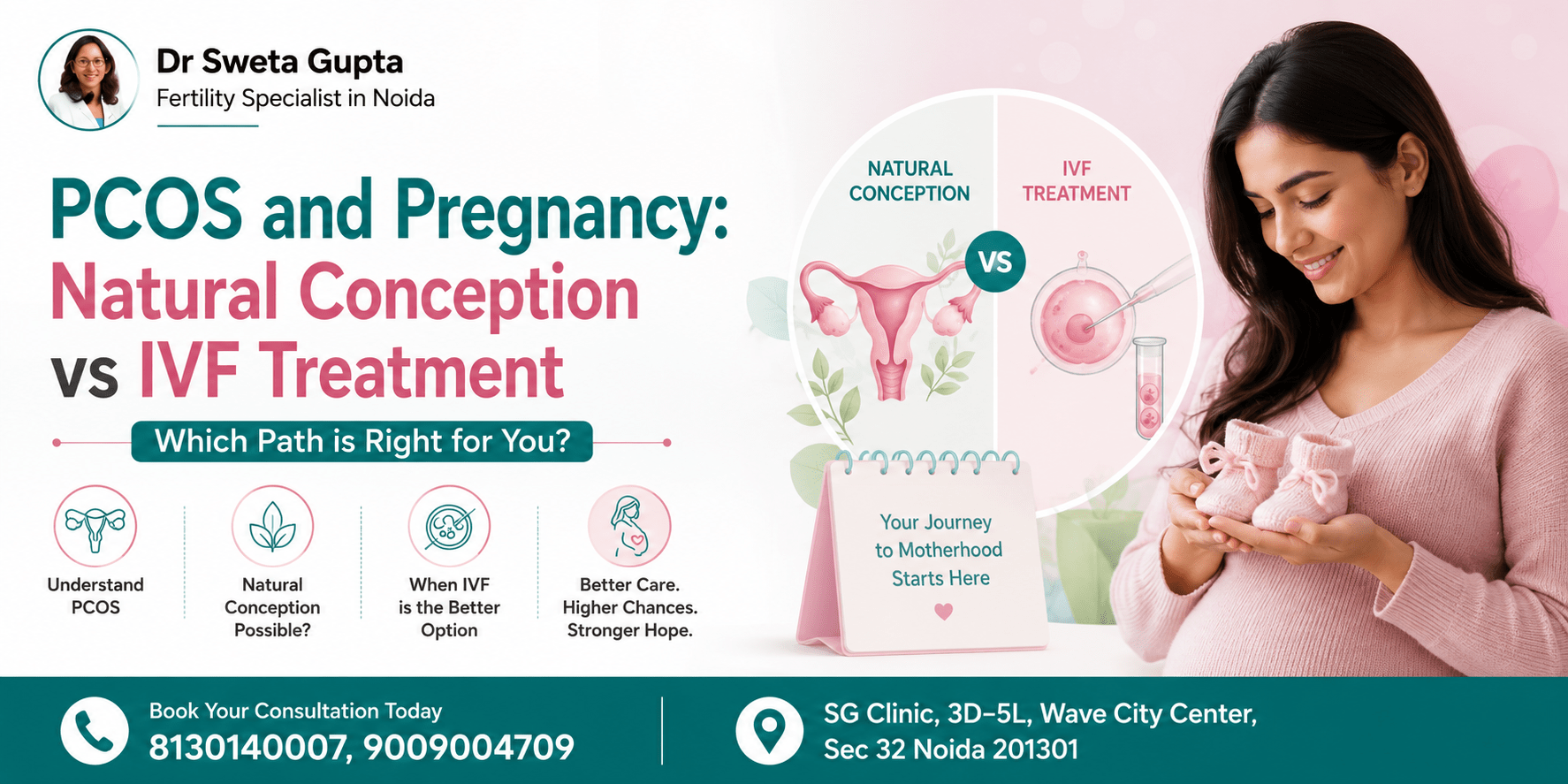
Polycystic Ovary Syndrome (PCOS) is one of the most common hormonal disorders affecting women of reproductive age. According to various studies, PCOS affects nearly 1 in 10 women worldwide and is one of the leading causes of female infertility. While many women with PCOS successfully conceive naturally, others may require fertility treatments such as ovulation induction, IUI, or IVF to achieve pregnancy.
A diagnosis of PCOS often brings uncertainty and anxiety, especially for women planning to start a family. Questions such as “Can I get pregnant naturally with PCOS?”, “Will I need IVF?”, and “What are my chances of having a healthy pregnancy?” are common concerns.
According to Dr. Sweta Gupta, a renowned IVF Specialist in Noida, the good news is that PCOS does not mean you cannot become a mother. With timely diagnosis, lifestyle modifications, medical management, and advanced fertility treatments when required, most women with PCOS can achieve successful pregnancies.
Understanding PCOS
Polycystic Ovary Syndrome is a hormonal and metabolic disorder that affects the ovaries and reproductive system.
Women with PCOS typically experience:
- Irregular ovulation
- Hormonal imbalance
- Elevated androgen levels
- Multiple immature follicles in the ovaries
- Insulin resistance
These factors can interfere with normal ovulation and make conception more difficult.
What Causes PCOS?
The exact cause of PCOS remains unknown, but several factors contribute to its development.
1. Insulin Resistance
Many women with PCOS have insulin resistance, causing the body to produce excess insulin.
High insulin levels stimulate the ovaries to produce more male hormones (androgens), which interfere with ovulation.
2. Hormonal Imbalance
Elevated androgen levels may lead to:
- Irregular periods
- Acne
- Excess facial hair
- Difficulty conceiving
3. Genetics
PCOS often runs in families.
Women with a family history of PCOS are more likely to develop the condition.
4. Inflammation
Chronic low-grade inflammation may contribute to hormonal disturbances and ovarian dysfunction.
Common Symptoms of PCOS
Symptoms vary from woman to woman.
Common signs include:
Irregular Menstrual Cycles
Periods may be:
- Delayed
- Infrequent
- Absent
Weight Gain
Many women experience difficulty losing weight.
Acne
Persistent acne often continues into adulthood.
Excess Hair Growth
Hair growth may occur on:
- Face
- Chest
- Back
- Abdomen
Hair Thinning
Some women experience scalp hair loss.
Difficulty Conceiving
Ovulation problems often make pregnancy challenging.
How PCOS Affects Fertility
Ovulation is essential for natural conception.
Women with PCOS often:
- Ovulate irregularly
- Ovulate less frequently
- Do not ovulate at all
Without regular ovulation, the chances of pregnancy decrease significantly.
Additional fertility challenges may include:
- Poor egg quality
- Obesity-related fertility issues
- Endometrial abnormalities
- Increased miscarriage risk
However, fertility outcomes can improve dramatically with proper treatment.
Can Women with PCOS Conceive Naturally?
Yes.
Many women with PCOS become pregnant naturally.
The likelihood depends on:
- Age
- Weight
- Severity of PCOS
- Ovulation frequency
- Overall reproductive health
Women with mild PCOS may conceive naturally after lifestyle modifications and fertility optimization.
Natural Conception with PCOS
For many women, the first step is improving fertility naturally.
1. Weight Management
Even a modest weight loss of 5–10% can significantly improve ovulation.
Benefits include:
- Better hormone balance
- Improved insulin sensitivity
- More regular periods
- Increased pregnancy chances
2. Healthy Diet
A fertility-friendly diet should include:
- Lean proteins
- Whole grains
- Fresh vegetables
- Fruits
- Healthy fats
Avoid:
- Processed foods
- Excess sugar
- Refined carbohydrates
3. Regular Exercise
Physical activity improves:
- Insulin resistance
- Hormonal balance
- Ovulation frequency
Recommended activities:
- Walking
- Yoga
- Cycling
- Swimming
4. Stress Reduction
Stress can negatively affect hormonal health.
Helpful techniques include:
- Meditation
- Mindfulness
- Breathing exercises
- Counseling
5. Tracking Ovulation
Ovulation monitoring helps identify fertile days.
Methods include:
- Ultrasound monitoring
- Ovulation predictor kits
- Basal body temperature tracking
When Natural Conception May Not Be Enough
Some women continue to experience infertility despite lifestyle changes.
Medical intervention may be recommended if:
- Pregnancy does not occur after 6–12 months
- Ovulation remains absent
- Age is above 35
- Additional fertility issues exist
Fertility Treatments Before IVF
IVF is not always the first treatment option.
Dr. Sweta Gupta often recommends less invasive fertility treatments initially.
Ovulation Induction
Medications stimulate egg release.
Common options include:
- Letrozole
- Clomiphene Citrate
These medications help restore ovulation.
Metformin Therapy
Metformin improves insulin sensitivity and may enhance ovulation.
It is particularly beneficial for women with insulin resistance.
IUI (Intrauterine Insemination)
IUI involves placing prepared sperm directly into the uterus during ovulation.
This treatment may be considered when:
- Ovulation is restored
- Mild male infertility exists
When Is IVF Recommended for PCOS?
IVF may be recommended when:
- Ovulation induction fails
- Multiple IUI cycles are unsuccessful
- Age is a significant factor
- Severe infertility exists
- Additional reproductive issues are present
IVF offers the highest success rates among fertility treatments.
What Is IVF?
In Vitro Fertilization (IVF) involves:
- Ovarian stimulation
- Egg retrieval
- Fertilization in the laboratory
- Embryo development
- Embryo transfer
The goal is to achieve pregnancy by transferring healthy embryos into the uterus.
IVF Process for Women with PCOS
Step 1: Fertility Assessment
Comprehensive evaluation includes:
- Hormonal testing
- Ultrasound examination
- Ovarian reserve testing
- Semen analysis
Step 2: Ovarian Stimulation
Fertility medications stimulate multiple eggs.
Women with PCOS often respond strongly to stimulation and require careful monitoring.
Step 3: Egg Retrieval
Mature eggs are collected using ultrasound guidance.
The procedure is minimally invasive and performed under sedation.
Step 4: Fertilization
Eggs are fertilized using:
- Conventional IVF
- ICSI (Intracytoplasmic Sperm Injection)
Step 5: Embryo Culture
Embryos develop in a specialized laboratory for several days.
Step 6: Embryo Transfer
Selected embryos are transferred into the uterus.
Step 7: Pregnancy Testing
A blood test confirms pregnancy approximately two weeks later.
Natural Conception vs IVF: Comparison
| Factor | Natural Conception | IVF Treatment |
|---|---|---|
| Cost | Lower | Higher |
| Medical Intervention | Minimal | Advanced |
| Success Speed | Variable | Faster in many cases |
| Ovulation Requirement | Necessary | Controlled medically |
| Pregnancy Chances | Depends on ovulation | Generally higher |
| Monitoring | Limited | Extensive |
| Suitable for Severe PCOS | Sometimes | Yes |
Advantages of Natural Conception
- Lower cost
- No invasive procedures
- Minimal medications
- Reduced treatment stress
For women with mild PCOS and regular ovulation, natural conception may be highly achievable.
Advantages of IVF for PCOS
IVF offers several benefits:
Higher Success Rates
Particularly for women with prolonged infertility.
Better Embryo Selection
Only healthy embryos are transferred.
Controlled Ovulation
Reduces uncertainty associated with irregular cycles.
Fertility Preservation Options
Embryos can be frozen for future use.
IVF Success Rates in Women with PCOS
Women with PCOS often produce multiple eggs during IVF, which can improve outcomes.
Success depends on:
- Age
- Egg quality
- Embryo quality
- Uterine health
- Overall health
Many women with PCOS achieve excellent IVF success rates when managed appropriately.
Risks of IVF in PCOS Patients
Ovarian Hyperstimulation Syndrome (OHSS)
Women with PCOS are more susceptible to OHSS.
Modern protocols have significantly reduced this risk.
Multiple Pregnancy
Multiple embryo transfer increases twin pregnancy risk.
Single embryo transfer is increasingly preferred.
Pregnancy Risks Associated with PCOS
Women with PCOS may face higher risks of:
- Gestational diabetes
- High blood pressure
- Preeclampsia
- Miscarriage
- Preterm birth
Proper prenatal care helps minimize these risks.
Lifestyle Tips to Improve Pregnancy Chances with PCOS
Maintain Healthy Weight
Eat Balanced Meals
Stay Physically Active
Sleep Well
Reduce Stress
Avoid Smoking and Alcohol
Follow Medical Advice Consistently
These habits improve fertility outcomes regardless of the conception method.
Why Choose Dr. Sweta Gupta for PCOS Fertility Treatment in Noida?
Dr. Sweta Gupta is a trusted IVF Specialist in Noida with extensive experience managing PCOS-related infertility.
Her approach includes:
- Personalized fertility evaluation
- Evidence-based treatment plans
- Advanced IVF techniques
- Compassionate patient support
- Comprehensive reproductive care
She focuses on identifying the most effective and least invasive treatment path for each patient.
Frequently Asked Questions (FAQs)
Can I get pregnant naturally if I have PCOS?
Yes. Many women with PCOS conceive naturally, especially with lifestyle modifications and ovulation management.
Does PCOS always require IVF?
No. Many women conceive through natural methods, ovulation induction, or IUI before considering IVF.
What is the best age to seek fertility treatment for PCOS?
Early evaluation is beneficial, especially if pregnancy has not occurred after 6–12 months of trying.
Is IVF more successful for women with PCOS?
Women with PCOS often respond well to IVF due to higher egg production, but success depends on multiple factors.
Can weight loss improve fertility in PCOS?
Yes. Even a small reduction in body weight can significantly improve ovulation and pregnancy rates.
Is PCOS curable?
PCOS is a long-term condition, but symptoms can be effectively managed with proper treatment and lifestyle changes.
How long should I try naturally before seeking fertility help?
Women under 35 should consider evaluation after 12 months of trying, while women over 35 should seek help after 6 months.
Does IVF guarantee pregnancy?
No treatment can guarantee pregnancy, but IVF offers one of the highest success rates among fertility treatments.
Can PCOS affect egg quality?
In some cases, PCOS may impact egg quality, though many women with PCOS produce healthy eggs and embryos.
What is the cost of IVF for PCOS patients?
Costs vary based on individual treatment requirements, medications, and additional procedures.
Conclusion
PCOS is one of the most common causes of infertility, but it is also one of the most treatable. Many women successfully achieve pregnancy naturally through lifestyle changes and ovulation management, while others benefit from advanced fertility treatments such as IVF.
The choice between natural conception and IVF depends on several factors, including age, fertility history, severity of PCOS, and overall reproductive health. Early diagnosis, expert guidance, and personalized treatment planning can significantly improve outcomes.
With the support of experienced fertility specialists like Dr. Sweta Gupta, IVF Specialist in Noida, women with PCOS can confidently navigate their fertility journey and move closer to achieving their dream of parenthood.
Every fertility journey is unique, and every woman deserves a treatment plan tailored to her individual needs, goals, and hopes for the future. PCOS and Pregnancy: Natural Conception vs IVF Treatment presents critical insights into the challenges and options available to women experiencing fertility issues. For those with polycystic ovary syndrome (PCOS), understanding the advantages and disadvantages of natural conception compared to in vitro fertilization (IVF) is essential. A personalized approach allows women to explore the most suitable methods for achieving their pregnancy goals. Ultimately, informed decision-making plays a pivotal role in enhancing the chances of successful conception and fulfilling their aspirations of motherhood.