

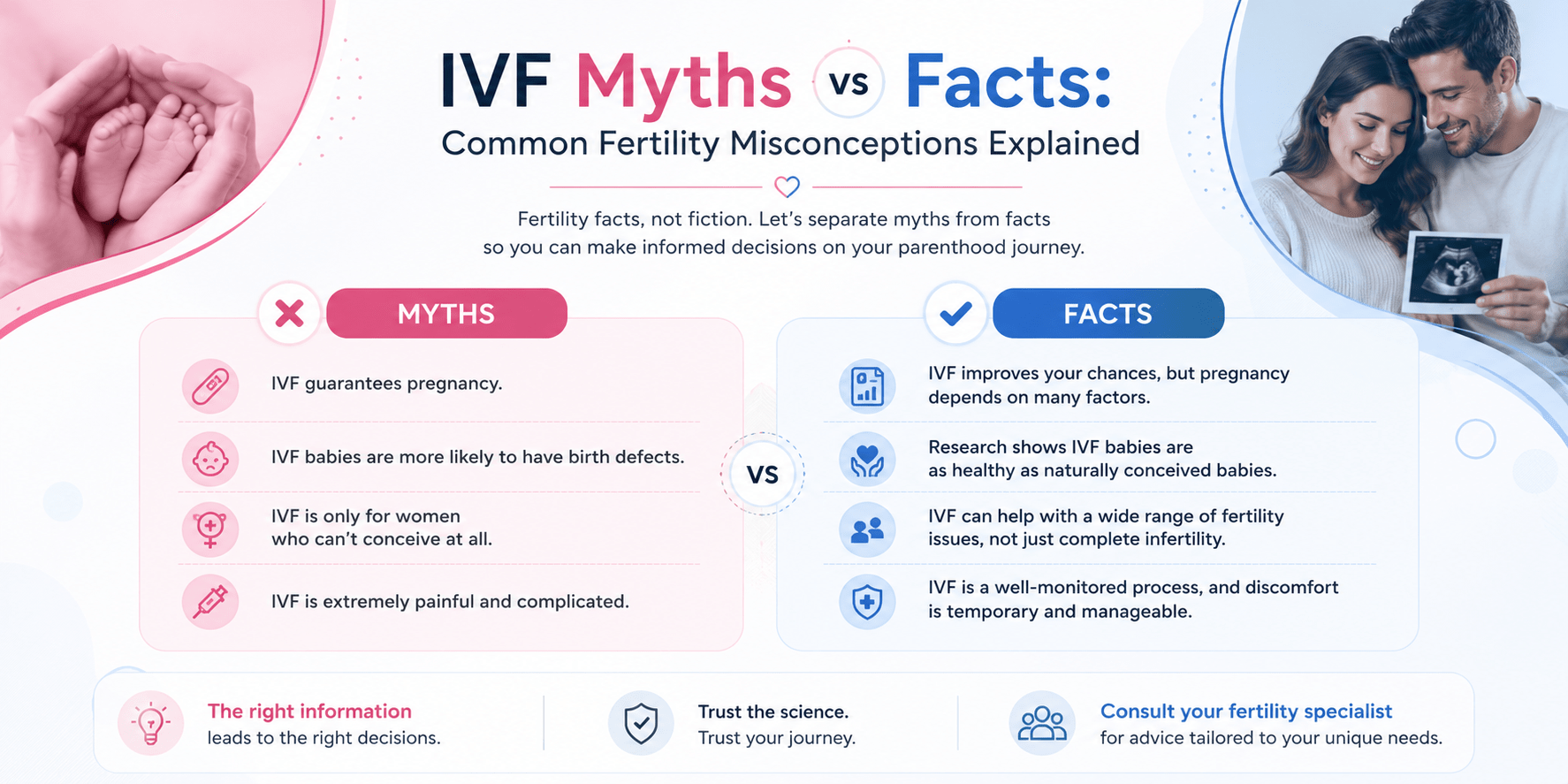
Myth 1: IVF Babies Are Not as Healthy as Naturally Conceived BabiesFact:
Babies born through IVF are generally as healthy as naturally conceived babies. While there is a slightly higher risk of preterm birth and low birth weight (mainly due to multiple pregnancies), single embryo transfer techniques have significantly reduced these risks. Long-term studies show no major difference in cognitive or physical development.
Myth 2: IVF Always Results in Twins or TripletsFact:
This was partially true in the past when multiple embryos were transferred. Today, with advanced techniques like Single Embryo Transfer (SET), the chances of multiple pregnancies have dropped dramatically. Many clinics now achieve high success rates with single embryo transfers, reducing health risks for both mother and baby.
Myth 3: IVF Has a 100% Success RateFact:
Success rates vary between 30% to 60% per cycle depending on the woman’s age, quality of eggs and sperm, and clinic expertise. Women under 35 generally have higher success rates (around 50-55% per cycle). Multiple cycles may be needed for many couples.
Myth 4: IVF is Extremely PainfulFact:
The procedure is not as painful as many believe. Egg retrieval is done under mild sedation or anesthesia. Most women describe the injections as similar to daily diabetes injections. Post-procedure cramping is common but manageable with medication.
Myth 5: Only Older Women or Couples Need IVFFact:
While age is a major factor, many young couples also require IVF due to conditions like:
- Blocked fallopian tubes
- Severe male infertility
- Endometriosis
- Unexplained infertility
- Genetic disorders
IVF is now common even among couples in their late 20s and early 30s.
Myth 6: IVF Causes CancerFact:
Multiple large-scale studies have found no strong link between IVF hormones and increased cancer risk (breast, ovarian, or uterine). Some early studies raised concerns, but recent research has largely ruled out any significant connection.
Myth 7: IVF is Only for Rich PeopleFact:
While IVF can be expensive, costs have become more affordable over the years. Many countries and insurance companies now offer partial or full coverage. EMI options, government schemes, and fertility packages have made it accessible to middle-class families as well.
Myth 8: You Need Bed Rest After Embryo TransferFact:
Scientific evidence shows that bed rest after embryo transfer does not improve success rates. Most doctors recommend resuming light daily activities. Excessive rest may even reduce blood flow. A normal routine with some precautions is usually advised.
Myth 9: All Fertility Clinics Offer the Same QualityFact:
Success rates vary greatly between clinics. Factors like laboratory standards, doctor experience, embryologist expertise, and use of advanced technology (such as time-lapse imaging, PGS/PGT-A testing) make a huge difference. Always check live success rates and reviews before choosing a clinic.
Myth 10: Lifestyle Doesn’t Matter If You’re Doing IVFFact:
Lifestyle plays a very important role even in IVF. Maintaining a healthy weight, quitting smoking, limiting alcohol, managing stress, and following a proper diet can significantly improve egg and sperm quality and overall success rates.
When Should You Consider IVF?You should consult a fertility specialist if:
- You’ve been trying to conceive for 12 months (or 6 months if you’re over 35)
- You have known fertility issues
- You want to preserve fertility for the future (egg freezing)
Final ThoughtsIVF is a safe, effective, and scientifically proven fertility treatment. While it comes with emotional and financial challenges, the majority of couples who complete treatment eventually become parents.Don’t let myths delay your journey to parenthood.If you’re struggling with infertility, consult a qualified fertility specialist who can give you personalized guidance based on your medical history.