

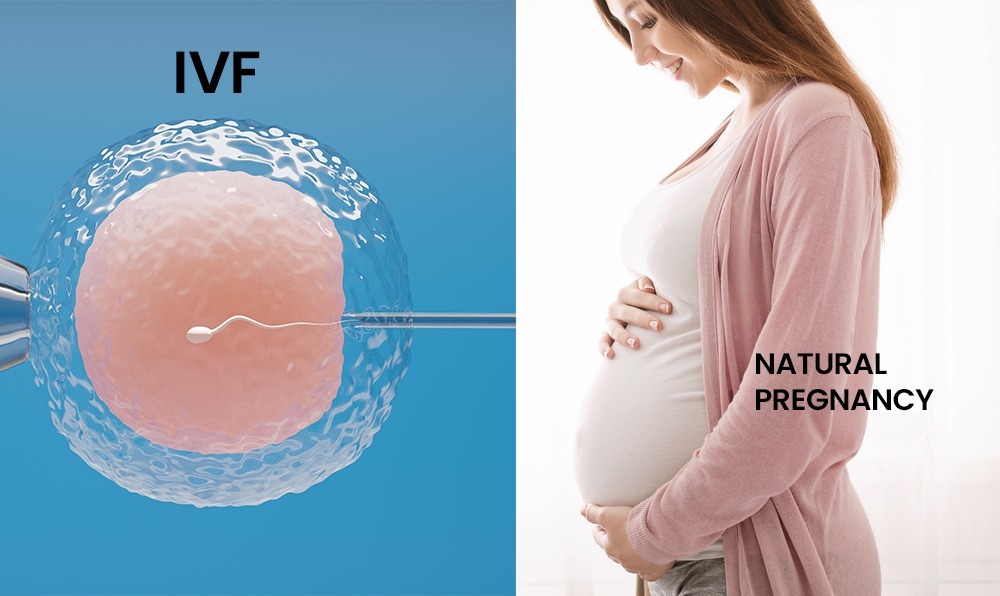
Pregnancy is one of the most life-changing experiences in a person’s life. For many couples, the journey to parenthood begins naturally, while for others, medical assistance becomes an essential part of achieving the dream of having a baby. In today’s fast-paced lifestyle, increasing stress levels, hormonal disorders, delayed parenthood, environmental influences, and fertility-related medical conditions have significantly impacted reproductive health, making fertility treatments more common than ever.
One of the most frequently asked questions among hopeful parents is whether natural pregnancy is better than IVF pregnancy. Couples often wonder if IVF pregnancy feels different, whether IVF babies are as healthy as naturally conceived babies, and if IVF pregnancy carries more risks. These concerns are understandable because fertility treatment can feel emotionally overwhelming, especially when individuals are trying to make informed decisions about their reproductive future.
The truth is that both natural pregnancy and IVF pregnancy ultimately aim for the same outcome—a healthy pregnancy and the birth of a healthy baby. However, the journey toward conception differs considerably between the two.
Understanding Natural Pregnancy
What Is Natural Pregnancy?
Natural pregnancy occurs when conception happens through sexual intercourse without assisted reproductive medical procedures. In this process, sperm fertilizes the egg naturally inside the female reproductive tract.
Natural conception is a complex biological event requiring precise coordination between hormones, reproductive organs, egg quality, sperm health, and timing.
For pregnancy to occur naturally, several reproductive mechanisms must function effectively.
How Natural Pregnancy Happens
The natural conception process includes multiple biological stages:
Ovulation
During ovulation, a mature egg is released from one of the ovaries. This generally occurs around the middle of the menstrual cycle.
Sperm Travel
After intercourse, sperm travel through the cervix into the uterus and toward the fallopian tubes.
Fertilization
If sperm successfully reaches the egg in the fallopian tube, fertilization occurs.
Embryo Formation
The fertilized egg develops into an embryo as cell division begins.
Implantation
The embryo travels to the uterus and attaches to the uterine lining, establishing pregnancy.
Requirements for Natural Pregnancy
Natural conception depends on multiple reproductive health factors.
Healthy Ovulation
The ovaries must regularly release mature eggs.
Good Egg Quality
Egg health significantly affects fertilization success.
Healthy Sperm Parameters
Successful conception requires:
- Good sperm count
- Healthy sperm motility
- Proper sperm morphology
Open Fallopian Tubes
Blocked fallopian tubes prevent sperm and egg from meeting.
Healthy Uterus
The uterine lining must support implantation.
Hormonal Balance
Hormones regulate ovulation, implantation, and pregnancy maintenance.
Challenges in Natural Pregnancy
Natural conception may seem simple, but many couples face fertility challenges.
Common issues include:
- Polycystic Ovary Syndrome (PCOS)
- Endometriosis
- Male infertility
- Hormonal imbalance
- Low ovarian reserve
- Thyroid disorders
- Irregular ovulation
- Tubal blockage
- Unexplained infertility
When these factors interfere, fertility support may become necessary.
Understanding IVF Pregnancy
What Is IVF Pregnancy?
IVF stands for In Vitro Fertilization.
It is an assisted reproductive technology in which fertilization occurs outside the body in a laboratory environment. Once embryos develop, they are transferred into the uterus to establish pregnancy.
IVF has helped millions of couples worldwide overcome infertility challenges.
How IVF Works
Fertility Assessment
Before IVF begins, specialists evaluate fertility health through:
- Hormone tests
- Ultrasound scans
- Ovarian reserve testing
- Semen analysis
- Uterine assessment
Ovarian Stimulation
Fertility medications stimulate the ovaries to produce multiple mature eggs instead of a single egg.
Egg Retrieval
A minimally invasive procedure retrieves eggs from the ovaries.
Fertilization in the Laboratory
Eggs and sperm are combined in controlled conditions.
In some cases, ICSI (Intracytoplasmic Sperm Injection) may be used.
Embryo Development
Embryologists monitor embryo growth for several days.
Embryo Transfer
Healthy embryos are transferred into the uterus.
Pregnancy Confirmation
Blood testing confirms successful implantation.
When IVF Is Recommended
IVF may be advised for several medical conditions.
Female Fertility Issues
Including:
- Blocked fallopian tubes
- Severe endometriosis
- Ovulation disorders
- Low ovarian reserve
Male Fertility Issues
Including:
- Low sperm count
- Poor sperm motility
- Abnormal sperm shape
Unexplained Infertility
When no clear cause is identified.
Advanced Maternal Age
Age-related fertility decline may reduce natural conception chances.
Recurrent Pregnancy Loss
IVF with genetic screening may help in selected cases.
Natural vs IVF Pregnancy: Key Differences
Difference in Conception Method
Natural Pregnancy
Conception occurs inside the female body.
IVF Pregnancy
Fertilization occurs in a fertility laboratory.
This is the most fundamental difference.
Difference in Medical Involvement
Natural Pregnancy
Little or no medical intervention.
IVF Pregnancy
Requires:
- Fertility consultations
- Hormonal medications
- Ultrasounds
- Procedures
- Lab monitoring
IVF is medically supervised from beginning to pregnancy confirmation.
Difference in Timeline
Natural Pregnancy
Timing is uncertain.
Some couples conceive immediately, others may wait months or years.
IVF Pregnancy
A structured process with defined treatment stages.
Difference in Cost
Natural Pregnancy
Lower immediate medical expenses.
IVF Pregnancy
Costs may include:
- Consultations
- Testing
- Medication
- Procedures
- Laboratory support
- Monitoring
Difference in Emotional Experience
Natural Pregnancy
Can feel spontaneous and emotionally natural.
Repeated failed attempts may still create stress.
IVF Pregnancy
Emotionally intense due to:
- Anticipation
- Financial investment
- Treatment uncertainty
- Hormonal changes
- Repeated medical visits
Pregnancy Symptoms: Natural vs IVF Pregnancy
Are Symptoms Different?
One of the most common myths is that IVF pregnancy feels entirely different.
The reality is that once pregnancy is established, symptoms are largely similar.
Common symptoms include:
- Nausea
- Fatigue
- Mood changes
- Breast tenderness
- Food cravings
- Frequent urination
- Mild cramping
Additional IVF-Related Early Experiences
Because IVF involves medication, some patients may temporarily experience:
- Bloating
- Injection soreness
- Pelvic discomfort
- Hormonal fluctuations
These effects are treatment-related, not pregnancy-related.
Success Rates: Natural Pregnancy vs IVF Pregnancy
Natural Pregnancy Success Rates
Monthly natural conception rates depend heavily on age.
Women Under 30
Higher fertility potential.
Women 30 to 35
Gradual decline begins.
Women Over 35
Noticeable fertility reduction.
Women Over 40
Natural conception becomes significantly more difficult.
IVF Success Rates
Success depends on:
- Maternal age
- Egg quality
- Embryo quality
- Sperm quality
- Fertility diagnosis
- Uterine health
IVF offers hope when natural conception is difficult.
Is IVF Pregnancy More Risky?
Common Misconception About IVF Risks
Many people assume IVF automatically creates a high-risk pregnancy.
This is inaccurate.
Pregnancy risk depends more on:
- Age
- Pre-existing health conditions
- Fertility diagnosis
- Multiple pregnancies
- Lifestyle factors
Situations That May Increase Monitoring
IVF pregnancies may require closer observation if:
- Maternal age is higher
- There is a history of miscarriage
- Multiple embryos were transferred
- Underlying medical issues exist
Are IVF Babies Healthy?
Understanding Baby Health Outcomes
A major concern among parents is whether IVF babies are healthy.
Research and modern clinical experience show that IVF babies are generally healthy.
Baby health depends more on:
- Genetics
- Prenatal care
- Maternal health
- Nutrition
- Medical history
The method of conception does not define the child’s future health.
Emotional Journey: Natural vs IVF Pregnancy
Emotional Experience in Natural Conception
Natural conception may seem less stressful initially.
However, prolonged unsuccessful attempts can cause:
- Anxiety
- Relationship strain
- Self-doubt
- Emotional fatigue
Emotional Experience During IVF
IVF may involve additional stress because of:
- Treatment expectations
- Financial pressure
- Hormonal changes
- Fear of failure
- Emotional exhaustion
Mental wellness support is important.
Lifestyle During Pregnancy
Healthy Nutrition
Both pregnancy journeys require balanced nutrition.
Important nutrients include:
- Folic acid
- Iron
- Calcium
- Protein
- Omega-3 fats
- Hydration
Physical Activity
Moderate exercise supports healthy pregnancy unless medically restricted.
Examples:
- Walking
- Prenatal yoga
- Stretching
- Guided movement
Stress Management
Managing emotional stress is essential.
Helpful strategies:
- Counseling
- Meditation
- Breathing exercises
- Support groups
When to See a Fertility Specialist
General Fertility Guidance
Consult a fertility specialist if:
Under Age 35
Trying for 12 months without success.
Over Age 35
Trying for 6 months without success.
Immediate Evaluation Situations
Seek earlier evaluation for:
- Irregular periods
- Endometriosis
- Known male infertility
- Recurrent miscarriage
- Hormonal disorders
Who Should Consider IVF?
Ideal Candidates for IVF
IVF may be suitable for:
- Tubal infertility
- Male infertility
- Low ovarian reserve
- Failed IUI cycles
- Advanced maternal age
- Recurrent implantation failure
- Unexplained infertility
Common IVF Myths
Myth: IVF Babies Are Different
Reality: IVF children develop normally.
Myth: IVF Always Works
Reality: Success depends on multiple biological factors.
Myth: IVF Is Only for Older Women
Reality: Younger individuals may also need IVF.
Myth: IVF Means Bed Rest
Reality: Modern IVF recovery guidance is more balanced.
Myth: Natural Pregnancy Is Always Better
Reality: Healthy parenthood matters most.
Natural Pregnancy After IVF
Is It Possible?
Yes, depending on the underlying fertility condition.
Some couples conceive naturally after IVF treatment.
This varies individually.
Delivery Experience: Natural vs IVF Pregnancy
Is Delivery Different?
The delivery process depends on obstetric factors, not conception method.
Delivery decisions depend on:
- Baby position
- Maternal health
- Pregnancy complications
- Labor progress
IVF does not automatically mean cesarean delivery.
Fertility Preservation Options
Modern Family Planning Solutions
Fertility medicine now offers preservation strategies.
Including:
- Egg freezing
- Embryo freezing
- Fertility preservation before medical treatment
These options support future family planning.
Why Choose Dr. Sweta Gupta – IVF Specialist in Noida
Expert Fertility Care in Noida
Choosing the right fertility doctor matters significantly.
Dr. Sweta Gupta offers patient-centered reproductive care with a focus on individualized fertility planning.
Patients often seek fertility consultation for:
- IVF treatment in Noida
- Infertility diagnosis
- Fertility counseling
- Reproductive treatment planning
- Second opinions
Personalized Fertility Support
Treatment plans are based on individual needs, not generalized assumptions.
Focus areas include:
- Diagnostic clarity
- Personalized fertility roadmaps
- Transparent treatment discussions
- Compassionate patient care
Frequently Asked Questions About Natural vs IVF Pregnancy
Is IVF pregnancy painful?
The treatment process may involve temporary discomfort, but pregnancy symptoms are similar to natural pregnancy.
Can IVF pregnancy become normal pregnancy?
Yes. Once pregnancy stabilizes, management often becomes similar.
Are IVF babies weaker?
No. IVF babies are generally healthy.
Does IVF increase miscarriage risk?
Risk depends more on age and health factors.
Is IVF pregnancy more stressful?
Emotionally, IVF can feel more intense due to treatment involvement.
Can PCOS patients conceive naturally?
Yes, some can. Others may require fertility support.
Does IVF guarantee pregnancy?
No fertility treatment guarantees success.
How many IVF cycles are needed?
This varies depending on fertility diagnosis and response.
Final Thoughts on Natural vs IVF Pregnancy
Natural pregnancy and IVF pregnancy are simply different paths toward the same dream—parenthood.
Natural conception may be possible for many couples, while IVF becomes a life-changing option for others facing infertility challenges.
Neither journey should be judged as superior.
The real priority is:
- Healthy conception
- Safe pregnancy
- Healthy baby
- Emotional well-being
- Expert medical support
If conception has become difficult, early fertility evaluation can improve your options.