

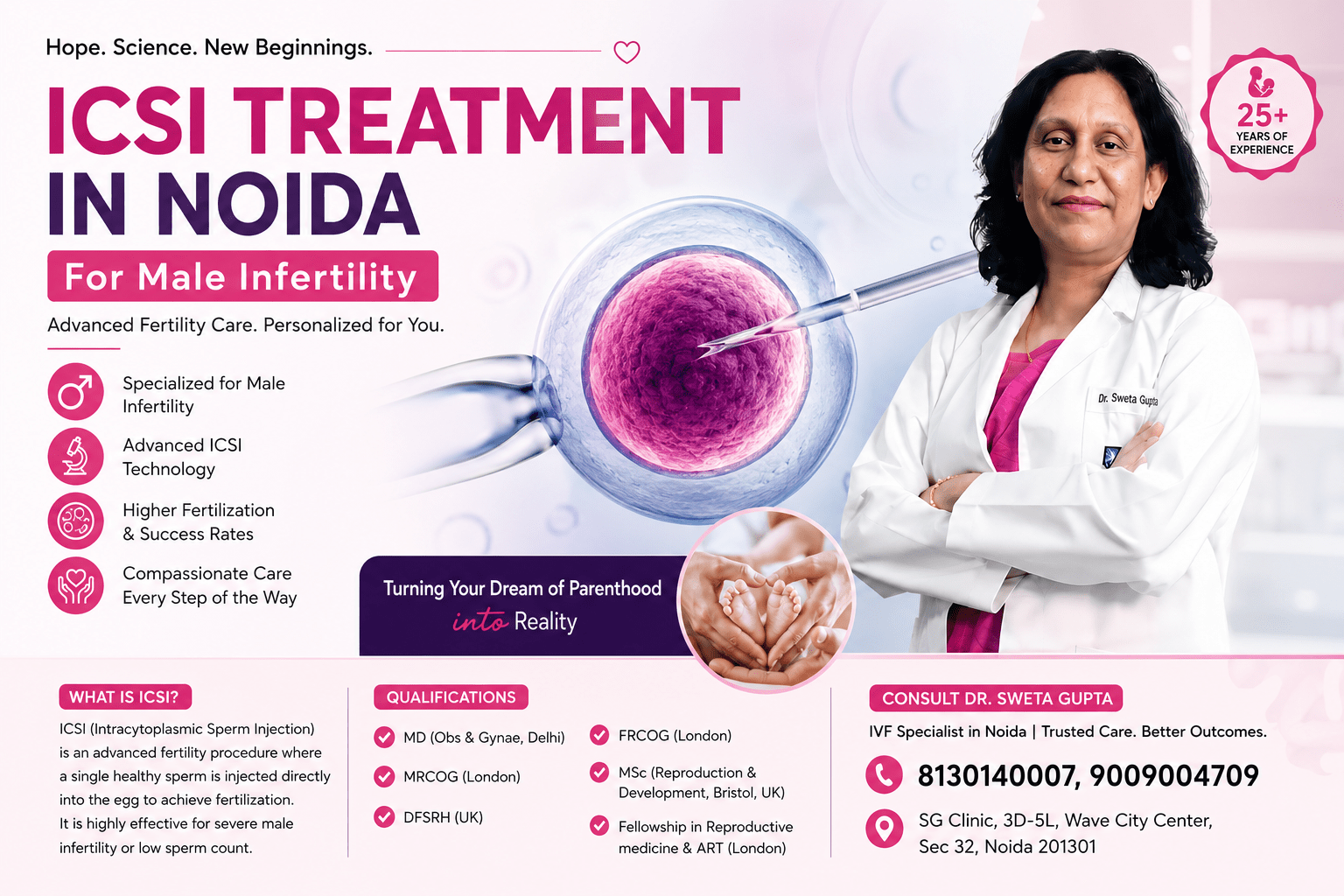
Male infertility is one of the most common yet least discussed reasons for difficulty in conceiving. Many couples are surprised to learn that infertility is not only a female health issue; in nearly 40–50% of infertile couples, male factors contribute either fully or partially. Fortunately, advances in reproductive medicine have made parenthood possible for many couples through ICSI (Intracytoplasmic Sperm Injection).
If you are searching for the best ICSI treatment in Noida, understanding the procedure, success rate, cost, and who should undergo ICSI is essential before making a decision. This detailed guide explains everything you need to know about ICSI for male infertility and how consulting an experienced IVF specialist in Noida can improve your chances of a successful pregnancy.
At SG Clinic, Noida, Dr. Sweta Gupta, a highly experienced IVF doctor in Noida, offers advanced fertility evaluation and personalized ICSI treatment plans for couples facing male infertility.
What Is ICSI?
Intracytoplasmic Sperm Injection (ICSI) is an advanced fertility treatment performed as part of an IVF cycle. In this procedure, a single healthy sperm is selected and injected directly into the cytoplasm of a mature egg using a microscopic needle. This bypasses many natural barriers that prevent fertilization.
ICSI was developed primarily for severe male infertility but is now widely used in various fertility situations.
Difference Between IVF and ICSI
| IVF | ICSI |
|---|---|
| Eggs and sperm are placed together in a laboratory dish | A single sperm is injected directly into the egg |
| Fertilization occurs naturally in the dish | Fertilization is assisted by an embryologist |
| Requires a reasonable number of motile sperm | Can be performed even with very low sperm counts |
| Less suitable for severe male infertility | Preferred for severe male infertility |
For couples with significant sperm abnormalities, ICSI often provides a much better chance of fertilization than conventional IVF.
Understanding Male Infertility
Male infertility refers to a man’s inability to contribute to conception despite regular unprotected intercourse for at least one year. Common causes include:
- Low sperm count (oligospermia)
- No sperm in semen (azoospermia)
- Poor sperm motility (asthenospermia)
- Abnormal sperm shape (teratozoospermia)
- Varicocele
- Hormonal disorders
- Genetic abnormalities
- Infections affecting the reproductive tract
- Erectile or ejaculation problems
- Previous surgery or injury
- Lifestyle factors such as smoking, alcohol, obesity, stress, and heat exposure
A thorough evaluation by a fertility specialist is necessary to identify the underlying cause.
When Is ICSI Recommended?
An IVF specialist in Noida may recommend ICSI in the following situations:
Severe Male Factor Infertility
- Sperm count below normal
- Very poor motility
- Severe abnormal morphology
Azoospermia
Sperm may be surgically retrieved from the testis or epididymis and used for ICSI.
Previous IVF Fertilization Failure
If eggs did not fertilize in a previous IVF cycle, ICSI can significantly improve fertilization rates.
Frozen Sperm Samples
ICSI is often preferred when sperm quantity is limited.
Unexplained Infertility
Some couples with unexplained infertility may benefit from ICSI, especially after failed treatments.
Advanced Maternal Age
When the number of available eggs is limited, ICSI helps maximize fertilization opportunities.
Who Is a Good Candidate for ICSI?
You may be a good candidate if:
- You have severe male infertility.
- You have had failed IVF cycles.
- Sperm retrieval is required surgically.
- You have ejaculation disorders.
- You have antisperm antibodies.
- You have a history of poor fertilization.
A consultation with an experienced IVF doctor in Noida is the best way to determine whether ICSI is appropriate for your case.
Step-by-Step ICSI Procedure
1. Initial Consultation and Fertility Assessment
Both partners undergo evaluation, including:
Female Partner
- Hormonal profile (AMH, FSH, LH, TSH, prolactin)
- Ultrasound scan
- Ovarian reserve assessment
- Uterine evaluation
Male Partner
- Semen analysis
- Hormonal tests if needed
- Ultrasound if indicated
- Genetic testing in selected cases
2. Ovarian Stimulation
Fertility injections are given for about 8–12 days to stimulate multiple eggs. Ultrasound monitoring tracks follicle growth.
3. Trigger Injection
When follicles reach adequate size, a trigger injection is administered to mature the eggs.
4. Egg Retrieval
Approximately 34–36 hours later, eggs are collected through a minor ultrasound-guided procedure under sedation.
5. Sperm Collection
Semen is collected on the same day. If no sperm are present in the semen, sperm may be retrieved surgically using techniques such as:
- TESA (Testicular Sperm Aspiration)
- PESA (Percutaneous Epididymal Sperm Aspiration)
- Micro-TESE
6. Sperm Selection
An embryologist selects the healthiest sperm under high magnification.
7. Intracytoplasmic Sperm Injection
A single sperm is injected directly into each mature egg.
8. Fertilization Check
Fertilization is assessed after about 16–18 hours.
9. Embryo Culture
Fertilized embryos are cultured for 3–5 days.
10. Embryo Transfer
One or more good-quality embryos are transferred into the uterus through a soft catheter.
11. Pregnancy Test
A blood test is performed about 12–14 days after embryo transfer.
How Long Does the ICSI Cycle Take?
| Step | Approximate Duration |
| Evaluation | 1–2 weeks |
| Ovarian stimulation | 8–12 days |
| Egg retrieval | 1 day |
| Fertilization & embryo culture | 3–5 days |
| Embryo transfer | Same cycle |
| Pregnancy test | 12–14 days later |
Total treatment duration is usually 3–6 weeks.
ICSI Success Rate in Noida
Success depends on several factors, especially female age and embryo quality.
Average Pregnancy Rates per Embryo Transfer
| Female Age | Pregnancy Rate |
| Below 35 years | 50–65% |
| 35–37 years | 40–55% |
| 38–40 years | 30–45% |
| Above 40 years | 15–30% |
Fertilization Rate
ICSI fertilization rates are generally 70–85% of mature eggs.
Live Birth Rate
Live birth rates are lower than pregnancy rates because not all pregnancies continue to delivery.
Factors Affecting ICSI Success
Female Age
The most important factor influencing egg quality.
Egg Quality
Better-quality eggs have higher implantation potential.
Sperm Quality
Even with ICSI, severe DNA damage in sperm may affect outcomes.
Embryo Quality
High-grade blastocysts improve pregnancy chances.
Uterine Health
Polyps, fibroids, adhesions, or inflammation can reduce implantation.
Lifestyle Factors
Smoking, alcohol, obesity, poor sleep, and stress negatively affect fertility.
ICSI Cost in Noida
The cost of ICSI varies depending on the clinic, medications, laboratory facilities, and additional procedures.
Approximate Cost Range
| Component | Estimated Cost |
| Consultation & investigations | ₹5,000–₹20,000 |
| Ovarian stimulation medicines | ₹40,000–₹1,00,000 |
| Egg retrieval | ₹25,000–₹50,000 |
| IVF laboratory charges | ₹40,000–₹80,000 |
| ICSI procedure | ₹20,000–₹50,000 |
| Embryo transfer | ₹15,000–₹30,000 |
| Total ICSI cycle | ₹1,20,000–₹2,50,000+ |
Additional procedures such as embryo freezing, PGT, or surgical sperm retrieval may increase the overall cost.
Is ICSI Painful?
Most women experience only mild discomfort.
- Egg retrieval: performed under sedation; usually painless.
- Embryo transfer: generally painless.
- Mild cramps or spotting may occur afterward.
Risks of ICSI
ICSI is considered safe, but potential risks include:
- Ovarian Hyperstimulation Syndrome (OHSS)
- Bleeding or infection after egg retrieval (rare)
- Multiple pregnancy if multiple embryos are transferred
- Ectopic pregnancy (rare)
- Cycle cancellation if inadequate response occurs
Your fertility specialist will discuss these risks in detail.
ICSI After Failed IVF
ICSI is often recommended after previous IVF failure because it overcomes fertilization problems directly. Many couples achieve pregnancy in subsequent cycles with ICSI after unsuccessful conventional IVF.
Surgical Sperm Retrieval and ICSI
Men with azoospermia may still become biological fathers through sperm retrieval techniques combined with ICSI.
Common Procedures
- PESA: sperm from epididymis
- TESA: sperm from testis
- Micro-TESE: microscopic surgical retrieval from testicular tissue
Retrieved sperm can be used fresh or frozen for future ICSI cycles.
Lifestyle Tips to Improve ICSI Outcomes
For Men
- Stop smoking and alcohol.
- Maintain healthy weight.
- Exercise regularly.
- Avoid excessive heat exposure.
- Manage stress.
- Take prescribed antioxidants if advised.
For Women
- Maintain healthy BMI.
- Eat a balanced diet.
- Take folic acid.
- Sleep adequately.
- Limit caffeine.
- Avoid tobacco and alcohol.
Nutrition for Fertility
Fertility-Friendly Foods
- Leafy greens
- Berries
- Nuts and seeds
- Eggs
- Fish rich in omega-3
- Whole grains
- Lentils and beans
- Dairy in moderation
A Mediterranean-style diet is often associated with better fertility outcomes.
Emotional Aspects of ICSI
Fertility treatment can be emotionally challenging. Couples may experience anxiety, disappointment, and uncertainty.
Helpful strategies include:
- Open communication between partners
- Counseling or support groups
- Mindfulness and relaxation techniques
- Realistic expectations
- Guidance from a compassionate fertility team
Choosing the Right IVF Specialist in Noida
When selecting an IVF specialist in Noida, consider:
- Experience in male infertility and ICSI
- Laboratory quality and embryology expertise
- Transparency regarding success rates and costs
- Availability of advanced fertility techniques
- Patient reviews and ethical practices
- Personalized treatment planning
Why Consult Dr. Sweta Gupta for ICSI in Noida?
Dr. Sweta Gupta is a highly experienced IVF doctor in Noida with extensive expertise in reproductive medicine and assisted reproductive technology.
Key Highlights
- More than 25 years of experience
- Expertise in male infertility management
- Advanced ICSI and IVF protocols
- Personalized fertility treatment
- Ethical and evidence-based care
- Comprehensive evaluation of both partners
Clinic Address:
SG Clinic, 3D-5L, Wave City Center, Sector 32, Noida – 201301
Frequently Asked Questions (FAQs)
1. What is the success rate of ICSI in Noida?
Success rates vary with age and fertility factors. Women below 35 years may achieve pregnancy rates of around 50–65% per embryo transfer.
2. Is ICSI better than IVF?
ICSI is not universally better; it is particularly beneficial for severe male infertility or previous fertilization failure.
3. Can ICSI help if sperm count is extremely low?
Yes. Even very low sperm counts may be sufficient because only one sperm is needed per egg.
4. Can pregnancy occur with surgically retrieved sperm?
Yes. Sperm retrieved through TESA, PESA, or Micro-TESE can often be used successfully with ICSI.
5. How many eggs are needed for ICSI?
More eggs generally improve chances, but pregnancy can occur even with a small number of eggs.
6. Is hospitalization required?
ICSI is usually a day-care procedure, and most patients go home the same day.
7. How many embryos are transferred?
Many clinics now prefer single embryo transfer to reduce the risk of twins.
8. Can frozen embryos be used later?
Yes. Good-quality embryos can be frozen and transferred in future cycles.
9. Does ICSI increase birth defects?
Current evidence suggests that most children conceived through ICSI are healthy, though counseling may be advised in certain male infertility conditions.
10. What should be avoided after embryo transfer?
Avoid smoking, alcohol, heavy exercise, and unnecessary medications unless prescribed.
11. When can I take a pregnancy test?
Usually 12–14 days after embryo transfer.
12. Is bed rest necessary after embryo transfer?
Routine prolonged bed rest is not recommended; normal light activities are generally allowed.
13. Can ICSI fail?
Yes. Fertilization, implantation, or pregnancy continuation may fail despite ICSI.
14. What is the difference between IVF and test-tube baby treatment?
They are commonly used interchangeably; ICSI is an advanced form of IVF.
15. How do I choose the best IVF doctor in Noida?
Look for experience, laboratory quality, transparency, personalized care, and expertise in male infertility treatment.
Key Takeaways
- ICSI is one of the most effective treatments for severe male infertility.
- A single healthy sperm is injected directly into the egg to achieve fertilization.
- Success rates depend largely on female age, egg quality, and embryo quality.
- The cost of ICSI in Noida generally ranges from ₹1.2 lakh to ₹2.5 lakh or more per cycle.
- Surgical sperm retrieval allows many men with azoospermia to father biological children.
- Choosing an experienced IVF specialist in Noida significantly improves treatment planning and outcomes.
Book a Consultation
If you are facing male infertility and would like expert guidance regarding ICSI treatment in Noida, consult Dr. Sweta Gupta at SG Clinic for a detailed fertility evaluation and personalized treatment plan.
Dr. Sweta Gupta – IVF Specialist in Noida
SG Clinic, 3D-5L, Wave City Center, Sector 32, Noida – 201301
Phone: 8130140007 | 9009004709