

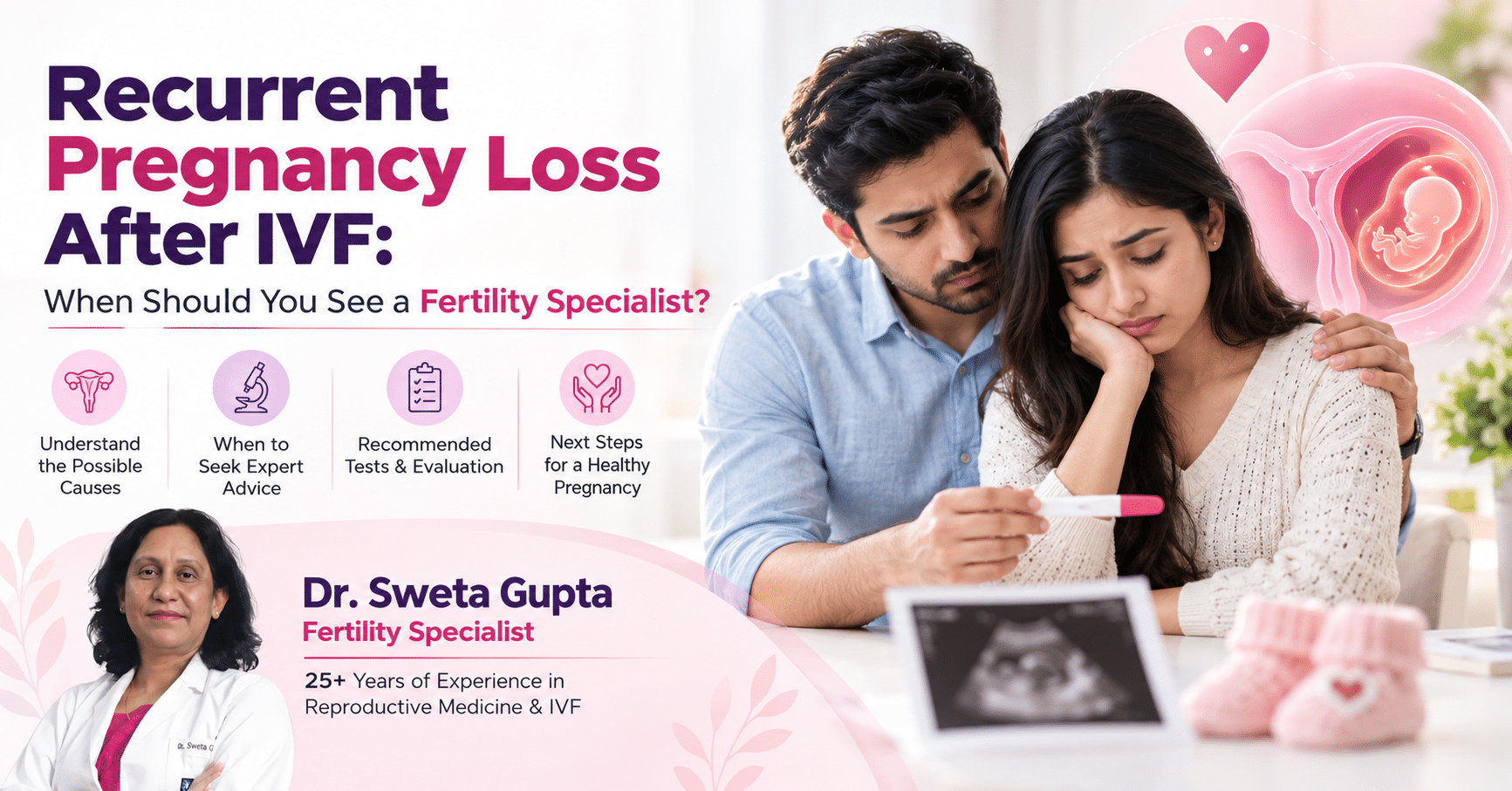
Recurrent pregnancy loss after IVF can be emotionally and physically difficult, especially when pregnancy has been achieved after fertility treatment but ends in miscarriage. While one unsuccessful pregnancy does not necessarily mean that IVF has failed permanently, repeated pregnancy losses deserve a structured medical evaluation.
If you have experienced two or more pregnancy losses after IVF or fertility treatment, it is reasonable to discuss your history with a fertility specialist rather than simply repeating the same IVF protocol. The American Society for Reproductive Medicine (ASRM) currently defines recurrent pregnancy loss (RPL) as two or more spontaneous pregnancy losses, including very early losses confirmed by blood or urine hCG, while excluding confirmed ectopic and molar pregnancies.
A fertility specialist can review the embryo, uterus, chromosomes, hormonal and metabolic factors, medical history and previous IVF cycles to determine whether further evaluation or a change in treatment strategy is appropriate.
What Is Recurrent Pregnancy Loss After IVF?
Recurrent pregnancy loss means experiencing repeated miscarriages rather than simply having difficulty becoming pregnant.
After IVF, pregnancy loss may happen:
- After a positive pregnancy test but before an ultrasound confirms a pregnancy
- After a pregnancy is confirmed by ultrasound
- During the first trimester
- Less commonly, during the second trimester
It is important to distinguish recurrent pregnancy loss from recurrent implantation failure. With recurrent implantation failure, an embryo is transferred but pregnancy does not establish. With recurrent pregnancy loss, pregnancy has started but subsequently ends.
According to the 2026 ASRM guidance, two or more pregnancy losses can warrant evaluation, and the losses do not necessarily have to be consecutive.
Why Can Pregnancy Loss Happen After IVF?
IVF does not eliminate all of the biological factors that can cause miscarriage. Pregnancy loss can involve several different factors, and sometimes no single cause is identified.
1. Embryonic Chromosomal Abnormalities
Chromosomal abnormalities are an important cause of early miscarriage. ASRM notes that approximately 50%–60% of first-trimester miscarriages are associated with embryonic aneuploidy, with the likelihood strongly influenced by maternal age.
This is one reason that the age of the woman, embryo development and previous embryo-testing results may be important when reviewing repeated IVF losses.
Where feasible, ASRM’s 2026 guidance recommends offering chromosome analysis of miscarriage tissue as part of recurrent pregnancy-loss evaluation.
2. Uterine or Endometrial Factors
The structure of the uterus can sometimes contribute to pregnancy loss.
A fertility specialist may evaluate for conditions such as:
- Uterine septum
- Endometrial polyps
- Submucosal fibroids
- Intrauterine adhesions
- Other abnormalities of the uterine cavity
ASRM recommends uterine-cavity evaluation in patients being assessed for recurrent pregnancy loss. Depending on the situation, this may involve saline sonography, hysterosalpingography (HSG) or hysteroscopy.
3. Antiphospholipid Syndrome
Antiphospholipid syndrome (APS) is an autoimmune condition associated with certain pregnancy complications and recurrent pregnancy loss.
Testing may be appropriate when the clinical history indicates it. ASRM identifies tests including:
- Lupus anticoagulant
- Anticardiolipin antibodies
- Anti-beta-2 glycoprotein I antibodies
Importantly, not every patient with miscarriage needs an extensive thrombophilia or immune panel. Testing should be guided by the clinical history and established diagnostic criteria.
4. Thyroid and Metabolic Conditions
Certain endocrine and metabolic conditions can affect reproductive outcomes.
Depending on your medical history, a fertility specialist may consider evaluation for:
- Thyroid dysfunction
- Diabetes or abnormal glucose regulation
- Other relevant hormonal conditions
ASRM’s 2026 RPL guidance specifically includes TSH testing when risk factors or symptoms are present, or in certain recurrent-loss circumstances such as a euploid miscarriage or when miscarriage testing was not performed.
5. Genetic Factors in the Couple
In some situations, one partner may carry a balanced chromosomal rearrangement that does not affect their own health but can increase the risk of an unbalanced embryo.
Parental karyotyping is therefore considered in selected cases, particularly when miscarriage-tissue testing identifies an unbalanced structural abnormality or when pregnancy tissue is unavailable for testing.
6. Male Reproductive Factors
The evaluation should not focus exclusively on the woman.
In selected cases of recurrent unexplained pregnancy loss, assessment of the male partner may also be relevant. ASRM’s current guidance includes sperm DNA fragmentation testing as a consideration in recurrent unexplained miscarriage or concurrent infertility.
When Should You See a Fertility Specialist After IVF?
You should consider consulting a fertility specialist if you have experienced two or more pregnancy losses, particularly if they occurred following IVF or another assisted reproductive treatment. Current ASRM guidance supports evaluation after two or more spontaneous pregnancy losses.
A consultation is particularly important if:
You have had two or more miscarriages
Repeated losses deserve evaluation rather than assuming that the next IVF cycle will automatically have a different outcome.
You have experienced repeated biochemical pregnancies
Very early losses detected through hCG testing can also be relevant. The 2026 ASRM definition includes pregnancies confirmed by blood or urine hCG, even when ultrasound confirmation was not obtained.
You have had a miscarriage after transferring an apparently good-quality embryo
A pregnancy loss after an embryo transfer may warrant reviewing the embryo’s genetic information, the uterine environment and the overall IVF history.
You have experienced a miscarriage after a euploid embryo transfer
If a genetically tested/euploid embryo was transferred and pregnancy subsequently ended, your fertility specialist may consider additional evaluation rather than assuming embryo chromosome abnormalities were responsible.
You are 35 or older
Maternal age is an important factor in embryo aneuploidy and miscarriage risk. The relationship between age and chromosome abnormalities should be considered when planning further treatment.
You have known thyroid, autoimmune, metabolic or uterine conditions
These conditions may influence the evaluation and treatment plan and should be reviewed before another pregnancy attempt.
What Tests May Be Recommended for Recurrent Pregnancy Loss?
There is no single test that can identify the cause of every miscarriage. A fertility specialist generally takes a step-by-step approach based on your medical and reproductive history.
Depending on the circumstances, evaluation may include:
| Area of evaluation | Possible assessment |
|---|---|
| Pregnancy tissue | Chromosome analysis/array-based testing |
| Uterus | Saline sonography, HSG or hysteroscopy |
| Chromosomes | Parental karyotyping in selected cases |
| Autoimmune factors | Antiphospholipid antibody testing when indicated |
| Thyroid | TSH and other testing when clinically appropriate |
| Metabolic health | Diabetes/glucose assessment where indicated |
| Endometrium | Evaluation for chronic endometritis in selected cases |
| Male factors | Semen assessment and, in selected unexplained cases, sperm DNA fragmentation |
The appropriate tests depend on the individual patient. Current ASRM guidance also emphasizes avoiding routine testing and treatments that lack sufficient evidence of benefit.
Does IVF Cause Recurrent Miscarriage?
IVF itself should not automatically be considered the cause of recurrent miscarriage.
IVF helps fertilization and embryo transfer, but pregnancy development still depends on factors such as embryo genetics, maternal age, uterine anatomy, endocrine health and other biological factors.
When recurrent pregnancy loss occurs after IVF, the important question is not simply “Why did IVF fail?” but rather:
“What factors could be contributing to the pregnancy losses, and what should be evaluated before the next pregnancy attempt?”
This distinction can help couples avoid repeating treatments without first understanding their reproductive history.
Should You Repeat IVF After Recurrent Pregnancy Loss?
Not necessarily immediately.
The appropriate next step depends on:
- Number and timing of pregnancy losses
- Maternal age
- Embryo quality and development
- Whether embryo genetic testing was performed
- Results of previous IVF cycles
- Uterine evaluation
- Medical and hormonal history
- Male reproductive factors
- Results of miscarriage-tissue testing, if available
For some couples, another IVF cycle may be appropriate. For others, additional evaluation before another transfer may be more useful.
The treatment plan should be individualized rather than based solely on the number of previous IVF attempts.
Is PGT-A Recommended After Recurrent Pregnancy Loss?
Preimplantation genetic testing for aneuploidy (PGT-A) is sometimes discussed with patients who have recurrent pregnancy loss because many early miscarriages are associated with chromosomal abnormalities.
However, PGT-A is not a universal solution for recurrent pregnancy loss.
Evidence and recommendations need to be interpreted according to factors such as age, embryo availability, previous pregnancy history and the underlying cause of the losses. ASRM’s guidance on PGT-A notes that evidence in patients with recurrent pregnancy loss is mixed and that treatment decisions should be individualized.
A fertility specialist can discuss whether PGT-A is relevant to your particular IVF situation.
Can Recurrent Pregnancy Loss Be Unexplained?
Yes.
Even after appropriate evaluation, some couples will not have a single identifiable cause.
This does not mean that another successful pregnancy is impossible. ASRM’s 2026 guidance notes that approximately 50%–80% of patients with recurrent pregnancy loss may subsequently achieve a successful pregnancy without a specific intervention, although individual prognosis varies according to factors including age and reproductive history.
This is also why evidence-based evaluation is important: not every patient benefits from adding multiple medications, immune therapies or laboratory tests without a clear indication.
What Should You Take to Your Fertility Consultation?
Before meeting your fertility specialist, collect:
- Previous IVF cycle reports
- Embryology/laboratory reports
- Embryo grading information
- PGT/embryo genetic-testing reports, if performed
- hCG reports
- Ultrasound reports
- Miscarriage or D&C records
- Genetic testing of pregnancy tissue, if available
- Thyroid and other relevant blood-test reports
- Previous medication protocols
- Medical history and previous pregnancy records
Having these documents together can make it easier for the specialist to identify patterns across previous cycles.
Emotional Support Is Also Part of Recurrent Pregnancy-Loss Care
Pregnancy loss is not only a physical event. Repeated miscarriage can bring grief, anxiety, frustration and self-blame.
Current ASRM guidance emphasizes the importance of psychological support and compassionate care for people experiencing recurrent pregnancy loss.
A recurrent loss is not automatically something you caused through an ordinary daily activity. Working with a qualified fertility specialist can help separate medically relevant factors from guilt and misinformation.
Recurrent Pregnancy Loss After IVF: Key Takeaways
If you have experienced repeated pregnancy loss after IVF:
- Two or more pregnancy losses can justify an RPL evaluation.
- Pregnancy losses do not necessarily have to be consecutive.
- Embryonic chromosome abnormalities are an important cause of early miscarriage.
- Miscarriage-tissue chromosome testing can provide useful information when available.
- The uterus should be evaluated for relevant structural abnormalities.
- APS, thyroid and metabolic factors may need targeted assessment.
- Male reproductive factors can also be relevant.
- PGT-A may be discussed in selected patients but is not appropriate for everyone.
- Not every immune, thrombophilia or fertility test is routinely recommended.
- Sometimes no specific cause is identified.
- A personalized plan is preferable to simply repeating the same IVF approach.
Frequently Asked Questions
1. How many miscarriages are considered recurrent pregnancy loss?
Current ASRM guidance defines recurrent pregnancy loss as two or more spontaneous pregnancy losses, excluding confirmed ectopic and molar pregnancies. Very early pregnancies confirmed by blood or urine hCG can also be included.
2. Should I see a fertility specialist after two miscarriages?
Yes, it is reasonable to discuss an evaluation with a fertility specialist after two pregnancy losses, particularly when the losses occur after IVF. Current ASRM guidance supports evaluation after two or more losses.
3. Can IVF cause recurrent pregnancy loss?
IVF itself should not automatically be considered the cause. Pregnancy loss after IVF can be associated with embryo chromosome abnormalities, maternal age, uterine factors, medical conditions and other reproductive factors.
4. Can a woman have recurrent pregnancy loss even after transferring a euploid embryo?
Yes. A euploid embryo transfer reduces the likelihood that embryo aneuploidy is responsible, but it does not eliminate every possible cause of pregnancy loss. Further evaluation may be appropriate depending on the clinical history.
5. What tests are done after recurrent miscarriage?
Depending on the individual case, evaluation may include miscarriage-tissue chromosome analysis, uterine-cavity assessment, selected parental genetic testing, antiphospholipid antibody testing, thyroid assessment and evaluation of other maternal or paternal factors.
6. Is PGT-A necessary after recurrent pregnancy loss?
Not necessarily. PGT-A may be considered for selected IVF patients, but it is not a universal treatment for recurrent pregnancy loss. Your age, embryo availability, previous IVF results and reproductive history should be considered.
7. What if all my recurrent pregnancy-loss tests are normal?
Unexplained recurrent pregnancy loss can occur. A normal evaluation does not mean that a future successful pregnancy is impossible. ASRM reports that many patients with RPL subsequently achieve a successful pregnancy, although individual chances vary.
8. Does recurrent pregnancy loss mean I cannot have a baby?
No. Recurrent pregnancy loss does not mean that future pregnancy is impossible. The appropriate evaluation and prognosis depend on factors such as age, pregnancy history and test results.
9. When should I consult Dr. Sweta Gupta for recurrent pregnancy loss after IVF?
If you have experienced repeated miscarriage after IVF, a consultation with a reproductive medicine specialist can help review your previous IVF cycles, pregnancy history, embryo information and available investigations and determine what should be evaluated before another pregnancy attempt.
Consult Dr. Sweta Gupta for Recurrent Pregnancy Loss & Fertility Care
Dr. Sweta Gupta is an IVF and reproductive medicine specialist with 25+ years of experience in Obstetrics, Gynaecology and Reproductive Medicine.
Qualifications
- MD (Obs & Gynae, Delhi)
- MRCOG (London)
- DFSRH (UK)
- FRCOG (London)
- MSc – Reproduction & Development, Bristol, UK
- Fellowship in Reproductive Medicine & ART, London
If you have experienced recurrent miscarriage after IVF, bring your previous treatment and pregnancy records for a detailed review and individualized fertility-care plan.
SG Clinic
3D-5L, Wave City Center, Sector 32, Noida – 201301
Appointments:
📞 8130140007 | 9009004709