

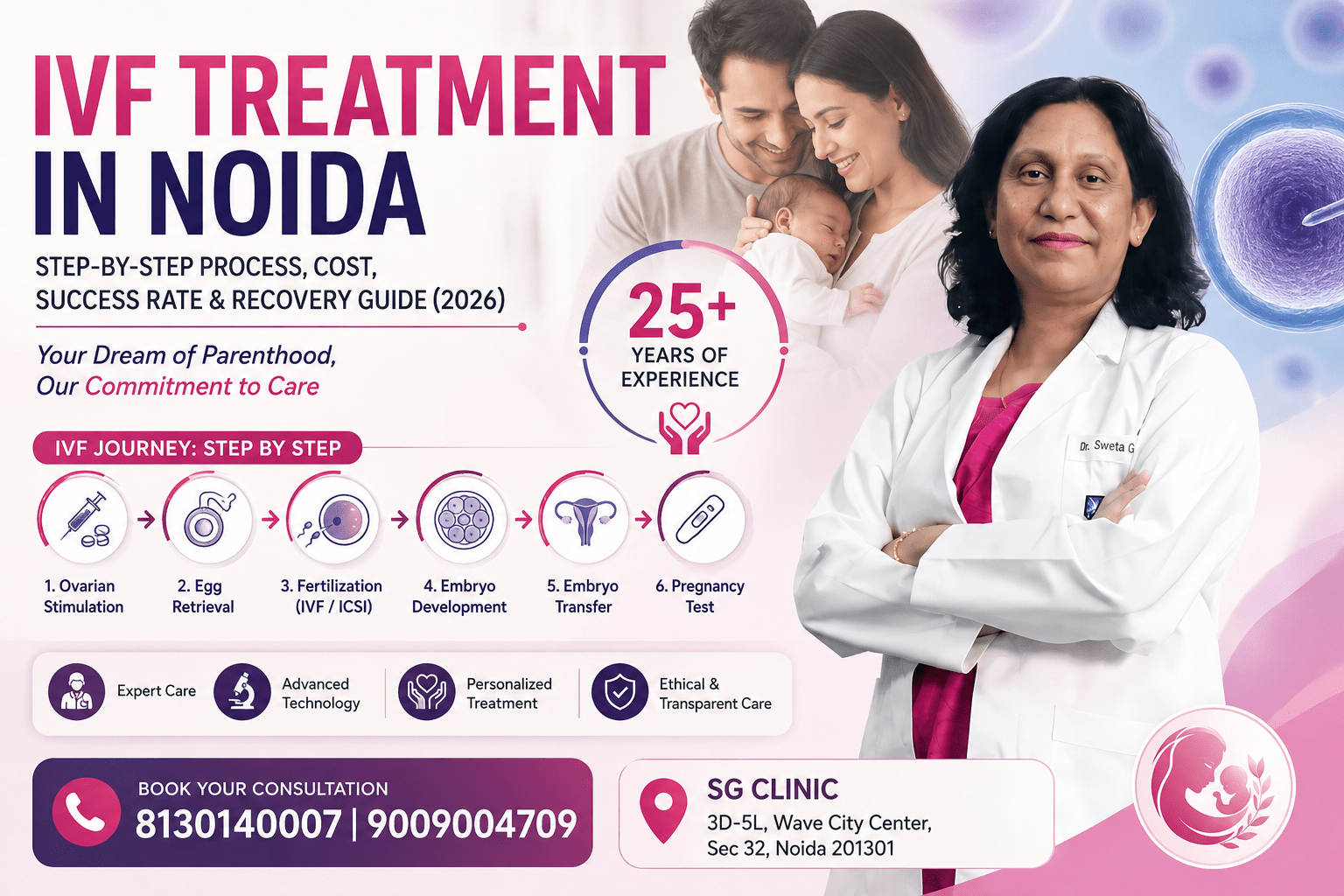
If you are considering IVF treatment in Noida, understanding the treatment process, expected cost, success factors, recovery period, and available fertility options can make the journey much less overwhelming. IVF, or in vitro fertilisation, is one of the most established forms of assisted reproductive technology (ART). It involves stimulating the ovaries, retrieving eggs, fertilising them with sperm in a laboratory, developing embryos, and transferring a suitable embryo into the uterus.
For couples looking for an IVF specialist in Noida or an experienced IVF doctor in Noida, the first step should not be choosing a package based only on price or a headline success percentage. A fertility assessment should determine why pregnancy has not occurred, whether IVF is actually appropriate, which protocol is suitable, and what the realistic chances of pregnancy and live birth may be for that individual couple.
At SG Clinic, 3D-5L, Wave City Center, Sector 32, Noida, Dr. Sweta Gupta provides fertility and IVF consultation. Her published professional profile lists more than 25 years of experience along with MD in Obstetrics & Gynaecology, MRCOG and FRCOG from London, DFSRH, MSc in Reproduction & Development from the University of Bristol, and a fellowship in Reproductive Medicine and ART from Homerton University Hospital, London.
Contact SG Clinic: 8130140007 | 9009004709
Address: SG Clinic, 3D-5L, Wave City Center, Sector 32, Noida – 201301
Important: IVF success rates and costs vary considerably according to age, ovarian reserve, sperm parameters, infertility diagnosis, embryo quality, previous IVF history, treatment protocol, laboratory factors and other medical circumstances. The cost ranges in this article are indicative 2026 planning ranges and are not a quotation from SG Clinic. A personalised treatment plan and written estimate should be obtained after consultation.
Quick Answer: IVF Treatment in Noida at a Glance
| Question | Short Answer |
|---|---|
| What is IVF? | IVF is a fertility treatment in which eggs are retrieved, fertilised with sperm in a laboratory and a resulting embryo is transferred into the uterus. |
| How long does one IVF cycle take? | A typical cycle may take around 3–6 weeks depending on the protocol, testing, embryo development and whether a fresh or frozen transfer is planned. |
| What is the IVF cost in Noida in 2026? | Published Noida estimates commonly place a standard cycle roughly around ₹1.2 lakh–₹2.5 lakh, but medicines, ICSI, freezing, PGT and other services may increase the total. |
| What is the IVF success rate in Noida? | There is no single success rate that applies to every patient or every clinic. Age, egg quality, embryo quality and diagnosis are major factors. |
| Is IVF painful? | Most parts of IVF are manageable, although injections, ovarian stimulation and egg retrieval can cause discomfort. Egg retrieval is generally performed with sedation or anaesthesia. |
| How long is recovery after egg retrieval? | Many patients return home the same day. Mild cramping, bloating or spotting may occur. Recovery depends on the individual and the response of the ovaries. |
| Is bed rest required after embryo transfer? | Routine prolonged bed rest is not recommended. Evidence reviewed by ASRM does not show a benefit from bed rest after embryo transfer. |
| When is the pregnancy test done? | The clinic will give a specific testing date, commonly around 10–16 days after transfer or according to the treatment protocol. |
| Who may need IVF? | IVF may be considered for tubal blockage, significant male-factor infertility, ovulation problems, endometriosis, diminished ovarian reserve, age-related fertility decline, unexplained infertility and other circumstances. |
What Is IVF Treatment?
IVF stands for in vitro fertilisation. “In vitro” means that fertilisation takes place outside the body in a specialised laboratory environment.
During conventional IVF, eggs are retrieved from the ovaries and combined with prepared sperm in the laboratory. If fertilisation occurs, the resulting embryos are monitored as they develop. A suitable embryo may then be transferred into the uterus.
ICSI, or intracytoplasmic sperm injection, is a related laboratory technique in which a single sperm is injected directly into a mature egg. It may be recommended in selected cases, particularly where male-factor infertility or previous fertilisation problems are present.
The Government of India’s National ART & Surrogacy Portal describes IVF as the most common and effective form of ART, while ICSI involves injecting a single sperm into a mature egg.
IVF does not guarantee pregnancy. Instead, it creates an opportunity to overcome specific barriers to fertilisation, embryo development or natural conception.
The most important principle is therefore:
IVF should be personalised rather than treated as a one-size-fits-all procedure.
Why Do Couples Consider IVF Treatment in Noida?
Noida has become an important healthcare destination within the Delhi-NCR region, with fertility and reproductive medicine services available through specialised clinics and hospitals.
Patients searching online for an IVF doctor in Noida, IVF specialist in Noida, fertility specialist, infertility doctor or IVF clinic often have very different medical circumstances.
One couple may have blocked fallopian tubes. Another may have severe male-factor infertility. A woman may have diminished ovarian reserve, endometriosis, PCOS or age-related reduction in egg quality. Some couples may have unexplained infertility despite apparently normal initial investigations.
Therefore, the right treatment is determined after evaluation.
At SG Clinic, Dr. Sweta Gupta’s published profile describes an individualised approach to fertility treatment and lists experience with IVF/ICSI, IUI, blastocyst culture, cryopreservation, PGT, fertility preservation and other reproductive medicine procedures.
Who May Need IVF?
IVF may be considered in a number of fertility situations.
1. Blocked or Damaged Fallopian Tubes
The fallopian tubes provide the natural pathway through which sperm and egg meet and the early embryo travels toward the uterus.
If both tubes are blocked or significantly damaged, natural fertilisation may be difficult or impossible.
IVF can bypass the fallopian tubes because fertilisation occurs in the laboratory and the embryo is subsequently transferred into the uterus.
2. Male-Factor Infertility
Male-factor infertility may involve:
- Low sperm concentration
- Poor sperm motility
- Abnormal sperm morphology
- Severe oligospermia
- Previous fertilisation failure
- Certain sperm production problems
- Ejaculatory problems
- Selected cases requiring surgical sperm retrieval
Depending on the severity and cause, treatment may range from lifestyle modification or medication to IUI, IVF or IVF with ICSI.
A semen analysis is therefore an important part of the fertility assessment.
3. Ovulation Disorders
Conditions affecting ovulation can make conception difficult.
Examples include:
- PCOS
- Irregular ovulation
- Anovulation
- Certain hormonal disorders
- Some endocrine conditions
Not every patient with an ovulation disorder needs IVF. Depending on age, duration of infertility and other factors, ovulation induction, timed intercourse or IUI may be considered first.
4. Endometriosis
Endometriosis can affect fertility through inflammation, anatomical distortion, ovarian involvement and other mechanisms.
Treatment depends on the severity of endometriosis, ovarian reserve, age, symptoms, previous treatment and fertility goals.
IVF may be recommended in selected patients, particularly when other factors are also present.
5. Diminished Ovarian Reserve
Ovarian reserve refers broadly to the remaining quantity of eggs available in the ovaries.
Tests such as AMH and antral follicle count can help assess ovarian reserve, but they do not independently determine whether a woman will become pregnant.
Age remains a major factor because egg quality changes with increasing age.
A low AMH result does not automatically mean IVF cannot work, and a normal AMH result does not guarantee pregnancy.
6. Age-Related Fertility Decline
Female age is one of the most important factors affecting IVF outcomes when using one’s own eggs.
With increasing age, the number of eggs generally decreases and the proportion of eggs with chromosomal abnormalities increases.
This means that the number of eggs retrieved, fertilisation, embryo development, implantation and miscarriage risk can all be affected.
For this reason, women should not delay fertility evaluation when there are concerns about age-related fertility decline.
The HFEA’s latest published 2024 statistics show a clear age-related difference in IVF birth rates using patients’ own eggs: the average birth rate per embryo transferred was 38% among patients aged 18–34 compared with 8% among patients aged 43–44. These are UK population-level figures and should not be interpreted as an individual patient’s expected success rate in Noida.
7. Unexplained Infertility
Sometimes standard fertility investigations do not identify a clear reason for infertility.
This is known as unexplained infertility.
The treatment approach depends on:
- Age
- Duration of infertility
- Previous pregnancy history
- Ovarian reserve
- Semen analysis
- Previous fertility treatments
- Patient preferences
IVF may be considered when appropriate, particularly after other treatment approaches have been unsuccessful or when age makes time an important consideration.
8. Previous Failed Fertility Treatment
IVF may also be considered after unsuccessful IUI or other fertility treatments.
However, a previous failed treatment does not automatically mean that another IVF cycle is the only answer.
A fertility specialist may review:
- The previous stimulation protocol
- Number of eggs retrieved
- Egg maturity
- Fertilisation rate
- Embryo development
- Blastocyst formation
- Embryo quality
- Endometrial lining
- Sperm parameters
- Timing and technique of embryo transfer
- Any previous pregnancy or miscarriage
- Other relevant medical factors
This information can help determine whether a change in strategy is appropriate.
IVF Treatment in Noida: Step-by-Step Process
Although each IVF protocol is individualised, the treatment journey generally follows a sequence.
Step 1: Initial Fertility Consultation
The IVF journey begins with a detailed consultation rather than immediately starting injections.
The fertility specialist may discuss:
- How long you have been trying to conceive
- Previous pregnancies
- Previous miscarriages
- Previous IUI or IVF treatment
- Menstrual cycle pattern
- Medical history
- Surgical history
- Medications
- Family history
- Lifestyle factors
- Previous fertility investigations
For male partners, the consultation may also cover semen analysis and other relevant history.
The goal is to identify the likely cause of infertility and determine the most appropriate treatment.
Step 2: Fertility Evaluation Before IVF
A comprehensive fertility assessment may include several investigations.
For the Female Partner
Depending on the case, investigations may include:
- Transvaginal ultrasound
- Antral follicle count
- AMH
- FSH
- LH
- Estradiol
- Thyroid testing when clinically indicated
- Prolactin when clinically indicated
- Assessment of the uterus
- Assessment of fallopian tubes when appropriate
- Screening tests
- Other investigations based on medical history
Not every patient requires every test.
The purpose is to understand ovarian reserve, uterine anatomy, ovulation and other factors relevant to treatment planning.
For the Male Partner
A semen analysis may evaluate:
- Sperm concentration
- Total sperm count
- Motility
- Progressive motility
- Morphology
- Other laboratory parameters
Additional tests may be considered in selected cases.
A fertility evaluation should involve both partners whenever appropriate because infertility may involve female factors, male factors, combined factors or unexplained factors.
Step 3: Selecting the IVF Protocol
There is no single IVF protocol suitable for every patient.
The doctor may consider:
- Age
- AMH
- Antral follicle count
- Previous IVF response
- PCOS
- Previous ovarian hyperstimulation
- Ovarian reserve
- Endometrial factors
- Previous embryo development
- Other medical conditions
The objective is not simply to obtain the largest possible number of eggs.
The goal is to achieve an appropriate number of mature eggs while maintaining patient safety and maximising the possibility of obtaining usable embryos.
Step 4: Ovarian Stimulation
In a natural menstrual cycle, usually one dominant follicle develops and releases an egg.
During IVF, injectable fertility medicines are used to stimulate the ovaries so that multiple follicles can develop during the same cycle.
Stimulation commonly lasts approximately 8–14 days, although the exact duration varies.
During this period, the patient attends monitoring appointments.
Monitoring may involve:
- Transvaginal ultrasound
- Blood tests
- Follicle measurements
- Hormonal assessment when indicated
The medication dose can be adjusted according to the ovarian response.
Step 5: Monitoring Follicular Growth
Monitoring is an essential part of IVF.
The fertility team evaluates how follicles are developing and whether the response is appropriate.
The doctor is looking for an appropriate balance between:
- Follicle development
- Egg maturity
- Patient safety
- Risk of ovarian hyperstimulation
- Timing of egg retrieval
This is one reason why IVF cannot be safely managed by simply following a fixed medication schedule without medical supervision.
Step 6: Trigger Injection
Once the follicles have reached an appropriate stage of development, a trigger medication is administered.
The trigger helps finalise egg maturation.
Timing is critical because egg retrieval is usually scheduled approximately 34–36 hours after the trigger, depending on the treatment protocol.
Patients should follow the clinic’s exact instructions regarding the trigger injection.
Step 7: Egg Retrieval
Egg retrieval, also known as oocyte retrieval or ovum pick-up, is performed under ultrasound guidance.
A specialised needle is passed through the vaginal wall into the ovarian follicles, and follicular fluid containing eggs is aspirated.
The procedure is generally performed with sedation or anaesthesia so that discomfort is minimised.
After retrieval, the patient is monitored for a period before going home.
The number of eggs retrieved can vary considerably from one patient to another.
Importantly:
More eggs do not automatically mean a guaranteed pregnancy.
Egg maturity, fertilisation, embryo development and embryo competence all matter.
Step 8: Sperm Collection and Preparation
The male partner may provide a semen sample around the time of egg retrieval.
The laboratory processes the sample to identify suitable sperm.
In selected situations, sperm may be obtained through a surgical sperm-retrieval procedure.
The appropriate method depends on the underlying diagnosis.
Step 9: Fertilisation — IVF or ICSI
There are two commonly discussed laboratory approaches.
Conventional IVF
Eggs and prepared sperm are placed together under controlled laboratory conditions so that fertilisation can occur.
ICSI
With ICSI, an embryologist injects a single sperm directly into a mature egg.
ICSI may be recommended in selected cases, especially when sperm-related factors or previous fertilisation problems are present.
It should not automatically be considered necessary for every patient.
Step 10: Embryo Development in the Laboratory
After fertilisation, embryos are monitored in the embryology laboratory.
Early embryo development occurs over several days.
Some embryos may continue developing to the blastocyst stage, usually around day 5 or 6.
Not every fertilised egg becomes a blastocyst.
This is an important part of understanding IVF.
For example:
Eggs retrieved → mature eggs → fertilised eggs → developing embryos → blastocysts → embryos suitable for transfer/freezing
There can be attrition at each stage.
Therefore, the number of eggs retrieved on the day of egg collection cannot be used to predict the final number of transferable embryos.
ASRM describes blastocyst development as occurring after approximately five days, with embryos that continue to develop being evaluated for transfer or other appropriate use.
Step 11: Embryo Grading and Selection
Embryologists assess embryo development and morphology.
Depending on the laboratory and treatment strategy, factors may include:
- Cell development
- Expansion
- Inner cell mass
- Trophectoderm appearance
- Fragmentation
- Overall developmental pattern
Embryo grading is useful but is not the same as genetic diagnosis.
A visually good-quality embryo cannot be guaranteed to be chromosomally normal.
Likewise, embryo grading is only one part of the overall decision regarding transfer.
Step 12: Fresh Embryo Transfer or Frozen Embryo Transfer
After embryo development, the treatment plan may involve:
Fresh embryo transfer
A suitable embryo is transferred during the same treatment cycle.
Frozen embryo transfer (FET)
Embryos are cryopreserved and transferred in a later cycle.
A frozen transfer may be selected because of:
- Hormonal considerations
- Endometrial factors
- Risk of OHSS
- Need for genetic testing
- Medical reasons
- Embryo banking
- Personal or clinical circumstances
The choice between fresh and frozen transfer should be individualised.
Frozen embryo transfers are now an important part of modern IVF practice. In the UK’s 2024 data, frozen embryo transfers accounted for almost half of IVF cycles.
Step 13: Endometrial Preparation
For an embryo to implant, the uterine lining must be appropriately prepared.
Depending on the transfer protocol, preparation may occur through:
- Natural ovulation
- Modified natural cycle
- Hormone replacement cycle
- Other clinically appropriate protocols
Progesterone support is commonly used around embryo transfer according to the treatment plan.
The exact medicines, doses and duration should be determined by the treating fertility specialist.
Step 14: Embryo Transfer
Embryo transfer is usually a relatively quick procedure.
A thin catheter is passed through the cervix into the uterus, and the selected embryo is placed into the uterine cavity.
Ultrasound guidance may be used to help guide the procedure.
Most patients do not require anaesthesia for embryo transfer.
The transfer itself is generally much less invasive than egg retrieval.
Step 15: The Two-Week Wait
After embryo transfer, patients often experience a period of uncertainty while waiting for the pregnancy test.
This is commonly called the “two-week wait,” although the exact testing date can vary.
Possible symptoms include:
- Mild cramping
- Breast tenderness
- Bloating
- Fatigue
- Vaginal discharge
- Light spotting
- No symptoms at all
These symptoms cannot reliably confirm whether implantation has occurred.
Hormonal medications can also produce symptoms that resemble early pregnancy symptoms.
The clinic should provide a specific pregnancy-testing date.
Step 16: Pregnancy Test
A blood beta-hCG test is commonly used to confirm pregnancy after IVF.
The test should be performed on the date advised by the fertility clinic.
Testing too early can create confusion, especially because medications used during IVF can influence some pregnancy-test results.
A positive beta-hCG test is an important milestone, but it is not the final confirmation of a healthy ongoing pregnancy.
Step 17: Early Pregnancy Scan
If the pregnancy test is positive, the fertility team may schedule an early ultrasound.
The scan helps assess:
- Location of the pregnancy
- Gestational sac
- Yolk sac
- Embryonic development
- Fetal cardiac activity when appropriate
Further antenatal care is then planned according to the pregnancy.
How Long Does IVF Treatment Take in Noida?
The duration of IVF depends on the treatment protocol.
A complete IVF journey may take approximately 3–6 weeks or longer, depending on:
- Initial testing
- Cycle timing
- Ovarian stimulation
- Egg retrieval
- Embryo development
- Fresh or frozen transfer
- Genetic testing if indicated
- Endometrial preparation
A standard stimulation phase may take around 8–14 days, followed by egg retrieval and laboratory development.
If a fresh embryo transfer is suitable, transfer may occur a few days after egg retrieval.
If embryos are frozen for later transfer, the overall journey becomes longer because a separate preparation cycle may be needed.
IVF Cost in Noida in 2026
One of the most common questions patients ask an IVF doctor in Noida is:
“How much does IVF cost in Noida?”
There is no single fixed IVF price because fertility treatment is personalised.
Published 2026 Noida estimates commonly place a standard IVF cycle around ₹1.2 lakh to ₹2.5 lakh, although some estimates are lower or higher depending on the clinic, medicines, laboratory facilities and treatment inclusions.
Some Delhi-NCR estimates show even wider variation, particularly when premium facilities, medicines, ICSI, freezing and other procedures are included.
Therefore, patients should not compare IVF clinics using the advertised package price alone.
Approximate IVF Cost Breakdown in Noida
A typical IVF budget may include several components.
| Treatment Component | Indicative 2026 Planning Range |
| Initial consultation & fertility assessment | ₹5,000–₹15,000+ |
| Fertility investigations | Depends on tests required |
| Ovarian stimulation medicines | ₹30,000–₹80,000+ |
| Ultrasound & monitoring | ₹8,000–₹18,000+ |
| Egg retrieval | ₹20,000–₹45,000+ |
| Embryology/laboratory charges | ₹15,000–₹35,000+ |
| Embryo transfer | ₹10,000–₹22,000+ |
| Anaesthesia/OT-related charges | ₹5,000–₹15,000+ |
| Post-transfer medication | ₹5,000–₹12,000+ |
| ICSI | Additional, depending on clinic/protocol |
| Embryo freezing | Additional |
| Frozen embryo transfer | Additional |
| PGT | Additional and highly variable |
These are broad market-planning estimates compiled from published 2026 Noida/Delhi-NCR pricing information and are not SG Clinic’s tariff. Actual treatment costs can be significantly different.
What Can Increase the IVF Cost?
The final cost may increase when additional procedures or medications are medically indicated.
These can include:
ICSI
ICSI is a specialised fertilisation technique and may carry an additional laboratory charge.
Embryo Freezing
If suitable embryos are available for cryopreservation, freezing and storage charges may apply.
Frozen Embryo Transfer
A later FET cycle has its own medication, monitoring and procedure costs.
PGT
Preimplantation genetic testing may be recommended in selected circumstances, such as certain known genetic conditions or specific reproductive indications.
Under India’s ART framework, preimplantation genetic testing is regulated and is intended for screening embryos for known, pre-existing heritable or genetic diseases; sex selection is prohibited except within the legally permitted medical context for sex-linked disorders.
Donor Eggs or Sperm
Donor treatment has different costs and regulatory requirements.
Additional Procedures
Other procedures may be considered only when clinically appropriate.
Patients should ask exactly what is included in an IVF package before comparing prices.
How to Compare IVF Cost in Noida Properly
Instead of asking only:
“What is the IVF package price?”
ask:
- Does the package include fertility medicines?
- Does it include ultrasound monitoring?
- Are blood tests included?
- Is egg retrieval included?
- Is anaesthesia included?
- Is embryology included?
- Is ICSI included?
- Is blastocyst culture included?
- Is embryo freezing included?
- Is the first year of embryo storage included?
- Is embryo transfer included?
- Are progesterone and other post-transfer medicines included?
- Is a pregnancy blood test included?
- What happens if no embryo is available for transfer?
- What happens if the cycle is cancelled?
- What additional charges may arise?
A transparent, itemised estimate is much more useful than a low headline price.
IVF Success Rate in Noida: What Should Patients Expect?
The term “IVF success rate” can be misleading because success can mean different things.
A clinic may report:
- Pregnancy rate
- Clinical pregnancy rate
- Implantation rate
- Pregnancy per embryo transfer
- Live-birth rate
- Live birth per retrieval
- Cumulative live-birth rate
These are not interchangeable.
For patients, live birth is generally a more meaningful outcome than a positive pregnancy test.
Is There One IVF Success Rate for Noida?
No.
There is no single IVF success rate that can accurately describe every patient in Noida.
Success depends on:
- Female age
- Egg quality
- Ovarian reserve
- Sperm quality
- Embryo quality
- Number of embryos available
- Uterine factors
- Endometriosis
- Previous IVF history
- Genetic factors
- Underlying medical conditions
- Laboratory quality
- Treatment protocol
The CDC specifically cautions that ART success rates vary by patient characteristics, clinic and treatment factors, and that published averages do not necessarily represent an individual’s chance of success.
How Does Age Affect IVF Success?
Age is one of the strongest predictors of IVF outcomes when using a woman’s own eggs.
As age increases:
- Ovarian reserve generally declines
- The number of eggs retrieved may decline
- Egg quality may decline
- Chromosomal abnormalities become more common
- Miscarriage risk increases
- The likelihood of obtaining a chromosomally competent embryo may decrease
The latest HFEA 2024 statistics provide an illustration of this pattern. Average birth rate per embryo transferred using patients’ own eggs was 38% for ages 18–34 and 8% for ages 43–44. Again, these are UK population data and are not a prediction for an individual patient undergoing IVF in Noida.
CDC data also show a strong age-related decline in live-birth outcomes in ART. In its national summary, the percentage of intended retrievals resulting in live birth was 50.8% for patients under 35, 36.4% for ages 35–37, 23.4% for ages 38–40 and 7.9% for patients over 40 in the cited 2022 dataset. These figures represent U.S. ART surveillance data and should not be applied directly to a Noida patient.
The key message is:
Age-specific statistics can provide context, but your fertility specialist should estimate your individual prognosis from your medical and treatment characteristics.
Does AMH Predict IVF Success?
AMH is useful for assessing ovarian reserve and predicting how the ovaries may respond to stimulation.
However:
AMH is not a pregnancy test and is not a direct measure of egg quality.
A woman with low AMH may still conceive with IVF.
Similarly, a woman with a high AMH does not automatically have a high chance of live birth.
AMH should therefore be interpreted together with:
- Age
- Antral follicle count
- Previous ovarian response
- Medical history
- Other fertility investigations
Does Having More Eggs Mean Better IVF Success?
Not necessarily.
A higher number of retrieved eggs can increase the opportunity to obtain mature eggs, fertilised embryos and blastocysts.
However, egg number is only one part of the process.
For example:
15 eggs retrieved does not mean 15 embryos.
Some eggs may be immature.
Some mature eggs may not fertilise.
Some fertilised eggs may stop developing.
Some embryos may not reach blastocyst stage.
Some blastocysts may not be suitable for transfer.
This natural attrition is one reason why fertility specialists discuss the complete IVF journey rather than focusing only on egg count.
Can IVF Guarantee a Baby?
No.
No responsible fertility specialist should guarantee a baby through IVF.
IVF can significantly improve reproductive options for many patients, but treatment cannot eliminate biological uncertainty.
The CDC’s IVF success estimator also emphasises that estimates are informational and may not reflect an individual’s actual chance of success.
A good fertility consultation should therefore focus on realistic probabilities rather than guarantees.
Recovery After Egg Retrieval
Egg retrieval is usually a day-care procedure.
Many patients go home after a period of observation.
Some temporary symptoms can include:
- Mild pelvic cramping
- Abdominal bloating
- Pelvic heaviness
- Fatigue
- Light vaginal spotting
- Mild discomfort
The exact recovery varies according to the number of follicles, ovarian response, anaesthesia, individual health and whether complications occur.
For the first few days, patients may be advised to avoid strenuous physical activity and follow the clinic’s specific instructions.
Recovery After Embryo Transfer
Embryo transfer is less invasive than egg retrieval.
Patients can usually resume ordinary daily activities unless their doctor advises otherwise.
Prolonged bed rest is not necessary after embryo transfer.
ASRM’s evidence-based guideline found no benefit from bed rest following embryo transfer and recommends against routine bed rest.
This does not mean that patients should ignore their bodies.
A sensible approach is:
- Follow prescribed medication
- Stay adequately hydrated
- Eat normally
- Sleep well
- Avoid strenuous activity if advised
- Follow clinic-specific instructions
- Seek medical help if concerning symptoms develop
What Should You Avoid After Embryo Transfer?
There is no need to treat yourself as completely immobile after embryo transfer.
Unless your fertility specialist gives different instructions, patients are generally encouraged to maintain a normal routine while avoiding activities that are unusually strenuous.
There is no evidence that lying in bed for prolonged periods improves implantation.
The embryo does not simply “fall out” when you stand, walk or use the bathroom.
Patients should nevertheless follow their own doctor’s instructions, especially if there are medical complications or specific circumstances.
Common IVF Side Effects
IVF medications can cause temporary side effects.
These may include:
- Bloating
- Breast tenderness
- Mood changes
- Headache
- Injection-site discomfort
- Pelvic heaviness
- Mild abdominal discomfort
- Fatigue
Not every patient experiences these symptoms.
Ovarian Hyperstimulation Syndrome (OHSS)
OHSS is a potential complication associated with ovarian stimulation.
It occurs when the ovaries respond excessively to fertility medication.
Symptoms can range from mild to severe.
Possible symptoms include:
- Significant abdominal bloating
- Abdominal pain
- Nausea
- Vomiting
- Rapid weight gain
- Reduced urine output
- Breathing difficulty in severe cases
Severe OHSS is uncommon but can be serious. ASRM notes that IVF stimulation can increase the risk of OHSS and that careful ultrasound and blood-test monitoring is used to reduce related risks.
Patients should contact their fertility clinic promptly if they develop significant or worsening symptoms after stimulation or egg retrieval.
When Should You Seek Urgent Medical Attention?
After IVF, contact your fertility team urgently if you experience:
- Severe or increasing abdominal pain
- Heavy vaginal bleeding
- Severe shortness of breath
- Fainting
- Persistent vomiting
- Rapid abdominal swelling
- Markedly reduced urine output
- Severe weakness
- High fever
- Severe chest pain
- Any symptom that feels unusual or dangerous
Do not wait for a routine appointment when severe symptoms develop.
Does IVF Increase the Risk of Twins?
Multiple pregnancy is one of the reasons modern IVF practice often favours transferring a single appropriate embryo.
Transferring more than one embryo can increase the chance of twins or higher-order pregnancy, which can increase pregnancy and neonatal risks.
ASRM states that transferring one embryo at a time is best medical practice in most situations and that reducing multiple gestation can improve maternal and fetal outcomes.
The decision regarding embryo number should always be based on the patient’s age, embryo quality, medical circumstances and applicable clinical guidance.
What Is Frozen Embryo Transfer?
A frozen embryo transfer, commonly called FET, involves transferring an embryo that was previously cryopreserved.
Instead of performing ovarian stimulation and egg retrieval again, the uterus is prepared for transfer.
FET may be performed after:
- A previous fresh IVF cycle
- Embryo banking
- PGT
- A cycle where fresh transfer was not advisable
- A desire to use remaining embryos from an earlier cycle
Modern embryo freezing techniques have made frozen embryo transfer an important part of IVF treatment.
HFEA’s 2024 data reported that frozen embryo transfers represented nearly half of IVF cycles in the UK.
What Is ICSI and When Is It Used?
ICSI stands for Intracytoplasmic Sperm Injection.
During ICSI, an embryologist injects one sperm directly into a mature egg.
It can be useful in selected cases involving:
- Severe male-factor infertility
- Very low sperm count
- Poor sperm motility
- Previous fertilisation failure
- Certain sperm-retrieval situations
- Selected cases where the fertility specialist believes it is appropriate
ICSI is not automatically better than conventional IVF for every patient.
The decision should be based on the couple’s specific clinical circumstances.
What Is PGT?
PGT stands for Preimplantation Genetic Testing.
It involves testing cells associated with embryos created through IVF for specific genetic or chromosomal purposes.
Different types of PGT may be used for different clinical indications.
Examples include testing related to:
- Known single-gene disorders
- Structural chromosomal abnormalities
- Certain chromosomal screening strategies
PGT is not necessary for every IVF patient.
The Indian ART Regulation Act provides a legal framework around preimplantation genetic testing and states that it may be used to screen embryos for known, pre-existing, heritable or genetic diseases.
Patients should discuss the potential benefits, limitations, costs and implications of genetic testing with their fertility specialist and, where appropriate, a genetics professional.
IVF Treatment and India’s ART Regulations
IVF treatment in India operates within a regulatory framework.
The Assisted Reproductive Technology (Regulation) Act, 2021 provides for regulation and supervision of ART clinics and banks and aims to promote safe and ethical ART practice.
The law states that ART clinics providing ART services must be registered under the applicable framework.
The National ART & Surrogacy Registry is maintained under the Department of Health Research, Ministry of Health & Family Welfare, and provides a public registry framework for ART clinics and banks.
The Act also specifies age-related provisions for ART services, including that clinics shall apply ART services to a woman above 21 and below 50 years and a man above 21 and below 55 years, subject to the law and applicable circumstances.
Patients should always select a properly registered and appropriately equipped fertility facility and ask questions about laboratory standards, consent, treatment protocols and costs.
How to Choose an IVF Specialist in Noida
Searching for an IVF specialist in Noida can produce many results.
Instead of choosing solely on advertisements, consider the following.
1. Qualifications
Check the doctor’s medical qualifications and specialist training.
2. Experience
Look at experience in reproductive medicine and the types of fertility problems treated.
3. Individualised Treatment
A good fertility plan should be based on your medical profile rather than a standard package.
4. Embryology Laboratory
The laboratory plays a major role in IVF because fertilisation and embryo development occur outside the body.
5. Transparency
Ask for a written explanation of:
- Treatment plan
- Expected costs
- Medicines
- Laboratory charges
- Additional procedures
- Freezing and storage
- Transfer charges
6. Communication
Fertility treatment involves multiple appointments and decisions. Clear communication between the patient and fertility team is important.
7. Success Rate Interpretation
Ask whether the quoted percentage refers to:
- Pregnancy
- Clinical pregnancy
- Implantation
- Live birth
- Per transfer
- Per retrieval
- Cumulative outcome
A high percentage without context can be misleading.
Why Consider Dr. Sweta Gupta for IVF Consultation in Noida?
Dr. Sweta Gupta’s professional profiles describe her as an internationally trained fertility and reproductive medicine specialist.
Her listed qualifications include:
- MD – Obstetrics & Gynaecology, Delhi
- MRCOG – Royal College of Obstetricians and Gynaecologists, London
- FRCOG – Royal College of Obstetricians and Gynaecologists, London
- DFSRH – UK
- MSc – Reproduction & Development, University of Bristol, UK
- Fellowship in Reproductive Medicine & ART – Homerton University Hospital, London
Her profile also describes clinical experience in the UK and India and experience with IVF, ICSI, IUI, blastocyst culture, cryopreservation and other reproductive medicine procedures.
SG Clinic is located at:
3D-5L, Wave City Center, Sector 32, Noida – 201301
The clinic’s published contact details are:
8130140007
9009004709
For patients searching for an IVF doctor in Noida, the most useful first step is a consultation to determine whether IVF is appropriate and what treatment approach fits their individual circumstances.
Questions to Ask Your IVF Doctor Before Starting Treatment
Before beginning IVF, consider asking:
About diagnosis
- What is the likely cause of infertility?
- Are there female and male factors?
- Is IVF definitely the best next step?
- Could IUI or another treatment be appropriate?
About ovarian reserve
- What does my AMH indicate?
- What is my antral follicle count?
- What response do you expect from stimulation?
About sperm
- Is the semen analysis normal?
- Do I need additional male fertility evaluation?
- Is ICSI necessary in my case?
About embryos
- How many eggs might realistically be retrieved?
- What proportion may be expected to fertilise?
- Will embryos be cultured to day 5?
- Will surplus embryos be frozen?
About transfer
- Will you recommend fresh or frozen transfer?
- How many embryos are recommended?
- What is the reason for that recommendation?
About cost
- What does the IVF package include?
- Are medicines included?
- Is ICSI included?
- Is embryo freezing included?
- Are storage charges separate?
- What additional procedures might be needed?
About success
- What outcome are you quoting?
- Is it pregnancy or live birth?
- Is the figure per transfer or per retrieval?
- How does age affect my expected outcome?
- What factors could lower or improve my individual chances?
These questions can help you make a more informed decision.
How to Prepare for IVF Treatment
A healthy lifestyle cannot guarantee IVF success, but it can support general reproductive and overall health.
Maintain a Balanced Diet
Focus on:
- Vegetables
- Fruits
- Whole grains
- Protein sources
- Healthy fats
- Adequate hydration
Avoid extreme diets unless medically indicated.
Maintain a Healthy Weight
Both very low and high body weight can affect reproductive health and pregnancy outcomes.
A fertility specialist can advise whether weight management should be part of the treatment plan.
Avoid Smoking
Smoking is associated with poorer reproductive outcomes and should be avoided.
Limit Alcohol
Discuss alcohol consumption with your fertility doctor, particularly once treatment begins.
Review Medications
Tell your fertility specialist about all prescription medicines, over-the-counter medicines and supplements.
Do not stop prescribed medication without medical advice.
Manage Existing Health Conditions
Conditions such as thyroid disease, diabetes and hypertension may need appropriate management before or during fertility treatment.
Does Stress Cause IVF Failure?
Fertility treatment can be emotionally stressful.
However, it is not appropriate to tell patients that stress alone caused an unsuccessful IVF cycle.
IVF outcomes are influenced by complex biological factors, including age, egg quality, sperm factors, embryo development and uterine factors.
Patients should not blame themselves after an unsuccessful cycle.
Emotional support, counselling, support groups, family support and open communication with the fertility team can be valuable.
What Happens If the First IVF Cycle Does Not Work?
An unsuccessful IVF cycle does not necessarily mean that pregnancy is impossible.
The fertility specialist may review the cycle in detail.
Important questions include:
- How many eggs were retrieved?
- How many were mature?
- How many fertilised?
- How many embryos developed?
- Did embryos reach blastocyst stage?
- Was an embryo transferred?
- Was implantation achieved?
- Was there a biochemical pregnancy?
- Was there a miscarriage?
- Were there uterine or endometrial concerns?
- Were there sperm-related issues?
- Is a change in stimulation protocol appropriate?
A second attempt should not automatically mean repeating exactly the same protocol.
The purpose of a cycle review is to identify what can reasonably be improved or changed.
Can IVF Be Successful After Multiple Failed Cycles?
Yes, some patients conceive after multiple unsuccessful IVF attempts.
However, the likelihood depends heavily on the underlying reason for previous failure.
A detailed review is particularly important after repeated failures.
Potential areas of review may include:
- Ovarian response
- Egg quality
- Fertilisation
- Embryo development
- Blastocyst formation
- Embryo quality
- Uterine anatomy
- Endometrial factors
- Sperm factors
- Genetic factors
- Age
- Previous pregnancy history
Not every commercially marketed “add-on” has proven benefit for every patient.
Patients should ask their IVF specialist about the evidence, potential benefit, cost and risks of any additional procedure before proceeding.
IVF Success: Why Laboratory Quality Matters
IVF is not only a doctor’s procedure.
It is a multidisciplinary process involving:
- Fertility specialist
- Nursing team
- Embryologists
- Andrology laboratory
- Anaesthesia team when required
- Ultrasound and diagnostic support
- Counselling and administrative support
The embryology laboratory handles eggs, sperm and embryos during some of the most sensitive stages of the treatment.
Laboratory quality control, culture conditions, equipment, witnessing procedures and staff expertise are therefore important considerations when choosing an IVF centre.
Why One Embryo Is Often Preferred
Modern IVF increasingly focuses on achieving a healthy singleton pregnancy rather than maximising the number of embryos transferred.
Transferring multiple embryos may increase the chance of twins or higher-order pregnancies.
However, multiple pregnancies can carry higher risks for both mother and babies.
ASRM notes that single embryo transfer is considered best practice in most situations and has helped reduce multiple gestations.
The appropriate number of embryos should always be decided individually.
IVF and Pregnancy After 35
Patients over 35 often ask whether IVF can still work.
The answer is yes, but age becomes increasingly important.
The important distinction is between:
Can IVF work after 35?
and
What is my individual chance of success?
The first question has a general answer: many women conceive through IVF after 35.
The second requires medical evaluation.
Age affects egg quality, embryo development and chromosomal competence. Therefore, treatment planning should take age into account from the beginning.
For women in their late 30s or 40s, a timely fertility consultation can be particularly important because treatment may require more than one cycle and ovarian reserve can change with time.
IVF After 40
IVF after 40 is possible, but outcomes using one’s own eggs generally decline with increasing age.
This is why patients over 40 should receive a realistic, age-specific assessment rather than relying on a generic clinic success percentage.
The fertility specialist may discuss:
- Ovarian reserve
- Expected response
- Egg quality
- Embryo development
- Previous fertility treatment
- Miscarriage risk
- Alternative reproductive options when medically appropriate
The objective is to provide honest counselling and avoid unnecessary delays.
IVF for Male Infertility
IVF can be particularly useful when male-factor infertility is significant.
Depending on the semen analysis and diagnosis, treatment may involve IVF with ICSI.
The male partner should not be overlooked during fertility evaluation.
A proper assessment may include:
- Semen analysis
- Medical history
- Previous surgery
- Medication history
- Lifestyle factors
- Hormonal evaluation when indicated
- Urological or andrological assessment when appropriate
Fertility is a couple’s issue, and both partners should be evaluated appropriately.
IVF for PCOS
Women with PCOS may have many follicles but irregular or absent ovulation.
Not every woman with PCOS needs IVF.
Depending on age and fertility history, treatment can range from ovulation induction to IUI or IVF.
If IVF is recommended, ovarian stimulation needs to be carefully individualised because some patients with PCOS may have a higher risk of excessive ovarian response and OHSS.
This is another reason why medication dosing and monitoring should be personalised.
IVF for Low AMH
Low AMH can indicate reduced ovarian reserve.
However, a low AMH result does not mean “no chance.”
The doctor may consider:
- Age
- AFC
- AMH
- Previous response
- FSH
- Menstrual history
- Previous IVF cycles
The expected number of eggs may be lower, but the treatment decision should be based on the complete clinical picture.
IVF for Unexplained Infertility
When no obvious cause is identified, the treatment pathway may depend on:
- Patient age
- Duration of infertility
- Previous treatment
- Ovarian reserve
- Semen analysis
- Tubal assessment
- Patient preference
IVF may be considered when it offers an appropriate balance between time, treatment burden and expected benefit.
Is IVF Safe?
IVF is an established medical treatment and is generally considered safe, but no medical procedure is completely risk-free.
Potential risks include:
- Ovarian hyperstimulation
- Bleeding
- Infection
- Complications related to egg retrieval
- Ovarian torsion, rarely
- Multiple pregnancy
- Ectopic pregnancy
- Pregnancy complications
- Medication-related effects
ASRM describes IVF as a safe and established procedure while emphasising that risks remain and that patients with infertility may have other factors that influence pregnancy outcomes.
A fertility specialist should discuss the risks relevant to your particular medical situation.
IVF Recovery Timeline: Simple Guide
Day of Egg Retrieval
You may experience:
- Mild cramps
- Fatigue
- Bloating
- Light spotting
Most patients are discharged after observation.
First 24–48 Hours
Rest as needed.
Avoid strenuous exercise unless your doctor says otherwise.
Follow medication instructions.
After Embryo Transfer
Normal light daily activities are generally acceptable unless specifically restricted.
Prolonged bed rest does not improve IVF outcomes.
During the Waiting Period
Continue prescribed medicines.
Do not stop progesterone or other support medication unless instructed by your fertility team.
Pregnancy Test
Take the test on the date advised by your clinic.
Positive Test
Continue medications as directed and attend the scheduled early pregnancy scan.
IVF Treatment in Noida: A Practical Patient Checklist
Before starting your IVF cycle, keep the following information organised:
- Previous medical reports
- Previous IVF/IUI records
- Semen analysis
- AMH report
- Ultrasound reports
- Previous pregnancy records
- Previous miscarriage reports
- Surgical history
- Current medication list
- Allergy information
- Previous genetic reports if applicable
- Questions about treatment
- Questions about cost
Maintaining a complete fertility file can make consultations more efficient.
Frequently Asked Questions About IVF Treatment in Noida
1. What is the cost of IVF treatment in Noida in 2026?
Published 2026 estimates generally place a standard IVF cycle in Noida around ₹1.2 lakh–₹2.5 lakh, although actual prices vary significantly. Medicines, ICSI, embryo freezing, FET, PGT and other procedures may be charged separately.
2. Who is the best IVF doctor in Noida?
There is no objective single “best” IVF doctor for every patient. The right IVF specialist should have appropriate qualifications, reproductive medicine experience, access to suitable laboratory facilities, transparent treatment planning and an evidence-based approach.
Dr. Sweta Gupta’s published profile lists more than 25 years of experience and specialist qualifications including MD, MRCOG, FRCOG, DFSRH, MSc in Reproduction & Development and a fellowship in Reproductive Medicine and ART.
3. How long does IVF treatment take?
A typical IVF cycle may take around 3–6 weeks, although the timeline can be longer if embryos are frozen, genetic testing is performed or a frozen embryo transfer is planned.
4. Is IVF painful?
Most IVF procedures are manageable. Stimulation injections can cause temporary discomfort, while egg retrieval is generally performed with sedation or anaesthesia. Embryo transfer is usually a short procedure and generally does not require anaesthesia.
5. How many eggs are needed for IVF?
There is no universal ideal number of eggs. The aim is to obtain an appropriate number of mature eggs while maintaining safety. Egg number alone does not determine IVF success.
6. Does low AMH mean IVF will fail?
No. AMH primarily provides information about ovarian reserve and expected ovarian response. It does not independently determine pregnancy or live-birth probability.
7. What is the IVF success rate after age 35?
Success generally declines with age, especially when using one’s own eggs. However, individual outcomes vary. International data demonstrate a clear age-related trend, but a patient’s individual prognosis should be assessed by her fertility specialist.
8. Can IVF work after age 40?
Yes, IVF can result in pregnancy after 40, but success rates using one’s own eggs generally decline with age. An individual assessment is essential.
9. Is ICSI required for every IVF cycle?
No. ICSI is a specialised fertilisation technique and is generally considered when there is a clinical reason, such as significant male-factor infertility or previous fertilisation problems.
10. What is the difference between IVF and ICSI?
In conventional IVF, sperm and eggs are combined in the laboratory. In ICSI, a single sperm is injected directly into a mature egg.
11. What is a frozen embryo transfer?
FET involves transferring an embryo that was previously frozen. The uterus is prepared in a separate cycle for embryo transfer.
12. Is bed rest necessary after embryo transfer?
No. Evidence does not show a benefit from routine bed rest after embryo transfer. Patients can generally resume normal light activities unless their doctor gives different instructions.
13. Can I go to work after embryo transfer?
Many patients can return to normal daily activities and work after embryo transfer, depending on the nature of their work and their doctor’s advice.
14. Can walking cause an embryo to fall out?
No. Walking or standing does not cause the embryo to fall out of the uterus. Prolonged bed rest has not been shown to improve IVF outcomes.
15. When should I take a pregnancy test after IVF?
Your fertility clinic will provide a specific date. Testing too early can be misleading, so follow the clinic’s instructions.
16. What happens after a positive IVF pregnancy test?
Your fertility team will generally continue appropriate hormonal support and schedule an early ultrasound to confirm the location and development of the pregnancy.
17. Can IVF fail even when the embryo looks good?
Yes. Embryo appearance is important, but morphology does not guarantee chromosomal normality or implantation.
18. Does IVF guarantee pregnancy?
No. IVF improves the opportunity for conception in appropriate patients but cannot guarantee pregnancy or live birth.
19. How many embryos should be transferred?
The number depends on age, embryo quality, clinical history and applicable guidance. Single embryo transfer is preferred in many situations because it reduces multiple pregnancy risk.
20. What causes IVF failure?
IVF failure can involve multiple factors, including egg quality, sperm factors, embryo development, chromosomal abnormalities, uterine factors, implantation biology and age.
21. Should I try IVF immediately?
Not necessarily. The appropriate treatment depends on your age, duration of infertility, diagnosis, ovarian reserve, semen analysis and previous treatment.
22. Is IVF possible with blocked fallopian tubes?
Yes. IVF can bypass the fallopian tubes because fertilisation occurs outside the body.
23. Can IVF help with male infertility?
Yes. Depending on the severity of male-factor infertility, IVF with ICSI may be considered.
24. Is IVF suitable for PCOS?
IVF can be used for selected patients with PCOS, particularly when other fertility treatments have not worked or when there are additional fertility factors. Stimulation must be carefully monitored because some patients with PCOS have an increased risk of excessive ovarian response.
25. What happens if no embryos are available after egg retrieval?
The doctor and embryology team will review the cycle to determine where embryo development stopped. Depending on the circumstances, a modified treatment approach may be considered for a future cycle.
26. How many IVF cycles may be needed?
There is no universal number. Some patients conceive during their first cycle, while others may need more than one attempt. The decision to continue should be based on age, prognosis, treatment response, previous outcomes and patient preference.
27. Is IVF safe?
IVF is an established fertility treatment, but it has potential risks such as OHSS, bleeding, infection, multiple pregnancy and other pregnancy-related complications. Your doctor should explain risks specific to your situation.
28. What should I ask about IVF cost?
Ask whether the quoted price includes consultation, investigations, medicines, monitoring, egg retrieval, anaesthesia, embryology, ICSI, embryo culture, embryo transfer, freezing, storage and pregnancy testing.
29. Where can I consult an IVF specialist in Noida?
Dr. Sweta Gupta provides fertility and IVF consultation at SG Clinic, 3D-5L, Wave City Center, Sector 32, Noida – 201301. The published clinic contact numbers are 8130140007 and 9009004709.
30. How can I book an IVF consultation with Dr. Sweta Gupta?
You can contact SG Clinic at 8130140007 or 9009004709 and enquire about an IVF and fertility consultation.
Why Personalised IVF Treatment Matters
IVF is often described as a sequence of technical steps:
Stimulation → Egg Retrieval → Fertilisation → Embryo Culture → Embryo Transfer → Pregnancy Test
But behind those steps is a much more important process:
Diagnosis → Individualised protocol → Safe stimulation → Laboratory strategy → Appropriate embryo selection → Personalised transfer plan → Follow-up
Two patients of the same age may require completely different IVF strategies.
For example:
- One may have PCOS and a high ovarian reserve.
- Another may have diminished ovarian reserve.
- One may have severe male-factor infertility.
- Another may have blocked tubes.
- One may have had multiple failed IVF cycles.
- Another may be undergoing IVF for the first time.
Therefore, choosing an IVF specialist in Noida should involve more than looking at a package price or a generic success percentage.
The Most Important Takeaways About IVF in Noida in 2026
If you are considering IVF treatment in Noida, remember these key points:
1. IVF is not a one-size-fits-all treatment.
Your protocol should be based on your age, ovarian reserve, diagnosis, previous treatment and overall health.
2. Cost varies.
A standard IVF cycle may fall broadly around ₹1.2–₹2.5 lakh in published 2026 Noida estimates, but the final amount depends on what your treatment requires.
3. Do not compare success rates without understanding the denominator.
Ask whether the number represents pregnancy, clinical pregnancy, live birth, per transfer, per retrieval or cumulative success.
4. Age matters.
IVF outcomes using one’s own eggs generally decline with increasing age.
5. AMH is useful but does not tell the whole story.
It helps assess ovarian reserve but does not independently predict pregnancy.
6. ICSI is not automatically required.
It is useful in selected cases, particularly when male-factor infertility or previous fertilisation problems are present.
7. Embryo quality matters.
The number of eggs retrieved is only the beginning of the IVF process.
8. Bed rest after embryo transfer is not routinely required.
Evidence does not support prolonged bed rest to improve pregnancy outcomes.
9. IVF cannot guarantee a baby.
A good fertility clinic should provide realistic, personalised counselling rather than promises.
10. Choose expertise, transparency and appropriate care.
The fertility specialist, embryology laboratory, treatment planning and patient support all contribute to the overall IVF journey.
Consult an IVF Specialist in Noida
If you have been trying to conceive and are considering fertility treatment, an early consultation can help clarify your options.
At SG Clinic, Sector 32, Noida, Dr. Sweta Gupta provides fertility and reproductive medicine consultation. Her professional profile lists extensive experience and international training in reproductive medicine, including MD (Obstetrics & Gynaecology), MRCOG (London), FRCOG (London), DFSRH (UK), MSc in Reproduction & Development from Bristol, UK, and Fellowship in Reproductive Medicine & ART from London.
Whether you are considering IVF for the first time, have experienced unsuccessful fertility treatment, are concerned about age-related fertility decline, or need an expert opinion about your fertility options, the first step is a detailed evaluation.
SG Clinic – IVF & Fertility Consultation
Dr. Sweta Gupta
IVF & Reproductive Medicine Specialist
Address:
SG Clinic
3D-5L, Wave City Center
Sector 32, Noida – 201301
Call for Consultation:
8130140007
9009004709
Your fertility journey deserves an individualised plan, realistic expectations and compassionate medical care.
Medical Disclaimer
This article is intended for general educational and SEO information and should not be considered a substitute for personalised medical advice, diagnosis or treatment. IVF protocols, medications, investigations, costs and expected outcomes vary from patient to patient. Do not start, stop or change fertility medication without guidance from your treating doctor. For an individual assessment, consult a qualified fertility and reproductive medicine specialist.
Suggested SEO Metadata
SEO Title:
IVF Treatment in Noida 2026: Cost, Process, Success Rate & Recovery
Meta Description:
Learn about IVF treatment in Noida in 2026, including step-by-step IVF process, cost, success rate, eligibility, ICSI, embryo transfer, recovery and FAQs with Dr. Sweta Gupta.
Suggested URL Slug:
/ivf-treatment-in-noida/
Primary Keywords:
- IVF treatment in Noida
- IVF specialist in Noida
- IVF doctor in Noida
Secondary Keywords:
- IVF cost in Noida
- IVF success rate in Noida
- IVF clinic in Noida
- fertility specialist in Noida
- fertility doctor in Noida
- IVF treatment cost in Noida 2026
- IVF process in Noida
- best IVF doctor in Noida
- IVF specialist near me
- IVF consultation in Noida
- ICSI treatment in Noida
- frozen embryo transfer in Noida
- fertility treatment in Noida
- infertility treatment in Noida
- reproductive medicine specialist in Noida
- IVF after 35
- IVF after 40
- IVF treatment process
- IVF recovery
- IVF pregnancy test
- IVF success factors
Suggested Article Category:
IVF & Fertility Treatment
Suggested Tags:
IVF Treatment, IVF Noida, IVF Specialist Noida, IVF Doctor Noida, IVF Cost, IVF Success Rate, Fertility Treatment, Infertility Treatment, ICSI, Embryo Transfer, FET, Reproductive Medicine, Dr Sweta Gupta, SG Clinic Noida
Suggested FAQ Schema Questions
For implementation of FAQ structured data, use only questions and answers that are visibly present on the page and comply with Google’s current structured-data guidelines.
Recommended questions include:
- What is the cost of IVF treatment in Noida in 2026?
- How long does IVF treatment take?
- What is the IVF success rate in Noida?
- Is IVF painful?
- Is bed rest required after embryo transfer?
- Does low AMH mean IVF will fail?
- Can IVF work after age 40?
- What is the difference between IVF and ICSI?
- What is frozen embryo transfer?
- How many embryos should be transferred?
- Is IVF safe?
- Where can I consult an IVF specialist in Noida?
- How can I book an IVF consultation with Dr. Sweta Gupta?
Author / Expert Information
Dr. Sweta Gupta is an internationally trained fertility and reproductive medicine specialist. Her published professional profile lists qualifications including MD in Obstetrics & Gynaecology, MRCOG and FRCOG from London, DFSRH, MSc in Reproduction & Development from the University of Bristol and a fellowship in Reproductive Medicine and ART from Homerton University Hospital, London. Her profile describes extensive experience in IVF, ICSI, IUI, blastocyst culture, cryopreservation and other fertility treatments.
Practice: SG Clinic, 3D-5L, Wave City Center, Sector 32, Noida – 201301
Phone: 8130140007 | 9009004709
Content review note: Medical information should be reviewed periodically because IVF guidelines, technologies, costs and published outcome data can change.