

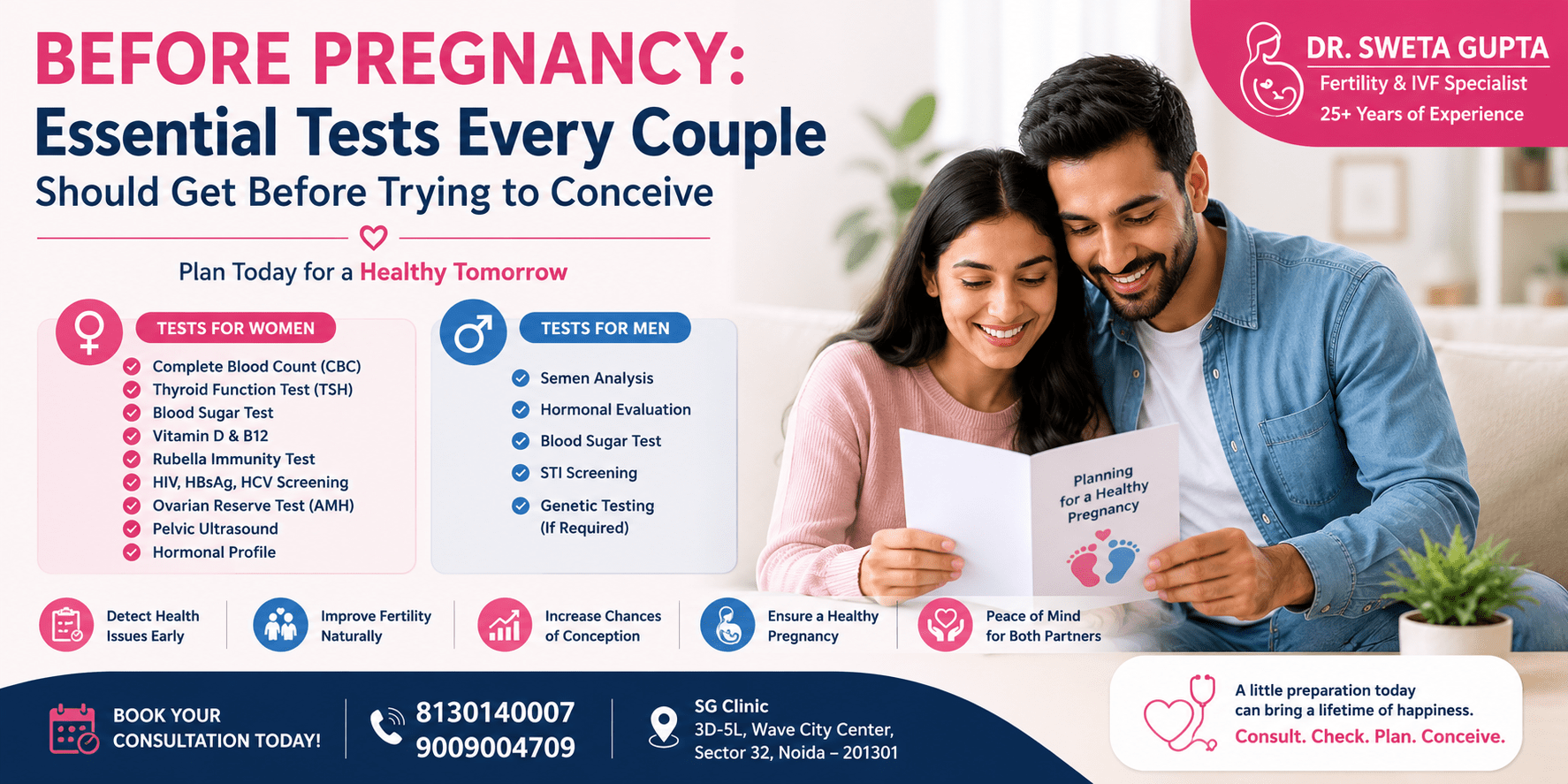
Planning for a baby is one of the most exciting milestones in a couple’s life. While many couples focus on diet, lifestyle changes, and preparing emotionally for parenthood, one important step is often overlooked — pre-pregnancy health screening and fertility testing.
A preconception health checkup helps identify potential health concerns that could affect fertility, conception, or pregnancy outcomes. By undergoing the right tests before trying to conceive, couples can improve their chances of a healthy pregnancy and reduce the risk of complications.
Whether you are planning your first pregnancy or have been trying to conceive for some time, understanding the essential tests before pregnancy can help you make informed decisions about your reproductive health.
Why Are Pre-Pregnancy Tests Important?
Pre-pregnancy testing allows doctors to evaluate the overall health of both partners before conception.
Benefits include:
- Identifying underlying medical conditions
- Detecting fertility-related issues early
- Improving chances of natural conception
- Reducing pregnancy complications
- Ensuring a healthier pregnancy journey
- Addressing genetic risks
- Optimizing reproductive health
Many fertility challenges can be successfully managed when diagnosed early through proper screening.
Preconception Counseling: The First Step Toward Parenthood
Before undergoing any tests, couples should schedule a preconception consultation with a fertility specialist.
During this appointment, your doctor may review:
- Medical history
- Menstrual history
- Previous pregnancies or miscarriages
- Family medical history
- Lifestyle habits
- Existing medical conditions
- Current medications
This evaluation helps determine which tests may be appropriate for each partner.
Essential Tests for Women Before Pregnancy
Complete Blood Count (CBC)
A CBC test evaluates overall health and helps identify:
- Anemia
- Infections
- Nutritional deficiencies
Since anemia is common among women of reproductive age, early detection is important before pregnancy.
Blood Group and Rh Factor
Knowing your blood type and Rh factor is essential.
If a woman is Rh-negative and her partner is Rh-positive, special precautions may be needed during pregnancy to prevent complications.
Thyroid Function Test (TSH)
Thyroid hormones play a vital role in fertility and pregnancy.
Untreated thyroid disorders may cause:
- Difficulty conceiving
- Miscarriage
- Pregnancy complications
A simple blood test can identify thyroid abnormalities.
Blood Sugar Testing
Diabetes and insulin resistance can affect fertility and pregnancy outcomes.
Tests may include:
- Fasting Blood Sugar
- HbA1c
Early detection allows proper management before conception.
Vitamin D Testing
Vitamin D deficiency is increasingly common and may impact reproductive health.
Adequate vitamin D levels support:
- Fertility
- Hormonal balance
- Healthy pregnancy development
Rubella Immunity Test
Rubella infection during pregnancy can cause serious birth defects.
A blood test checks whether a woman has immunity against rubella and whether vaccination may be required before pregnancy.
Hepatitis B, Hepatitis C and HIV Screening
These tests are important to:
- Protect maternal health
- Prevent transmission to the baby
- Ensure proper pregnancy planning
Early diagnosis enables appropriate medical care.
Hormonal Profile
Hormonal evaluation may include:
- FSH
- LH
- Estradiol
- Prolactin
- AMH
Hormonal testing provides valuable information about reproductive health and ovarian function.
Ovarian Reserve Testing (AMH)
Anti-Müllerian Hormone (AMH) testing helps assess ovarian reserve.
This test provides information about:
- Egg quantity
- Fertility potential
- Future reproductive planning
Women planning pregnancy after 30 or 35 may particularly benefit from AMH testing.
Pelvic Ultrasound
A pelvic ultrasound helps evaluate:
- Uterus
- Ovaries
- Endometrial lining
It can identify conditions such as:
- PCOS
- Fibroids
- Ovarian cysts
- Structural abnormalities
Essential Tests for Men Before Pregnancy
Fertility depends on both partners. Male infertility contributes to nearly half of all infertility cases.
Semen Analysis
Semen analysis is one of the most important fertility tests for men.
It evaluates:
- Sperm count
- Sperm motility
- Sperm morphology
- Semen volume
Abnormal findings can often be treated successfully.
Hormonal Evaluation
Hormone testing may include:
- Testosterone
- FSH
- LH
- Prolactin
Hormonal imbalances can affect sperm production and fertility.
Blood Sugar Test
Uncontrolled diabetes can negatively impact sperm quality and reproductive health.
Routine blood sugar screening is recommended.
STI Screening
Sexually transmitted infections may affect fertility if left untreated.
Screening helps ensure reproductive health and pregnancy safety.
Genetic Testing
Genetic testing may be recommended when:
- There is a family history of genetic disorders
- Recurrent pregnancy loss has occurred
- Severe male infertility is present
Fertility Tests for Couples Above 35 Years
Age plays a significant role in fertility.
Couples above 35 should consider early fertility assessment to avoid delays in conception.
Additional investigations may include:
- AMH testing
- Advanced hormone evaluation
- Tubal assessment
- Semen analysis
- Fertility consultation
Early intervention often improves reproductive outcomes.
Genetic Screening Before Pregnancy
Some couples may benefit from genetic carrier screening.
This helps identify inherited conditions that could potentially be passed on to future children.
Genetic counseling can help couples understand risks and available options.
Lifestyle Changes to Improve Fertility Before Pregnancy
Testing is only one part of pregnancy preparation.
Healthy lifestyle habits can significantly improve fertility.
Maintain a Healthy Weight
Both obesity and underweight conditions can affect reproductive health.
Eat a Balanced Diet
Focus on:
- Fruits
- Vegetables
- Whole grains
- Lean proteins
- Healthy fats
Start Folic Acid Supplementation
Folic acid supplementation is generally recommended before conception to support healthy fetal development.
Exercise Regularly
Moderate physical activity supports overall health and fertility.
Avoid Smoking and Alcohol
Both can negatively impact fertility in men and women.
Manage Stress
Stress reduction techniques such as yoga, meditation, and counseling may support reproductive health.
When Should You Consult a Fertility Specialist?
You should consider consulting a fertility specialist if:
- You are above 35 and planning pregnancy
- You have irregular periods
- You have PCOS
- You have endometriosis
- You have experienced recurrent miscarriages
- You have known fertility concerns
- You have been trying to conceive without success
Early fertility assessment can save valuable time and improve pregnancy outcomes.
Frequently Asked Questions
Should both partners undergo testing before pregnancy?
Yes. Fertility and reproductive health involve both partners, making joint evaluation beneficial.
Is fertility testing necessary before trying to conceive?
Not every couple requires extensive testing, but a preconception health checkup can help identify hidden concerns.
Which test is most important before pregnancy?
There is no single test. The appropriate evaluation depends on age, medical history, and reproductive goals.
How early should couples get tested?
Ideally, couples should consider a health assessment several months before planning pregnancy.
Can fertility problems be detected before trying to conceive?
Many fertility-related conditions can be identified through preconception screening and fertility evaluation.
Pregnancy Planning Consultation with Dr. Sweta Gupta in Noida
If you are planning to start a family, a pre-pregnancy consultation can help ensure you are physically and reproductively prepared for a healthy pregnancy journey.
Dr. Sweta Gupta offers comprehensive fertility assessment, pregnancy planning guidance, and reproductive health evaluation for couples seeking expert advice before conception.
Contact Details
Dr. Sweta Gupta
MD (Obs & Gynae, Delhi)
MRCOG (London)
DFSRH (UK)
FRCOG (London)
MSc (Reproduction & Development, Bristol, UK)
Fellowship in Reproductive Medicine & ART (London)
SG Clinic
3D-5L, Wave City Center,
Sector 32, Noida – 201301
📞 8130140007
📞 9009004709
Conclusion
Preparing for pregnancy involves much more than simply trying to conceive. A comprehensive pre-pregnancy health assessment helps identify potential concerns, optimize fertility, and create the best possible foundation for a healthy pregnancy. By taking proactive steps today, couples can move forward with greater confidence on their journey toward parenthood.