

Infertility can be one of the most emotionally challenging journeys for couples dreaming of parenthood. Thankfully, modern reproductive medicine has transformed the possibilities of conception, and one of the most remarkable advancements in assisted reproductive technology is Blastocyst Culture and Day 5 Embryo Transfer. This breakthrough approach in IVF treatment has significantly improved implantation rates, pregnancy success, and healthy live births for many couples worldwide.
Today, leading fertility experts like Dr. Sweta Gupta are helping couples understand how advanced IVF procedures such as blastocyst transfer can increase the chances of successful pregnancy while reducing complications associated with multiple embryo transfers.
Understanding IVF and Embryo Development
Before understanding blastocyst culture, it is important to know how embryos develop during IVF treatment.
What Is IVF?
In Vitro Fertilization is an assisted reproductive technique in which eggs are retrieved from a woman’s ovaries and fertilized with sperm in a laboratory. Once fertilization occurs, embryos are cultured for several days before being transferred into the uterus.
Traditional IVF transfers often occurred on Day 2 or Day 3, when embryos contained around 4–8 cells. However, advancements in embryology now allow embryos to grow until Day 5, reaching the blastocyst stage, which is considered a more advanced and viable developmental stage.
What Is Blastocyst Culture?
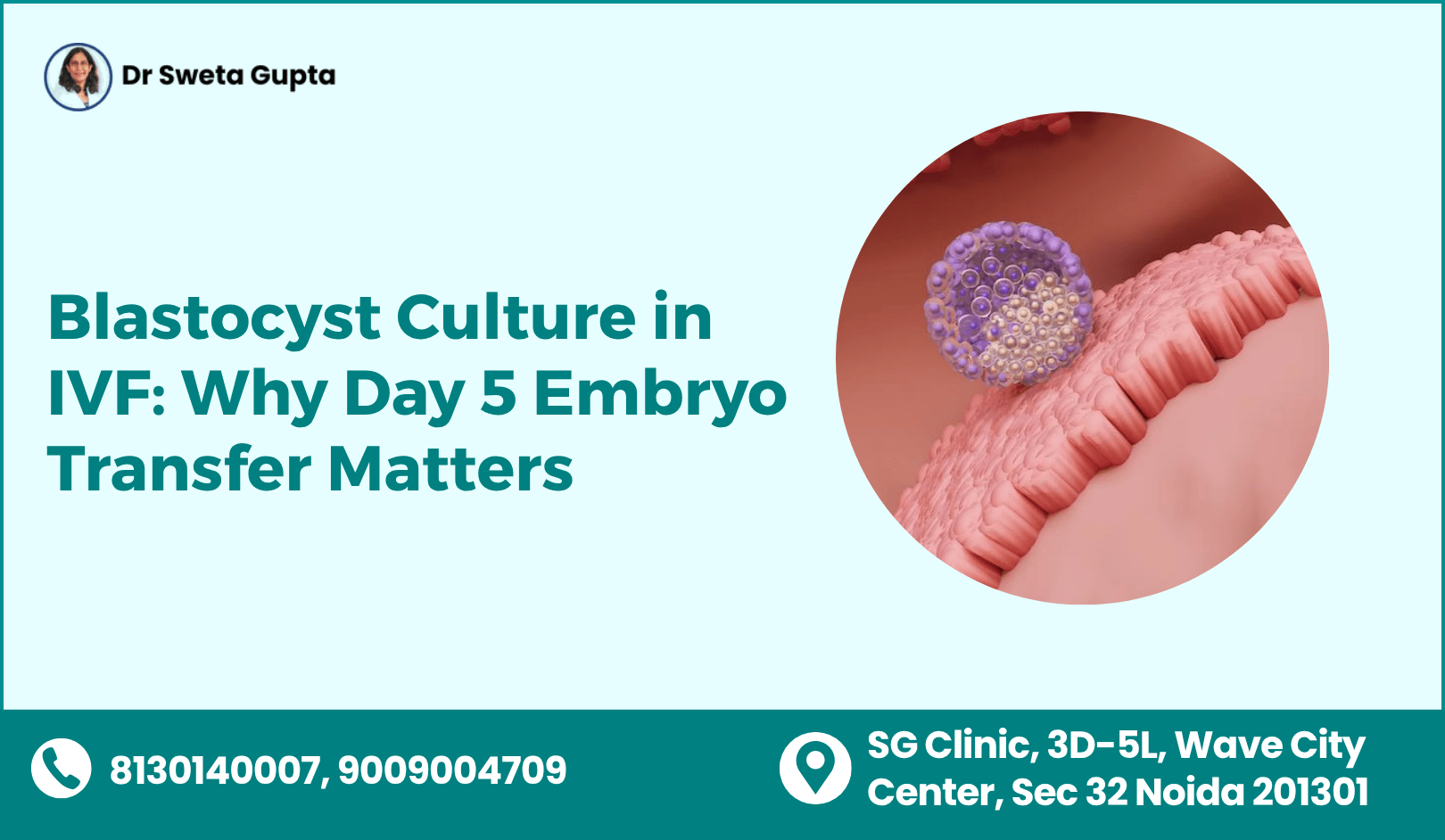
Blastocyst culture refers to the process of growing embryos in the IVF laboratory for five to six days after fertilization until they become blastocysts.
A blastocyst is a highly developed embryo containing approximately 70–100 cells and differentiated structures that are essential for implantation and fetal development.
Components of a Blastocyst
A blastocyst consists of:
1. Inner Cell Mass (ICM)
This group of cells eventually develops into the fetus.
2. Trophectoderm
These cells form the placenta, which supports pregnancy.
3. Fluid-Filled Cavity
This cavity helps embryo expansion and implantation.
Blastocyst-stage embryos are considered more biologically advanced than Day 3 embryos because they have already survived critical stages of development.
Why Day 5 Embryo Transfer Matters
One of the biggest questions couples ask during IVF treatment is:
“Why wait until Day 5?”
The answer lies in natural embryo selection and implantation potential.
In natural conception, fertilization occurs in the fallopian tube, and the embryo reaches the uterus around Day 5 as a blastocyst. Therefore, transferring embryos at this stage better mimics natural pregnancy timing.
According to fertility experts like Dr. Sweta Gupta, Day 5 transfer helps embryologists identify the strongest embryos with the highest implantation potential.
Advantages of Blastocyst Culture and Day 5 Transfer
1. Higher Implantation Rates
Blastocysts have a greater chance of attaching successfully to the uterine lining compared to earlier-stage embryos.
Since only stronger embryos survive to Day 5, the likelihood of implantation increases significantly.
Why It Matters
- Better embryo selection
- Increased pregnancy probability
- Reduced failed implantation cycles
2. Better Embryo Selection
Not all embryos can develop into blastocysts. By extending culture to Day 5, embryologists can naturally identify embryos with higher developmental competence.
This means:
- Weak embryos stop developing
- Strong embryos continue growing
- IVF specialists can choose the best embryo for transfer
3. Reduced Risk of Multiple Pregnancy
Earlier IVF treatments often required transferring multiple embryos to improve success rates. This increased the chances of twins or triplets.
With blastocyst transfer:
- Single embryo transfer becomes more effective
- Pregnancy rates remain high
- Risk of multiple pregnancies decreases
This is safer for both mother and baby.
Understanding Single Embryo Transfer (SET)
Modern fertility care increasingly promotes Single Embryo Transfer (SET), especially with blastocyst-stage embryos.
Benefits of SET
Reduced Pregnancy Complications
Multiple pregnancies carry risks such as:
- Premature birth
- Low birth weight
- Gestational diabetes
- Hypertension
Healthier Pregnancy Outcomes
A single healthy embryo often leads to safer pregnancies.
Better Maternal Health
The mother experiences fewer medical risks during pregnancy and delivery.
Experts like Dr. Sweta Gupta often recommend personalized embryo transfer strategies depending on:
- Maternal age
- Embryo quality
- Fertility history
- Previous IVF cycles
The Science Behind Blastocyst Development
Embryo development is an extraordinary biological process.
Day-by-Day Embryo Development
Day 1 – Fertilization
The egg and sperm combine to form a zygote.
Day 2 – Early Cleavage
Embryos divide into 2–4 cells.
Day 3 – Cleavage Stage
Embryos usually contain 6–8 cells.
Day 4 – Morula Stage
Cells compact tightly together.
Day 5 – Blastocyst Stage
The embryo forms:
- Inner cell mass
- Trophectoderm
- Blastocoel cavity
This stage is ideal for implantation.
Who Benefits Most from Blastocyst Transfer?
Blastocyst transfer may benefit:
Women Under 38
Younger women often produce multiple high-quality embryos suitable for extended culture.
Patients with Recurrent IVF Failure
Blastocyst transfer may improve implantation outcomes.
Couples with Multiple Good-Quality Embryos
Day 5 culture helps identify the strongest embryos.
Patients Opting for Genetic Testing
Blastocysts are ideal for:
- PGT-A
- PGT-M
- Chromosomal screening
Blastocyst Culture and Genetic Testing
Preimplantation Genetic Testing (PGT) is often performed at the blastocyst stage.
Why Blastocysts Are Preferred
At Day 5:
- More cells are available for biopsy
- Testing accuracy improves
- Embryo survival remains high
This helps detect:
- Chromosomal abnormalities
- Genetic disorders
- Implantation issues
Frozen Blastocyst Transfer vs Fresh Transfer
Another advancement in IVF is frozen embryo transfer (FET).
Fresh Blastocyst Transfer
The embryo is transferred in the same IVF cycle.
Frozen Blastocyst Transfer
Embryos are frozen and transferred later.
Benefits of Frozen Transfer
- Better uterine preparation
- Hormonal balance
- Reduced ovarian hyperstimulation risk
Many clinics now report excellent success rates with frozen blastocyst transfers.
Success Rates of Blastocyst Transfer
Blastocyst transfer has improved IVF outcomes worldwide.
Success rates depend on:
- Maternal age
- Embryo quality
- Sperm quality
- Uterine health
- Fertility diagnosis
However, Day 5 embryos generally demonstrate:
- Higher implantation rates
- Better pregnancy rates
- Improved live birth outcomes
Challenges of Blastocyst Culture
Although highly beneficial, blastocyst culture may not be suitable for every patient.
Limited Embryo Numbers
If only a few embryos are available, extended culture may result in no blastocysts developing.
Laboratory Expertise Required
Blastocyst culture demands:
- Advanced IVF lab conditions
- Skilled embryologists
- Precise monitoring systems
This is why choosing an experienced fertility center and specialist is extremely important.
Importance of Choosing the Right IVF Specialist
Your fertility specialist plays a major role in IVF success.
A skilled fertility doctor can:
- Design personalized protocols
- Optimize ovarian stimulation
- Select suitable embryos
- Improve implantation outcomes
Couples seeking advanced fertility treatment often trust experienced experts like Dr. Sweta Gupta for compassionate and evidence-based fertility care.
Emotional Benefits of Blastocyst Transfer
Infertility treatment can be emotionally exhausting. Blastocyst transfer may help reduce stress by:
- Improving success probability
- Reducing repeated failed cycles
- Lowering chances of multiple pregnancies
Patients often feel more confident knowing that the embryo selected has already demonstrated stronger developmental capability.
Lifestyle Factors That Influence IVF Success
Even with advanced IVF technologies, healthy lifestyle habits remain important.
Healthy Diet
Nutrient-rich foods support reproductive health.
Exercise
Moderate physical activity improves hormonal balance.
Stress Management
Stress reduction techniques may positively influence fertility treatment.
Sleep Quality
Adequate rest supports overall health and hormonal function.
Avoid Smoking and Alcohol
Both can negatively impact fertility outcomes.
Common Myths About Blastocyst Transfer
Myth 1: Day 5 Transfer Guarantees Pregnancy
While success rates improve, no IVF method guarantees pregnancy.
Myth 2: All Embryos Reach Blastocyst Stage
Not every embryo survives extended culture.
Myth 3: Blastocyst Transfer Is Only for Younger Women
Older women may also benefit depending on embryo quality and fertility history.
Myth 4: Frozen Blastocysts Are Less Effective
Frozen embryo transfer often achieves excellent outcomes.
How Embryologists Grade Blastocysts
Embryologists evaluate:
- Expansion level
- Inner cell mass quality
- Trophectoderm appearance
Higher-grade blastocysts generally have better implantation potential.
Personalized Fertility Care Matters
Every couple’s fertility journey is unique.
A personalized IVF strategy may include:
- Ovarian reserve assessment
- Hormonal evaluation
- Semen analysis
- Genetic screening
- Embryo monitoring
Experts like Dr. Sweta Gupta emphasize individualized treatment plans rather than one-size-fits-all IVF protocols.
Technological Advancements Supporting Blastocyst Culture
Modern IVF labs use advanced systems such as:
Time-Lapse Imaging
Continuous embryo monitoring without disturbance.
AI-Based Embryo Selection
Artificial intelligence helps predict embryo viability.
Advanced Incubators
Maintain stable culture conditions.
Cryopreservation Technology
Improved freezing methods increase embryo survival.
These innovations have significantly improved IVF success rates.
Day 5 Transfer and Endometrial Synchronization
Successful implantation requires perfect timing between:
- Embryo development
- Uterine receptivity
Blastocyst transfer aligns more naturally with endometrial readiness, increasing implantation probability.
Blastocyst Culture in Patients with PCOS
Women with Polycystic Ovary Syndrome often produce multiple eggs during IVF.
Blastocyst culture may help:
- Identify viable embryos
- Reduce unnecessary transfers
- Improve pregnancy outcomes
Male Factor Infertility and Blastocyst Development
Even with male infertility issues, advanced techniques such as:
- ICSI
- Sperm selection
- Blastocyst culture
can improve fertilization and embryo quality.
IVF Success Is More Than Technology
While advanced IVF procedures are valuable, emotional support and compassionate care remain equally important.
Patients often need:
- Counseling
- Emotional reassurance
- Transparent communication
- Long-term fertility planning
A trusted fertility specialist can make the journey less stressful and more hopeful.
Questions Couples Often Ask About Blastocyst Transfer
Is Blastocyst Transfer Painful?
No, embryo transfer is usually painless and quick.
How Many Blastocysts Are Typically Transferred?
Often one high-quality embryo is enough.
Can Blastocysts Be Frozen?
Yes, vitrification technology allows successful freezing and thawing.
What Happens If No Blastocysts Develop?
Your specialist may recommend alternative protocols in future cycles.
Recovery After Embryo Transfer
After Day 5 transfer:
- Avoid heavy physical strain
- Continue prescribed medications
- Stay hydrated
- Maintain emotional balance
Most patients can resume normal daily activities.
Signs of Successful Implantation
Some women may notice:
- Mild cramping
- Light spotting
- Breast tenderness
- Fatigue
However, symptoms vary widely and are not definitive indicators of pregnancy.
The Future of Blastocyst Culture
The future of fertility treatment is becoming increasingly precise and personalized.
Emerging trends include:
- AI-driven embryo analysis
- Non-invasive genetic testing
- Advanced reproductive genomics
- Personalized implantation prediction
These advancements aim to improve success rates while minimizing emotional and financial burdens for couples.
Why Noida Is Emerging as a Fertility Care Destination
Noida has become a growing hub for advanced fertility treatment because of:
- Modern IVF laboratories
- Experienced fertility specialists
- Advanced reproductive technologies
- Affordable treatment options
Couples searching for trusted fertility guidance often consult experts like Dr. Sweta Gupta for advanced IVF procedures and patient-focused fertility care.