

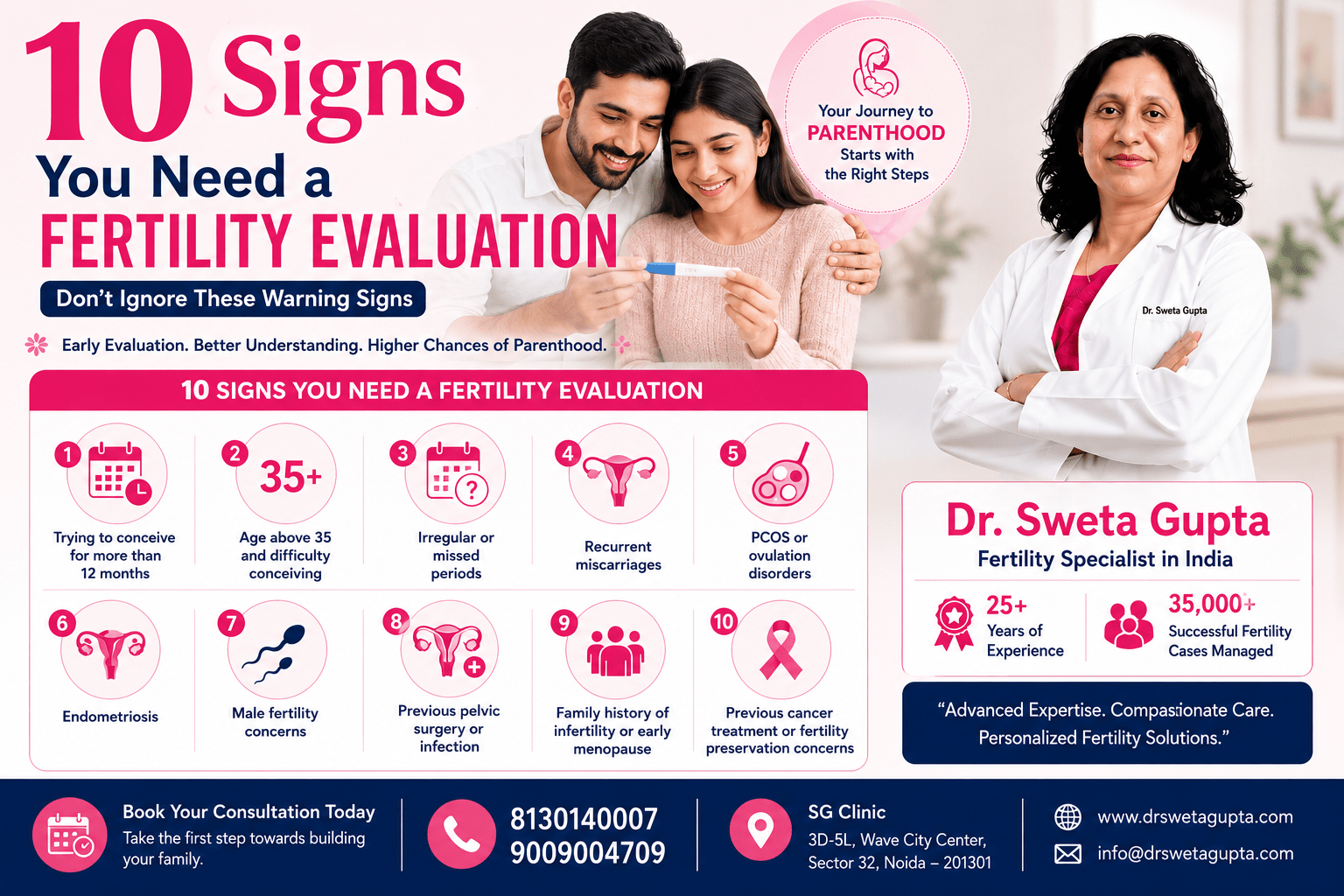
Starting a family is one of life’s most exciting milestones. While many couples conceive naturally within a few months of trying, others may experience unexpected challenges that delay pregnancy. These challenges can be emotionally overwhelming, especially when there are no obvious symptoms pointing to an underlying fertility issue.
One of the biggest misconceptions about infertility is that fertility problems always present with noticeable symptoms. In reality, many men and women may have underlying reproductive conditions without realizing it until they begin trying to conceive.
This is where a fertility evaluation becomes essential.
A fertility evaluation is not only for couples undergoing IVF or those diagnosed with infertility. It is a comprehensive assessment that helps identify potential reproductive health issues early, allowing timely treatment and improving the chances of a successful pregnancy.
As an internationally trained Fertility Specialist in India with more than 25 years of experience, Dr. Sweta Gupta has helped thousands of couples understand their fertility health and receive personalized treatment plans based on their individual needs.
In this complete guide, you’ll learn the 10 most important signs that indicate you should consider a fertility evaluation, the tests involved, and why seeking expert advice early can make a significant difference in your fertility journey.
Why Early Fertility Evaluation Matters
Many couples believe they should continue trying naturally for years before consulting a fertility specialist.
Unfortunately, delaying evaluation can sometimes reduce available treatment options, especially when age-related fertility decline or underlying reproductive disorders are involved.
Early fertility evaluation helps to:
- Identify potential fertility issues before they become more complex.
- Diagnose hormonal, ovulatory, uterine, tubal, or male fertility problems.
- Provide personalized recommendations based on your reproductive health.
- Reduce unnecessary delays in conception.
- Help couples understand all available fertility treatment options.
Seeking medical advice early does not automatically mean IVF will be required. In many cases, lifestyle changes, medications, or simpler fertility treatments may be sufficient.
What Is a Fertility Evaluation?
A fertility evaluation is a detailed medical assessment designed to understand the reproductive health of both partners.
Since infertility can result from male, female, or combined factors, evaluating both partners is essential.
A fertility evaluation typically includes:
Medical History
Your doctor will discuss:
- Menstrual history
- Pregnancy history
- Previous miscarriages
- Medical conditions
- Previous surgeries
- Medications
- Lifestyle habits
- Family history
- Sexual health
Physical Examination
A general physical examination may identify conditions that affect fertility.
Hormonal Assessment
Blood tests evaluate reproductive hormones responsible for ovulation and fertility.
Ultrasound Examination
Pelvic ultrasound helps assess:
- Ovaries
- Uterus
- Endometrial lining
- Ovarian reserve indicators
Male Fertility Assessment
A semen analysis evaluates:
- Sperm count
- Motility
- Morphology
- Overall sperm health
Who Should Consider a Fertility Evaluation?
Many people assume fertility evaluations are only for couples experiencing infertility.
However, fertility assessment may also benefit:
- Couples planning pregnancy after age 35.
- Women with irregular menstrual cycles.
- Men with known fertility concerns.
- Couples with recurrent miscarriages.
- Individuals with a history of cancer treatment.
- Women diagnosed with PCOS or endometriosis.
- Couples planning IVF or fertility preservation.
10 Signs You Need a Fertility Evaluation
1. You’ve Been Trying to Conceive for More Than One Year
One of the most common reasons couples seek fertility care is difficulty conceiving despite regular unprotected intercourse.
General recommendations include:
Women Under 35
Consult a fertility specialist after 12 months of trying without pregnancy.
Women Over 35
Seek evaluation after 6 months of trying.
Women Over 40
Consult a fertility specialist as soon as pregnancy planning begins.
Fertility naturally declines with age, making early assessment increasingly important.
2. You Are Above 35 Years and Planning Pregnancy
Age plays a significant role in female fertility.
Unlike men, women are born with a finite number of eggs.
As age increases:
- Egg quantity declines.
- Egg quality decreases.
- Chromosomal abnormalities become more common.
- Pregnancy may become more difficult.
A fertility evaluation can assess:
- Ovarian reserve
- Hormone levels
- Reproductive health
- Individual fertility potential
Early consultation allows couples to make informed decisions about family planning.
3. Your Menstrual Cycles Are Irregular
Regular menstrual cycles usually indicate regular ovulation.
Irregular periods may suggest that ovulation is not occurring consistently.
Examples include:
- Cycles shorter than 21 days
- Cycles longer than 35 days
- Frequently missed periods
- Unpredictable menstrual patterns
Common causes include:
Polycystic Ovary Syndrome (PCOS)
One of the leading causes of irregular ovulation.
Thyroid Disorders
Both hypothyroidism and hyperthyroidism can affect fertility.
Hormonal Imbalances
Changes in reproductive hormones may interfere with ovulation.
Premature Ovarian Insufficiency
Early decline in ovarian function can lead to irregular or absent periods.
4. You’ve Experienced Recurrent Miscarriages
Miscarriage is emotionally challenging for any couple.
Although a single miscarriage is relatively common, experiencing two or more consecutive pregnancy losses may warrant further evaluation.
Possible contributing factors include:
- Chromosomal abnormalities
- Uterine abnormalities
- Hormonal disorders
- Autoimmune conditions
- Blood clotting disorders
- Thyroid disease
A fertility specialist may recommend investigations to identify possible causes and discuss appropriate management.
5. You Have Been Diagnosed with PCOS
Polycystic Ovary Syndrome (PCOS) affects millions of women worldwide and is one of the most common causes of infertility.
Symptoms may include:
- Irregular periods
- Excess facial or body hair
- Acne
- Weight gain
- Difficulty ovulating
Not every woman with PCOS experiences infertility, but evaluation helps determine whether ovulation is occurring regularly and whether treatment may be beneficial.
6. You Have Endometriosis
Endometriosis occurs when tissue similar to the uterine lining grows outside the uterus.
This condition may affect:
- Ovaries
- Fallopian tubes
- Pelvic organs
Symptoms can include:
- Severe menstrual pain
- Pain during intercourse
- Chronic pelvic pain
- Heavy menstrual bleeding
Endometriosis may reduce fertility by affecting egg quality, tubal function, or the pelvic environment.
Early evaluation allows for appropriate fertility planning and management.
7. Male Fertility Concerns
Infertility is not solely a female issue.
Male factors contribute to approximately half of infertility cases.
A fertility evaluation is recommended if there are concerns such as:
Low Sperm Count
Fewer sperm reduce the chances of fertilization.
Poor Sperm Motility
Sperm may struggle to reach and fertilize the egg.
Abnormal Sperm Morphology
Unusual sperm shape may affect fertilization potential.
Previous Testicular Surgery or Injury
Medical history may influence sperm production.
Erectile or Ejaculatory Problems
These issues can also affect fertility and should be discussed openly with a fertility specialist.
8. You Have a History of Pelvic Surgery or Pelvic Infection
Previous pelvic conditions can sometimes affect reproductive organs.
Examples include:
- Fibroid surgery
- Ovarian cyst surgery
- Appendicitis with complications
- Pelvic inflammatory disease (PID)
- Tubal surgery
These conditions may impact:
- Fallopian tubes
- Ovarian function
- Pelvic anatomy
Evaluation helps determine whether fertility has been affected.
9. Family History of Fertility Problems or Early Menopause
Family history can provide important clues about reproductive health.
You may benefit from fertility assessment if close relatives experienced:
- Early menopause
- Premature ovarian insufficiency
- Recurrent miscarriages
- Genetic disorders affecting fertility
Early evaluation allows proactive fertility planning, particularly if ovarian reserve may decline earlier than expected.
10. Previous Cancer Treatment or Fertility Preservation Concerns
Certain cancer treatments, such as chemotherapy or radiation therapy, may affect fertility.
Individuals planning cancer treatment or those who have completed treatment should discuss fertility with a specialist.
Fertility preservation options may include:
- Egg freezing
- Embryo freezing
- Ovarian tissue preservation (in selected cases)
A fertility evaluation helps determine current reproductive potential and future family-building options.
What Tests Are Included in a Fertility Evaluation?
The exact investigations depend on each couple’s medical history, but commonly recommended tests include:
Female Fertility Tests
Hormone Blood Tests
These may assess hormones related to ovarian function and ovulation, such as AMH, FSH, LH, estradiol, progesterone, prolactin, and thyroid function, based on individual needs.
Pelvic Ultrasound
Used to evaluate:
- Ovaries
- Uterus
- Endometrial lining
- Antral follicle count
Ovulation Assessment
Helps determine whether ovulation is occurring regularly.
Tubal Assessment
Procedures such as HSG (Hysterosalpingography) or HyCoSy may be recommended to evaluate whether the fallopian tubes are open.
Male Fertility Tests
Semen Analysis
The first-line investigation for assessing male fertility.
It evaluates:
- Sperm concentration
- Motility
- Morphology
- Semen volume
Hormonal Evaluation
Recommended in selected cases where hormonal factors may contribute to infertility.
Additional Tests
Depending on the clinical situation, further investigations such as genetic testing or scrotal ultrasound may be advised.
What Happens During Your First Fertility Consultation?
Your first consultation is an opportunity to discuss your reproductive health and ask questions.
Dr. Sweta Gupta will review:
- Your medical and reproductive history
- Previous fertility treatments (if any)
- Menstrual cycle patterns
- Lifestyle factors
- Existing test results
- Fertility goals
Based on this assessment, a personalized evaluation and treatment plan will be developed.
The goal is to identify any underlying issues and recommend the most appropriate next steps—whether that involves lifestyle guidance, medication, further testing, or fertility treatments such as IUI or IVF.
What Happens After Your Fertility Evaluation?
Receiving the results of your fertility evaluation is an important step toward understanding your reproductive health. While some couples may discover that no major fertility issues are present, others may identify conditions that require medical treatment or assisted reproductive techniques.
The goal of a fertility evaluation is not simply to diagnose infertility—it is to create a personalized treatment plan that improves your chances of achieving a healthy pregnancy.
Depending on your results, Dr. Sweta Gupta may recommend one or more of the following:
Lifestyle Modifications
For many couples, improving overall health can positively influence fertility.
Recommendations may include:
- Maintaining a healthy body weight
- Following a balanced fertility-friendly diet
- Regular physical activity
- Managing stress effectively
- Quitting smoking and tobacco use
- Limiting alcohol consumption
- Improving sleep quality
These lifestyle changes support reproductive health and may complement medical treatment.
Ovulation Induction
Women with irregular ovulation may benefit from medications that help stimulate egg development and ovulation.
This treatment is commonly considered for women with conditions such as:
- Polycystic Ovary Syndrome (PCOS)
- Mild ovulatory disorders
Regular monitoring helps ensure safe and effective treatment.
Intrauterine Insemination (IUI)
IUI may be recommended in selected cases, such as:
- Mild male factor infertility
- Unexplained infertility
- Ovulation disorders
- Cervical factor infertility
During IUI, specially prepared sperm is placed directly into the uterus around the time of ovulation to increase the chances of fertilization.
In Vitro Fertilization (IVF)
IVF may be advised for couples experiencing:
- Blocked fallopian tubes
- Severe male infertility
- Advanced maternal age
- Endometriosis
- Repeated IUI failure
- Certain unexplained infertility cases
IVF involves fertilizing eggs in a laboratory and transferring healthy embryos into the uterus.
Intracytoplasmic Sperm Injection (ICSI)
ICSI is an advanced IVF technique in which a single sperm is injected directly into an egg.
It may be recommended for:
- Low sperm count
- Poor sperm motility
- Previous fertilization failure
- Surgically retrieved sperm
Fertility Preservation
For individuals planning cancer treatment or delaying parenthood for personal or medical reasons, fertility preservation options may include:
- Egg freezing
- Embryo freezing
- Sperm freezing
Lifestyle Habits That Support Fertility
While medical treatment plays a vital role, healthy lifestyle choices can also contribute to overall reproductive wellness.
Eat a Nutrient-Rich Diet
A balanced diet supports hormonal health and reproductive function.
Include:
- Fresh fruits
- Green vegetables
- Whole grains
- Lean protein
- Healthy fats
- Adequate hydration
Exercise Regularly
Moderate exercise supports cardiovascular health and weight management.
Avoid excessive exercise unless advised by your doctor.
Maintain a Healthy Weight
Being significantly underweight or overweight may affect ovulation and hormone balance.
Quit Smoking
Smoking has been associated with reduced fertility in both men and women.
Stopping smoking benefits overall health and reproductive function.
Limit Alcohol Intake
If you’re planning pregnancy, discuss alcohol consumption with your healthcare provider.
Manage Stress
Although stress alone does not cause infertility, managing stress can improve overall well-being during fertility treatment.
Helpful strategies include:
- Meditation
- Yoga
- Walking
- Deep breathing
- Counseling
- Support groups
Common Myths About Fertility Evaluation
Myth 1: Fertility Testing Is Only for Women
Fact: Male factors contribute to approximately 40–50% of infertility cases. Both partners should be evaluated.
Myth 2: Fertility Evaluation Means IVF Is the Only Option
Fact: Many fertility concerns can be managed with medication, lifestyle changes, ovulation induction, or IUI. IVF is recommended only when appropriate.
Myth 3: Regular Periods Mean You Are Fertile
Fact: While regular cycles often indicate ovulation, they do not guarantee fertility. Other factors such as egg quality, tubal health, and sperm quality also play a role.
Myth 4: Fertility Problems Always Have Symptoms
Fact: Many fertility conditions are silent and only become apparent during evaluation.
Myth 5: Infertility Is Always a Woman’s Problem
Fact: Fertility is a shared responsibility. Both partners should undergo evaluation when pregnancy is delayed.
When Should Couples Consider IVF or Advanced Fertility Treatment?
Not every couple requires IVF.
However, advanced fertility treatment may be recommended in situations such as:
- Blocked or damaged fallopian tubes
- Severe male factor infertility
- Repeated miscarriage (after appropriate evaluation)
- Advanced maternal age with reduced ovarian reserve
- Endometriosis affecting fertility
- Repeated unsuccessful IUI cycles
- Certain unexplained infertility cases
The decision is always based on a thorough clinical assessment and individualized discussion.
Why Early Fertility Evaluation Can Improve Outcomes
One of the biggest advantages of early fertility assessment is that it provides clarity.
Rather than continuing to try without understanding the underlying cause, couples can make informed decisions based on medical evidence.
Early evaluation may help:
- Detect treatable fertility conditions
- Preserve fertility options
- Avoid unnecessary delays
- Improve treatment planning
- Reduce emotional uncertainty
Timely diagnosis often opens the door to a wider range of treatment options.
Why Choose Dr. Sweta Gupta?
Choosing the right fertility specialist is one of the most important decisions on your journey to parenthood.
International Qualifications
Dr. Sweta Gupta has advanced training in reproductive medicine, including:
- MD (Obs & Gynae, Delhi)
- MRCOG (London)
- DFSRH (UK)
- FRCOG (London)
- MSc (Reproduction & Development, Bristol, UK)
- Fellowship in Reproductive Medicine & ART (London)
More Than 25 Years of Experience
With over 25 years of experience, Dr. Sweta Gupta has helped thousands of couples navigate infertility with compassion, expertise, and evidence-based care.
Comprehensive Fertility Services
- Fertility Evaluation
- Pregnancy Planning
- Ovulation Assessment
- IVF
- ICSI
- IUI
- Frozen Embryo Transfer (FET)
- Preimplantation Genetic Testing (PGT)
- PCOS & Endometriosis Management
- Male & Female Fertility Care
Personalized Treatment Plans
Every patient receives an individualized fertility plan based on:
- Age
- Medical history
- Hormonal profile
- Ovarian reserve
- Semen analysis
- Family-building goals
Frequently Asked Questions (FAQs)
1. What is a fertility evaluation?
A fertility evaluation is a series of consultations, medical history reviews, examinations, and tests that help identify factors affecting a couple’s ability to conceive.
2. When should I see a fertility specialist?
Generally, couples under 35 should seek evaluation after 12 months of trying to conceive, while women aged 35 or older should consider evaluation after 6 months. Women over 40 should seek advice as soon as they plan pregnancy.
3. Is fertility testing painful?
Most fertility tests are minimally invasive. Some procedures, such as HSG, may cause temporary discomfort.
4. Do both partners need testing?
Yes. Fertility assessment is recommended for both partners because infertility can involve male, female, or combined factors.
5. Can irregular periods affect fertility?
Yes. Irregular menstrual cycles may indicate irregular ovulation or hormonal imbalances.
6. Can PCOS cause infertility?
PCOS can affect ovulation, but many women with PCOS achieve pregnancy with appropriate treatment.
7. Does age affect fertility?
Yes. Female fertility naturally declines with age, particularly after 35 years.
8. Can stress cause infertility?
Stress alone is not usually a direct cause of infertility, but managing stress supports overall health and well-being during fertility treatment.
9. What tests are included in male fertility evaluation?
A semen analysis is commonly the first test. Additional investigations may be recommended based on individual findings.
10. Will I need IVF after fertility testing?
Not necessarily. Treatment depends on the underlying cause. Some couples conceive with lifestyle changes or simpler treatments such as ovulation induction or IUI.
11. How long does a fertility evaluation take?
The timeline varies depending on menstrual cycle timing and the tests required. Some evaluations can be completed within a few weeks.
12. Can lifestyle changes improve fertility?
Healthy lifestyle habits support reproductive health and may improve treatment outcomes.
Final Thoughts
Fertility challenges can be emotionally overwhelming, but they are also increasingly manageable with modern reproductive medicine. The most important step is recognizing when it’s time to seek expert advice.
If you recognize one or more of the signs discussed in this guide, consider scheduling a fertility evaluation rather than waiting. Early diagnosis can identify treatable conditions, expand your treatment options, and help you move forward with confidence.
Every fertility journey is unique. A personalized evaluation allows your treatment plan to be based on your individual needs—not assumptions.
Book Your Fertility Consultation
If you’re planning pregnancy or have concerns about your fertility, schedule a consultation with Dr. Sweta Gupta, one of India’s leading fertility specialists with 25+ years of experience in reproductive medicine.
Dr. Sweta Gupta
SG Clinic
3D-5L, Wave City Center,
Sector 32, Noida – 201301
📞 8130140007
📞 9009004709