

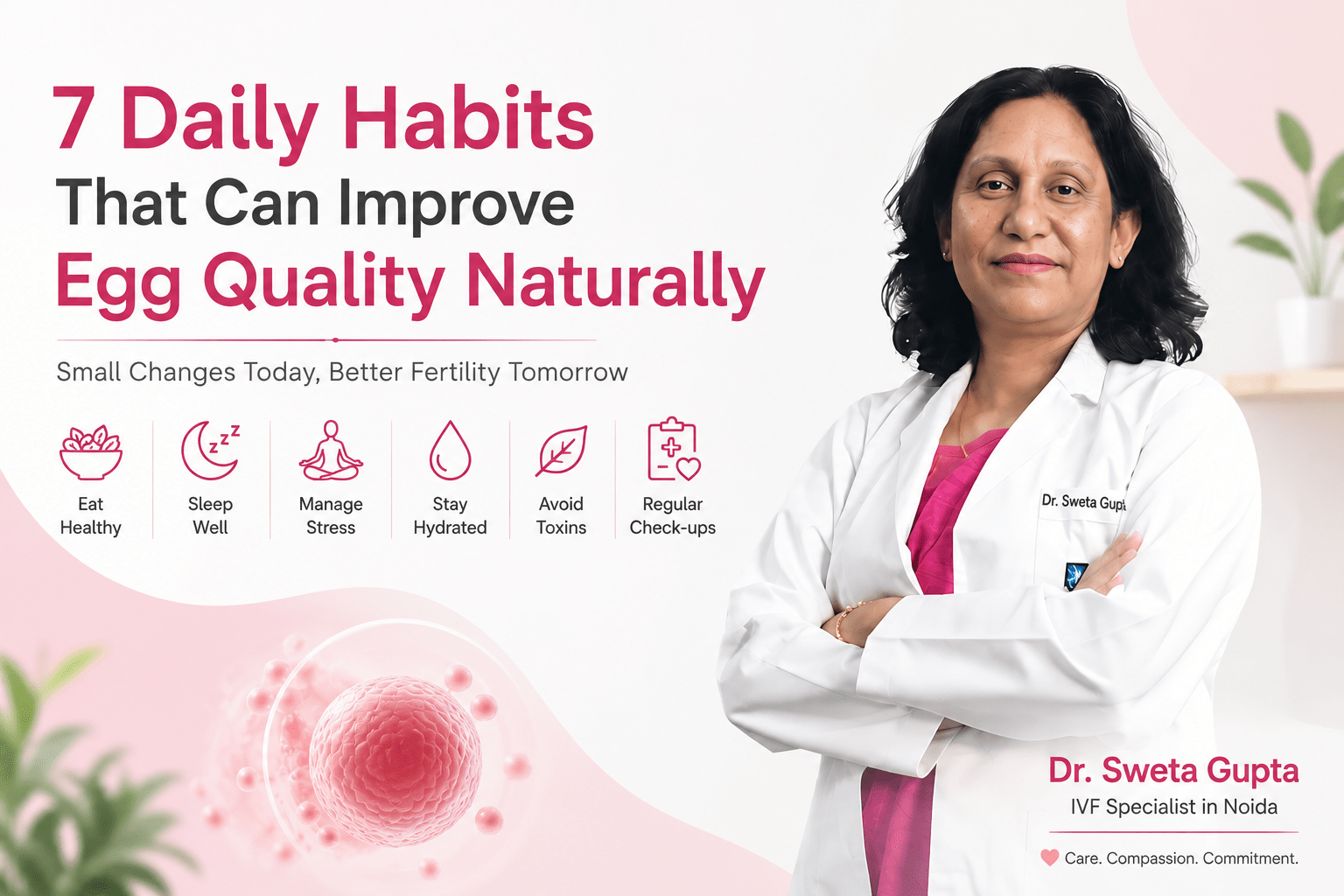
Improving egg quality naturally is an important step for women planning pregnancy, whether they are trying to conceive naturally or considering fertility treatment. While age is one of the biggest factors affecting egg quality, healthy lifestyle habits can support the development of healthier eggs during their 90–120-day maturation process. Eating a balanced diet rich in antioxidants, maintaining a healthy weight, getting 7–9 hours of quality sleep, exercising regularly, managing stress, staying hydrated, reducing exposure to environmental toxins, and seeking timely fertility evaluation are all evidence-based practices that contribute to better reproductive health.
Table of Contents
- Introduction
- Meet Dr. Sweta Gupta – Leading IVF Specialist in Noida
- What Is Egg Quality?
- Egg Quality vs. Egg Quantity: Understanding the Difference
- Why Does Egg Quality Decline?
- The Science Behind Healthy Egg Development
- Can Egg Quality Improve Naturally?
- Daily Habit #1: Eat a Fertility-Friendly Diet Rich in Antioxidants
- Daily Habit #2: Prioritize Quality Sleep Every Night
- Daily Habit #3: Exercise Regularly—but Avoid Overtraining
- Daily Habit #4: Manage Stress for Better Reproductive Health
- Daily Habit #5: Stay Hydrated and Maintain a Healthy Weight
- Daily Habit #6: Reduce Exposure to Environmental Toxins
- Daily Habit #7: Schedule Regular Fertility Check-Ups
- Best Foods That May Support Egg Quality Naturally
- Essential Vitamins and Supplements for Female Fertility
- Lifestyle Habits That Can Harm Egg Quality
- Daily Fertility Routine Recommended by Dr. Sweta Gupta
- Can Women Above 35 Improve Egg Quality Naturally?
- How IVF Can Help Women with Poor Egg Quality
- When Should You Consult an IVF Specialist in Noida?
- Fertility Tests Your Doctor May Recommend
- Why Choose Dr. Sweta Gupta – Trusted IVF Doctor in Noida
- Daily Fertility Checklist for Women Planning Pregnancy
- Common Myths About Egg Quality
- Expert Tips from Dr. Sweta Gupta
- Conclusion
- Frequently Asked Questions (FAQs)
According to Dr. Sweta Gupta, a highly experienced IVF Specialist in Noida with over 25 years of expertise in reproductive medicine, adopting these habits consistently can help optimize the body’s natural fertility potential. Women over 35, those with PCOS, low AMH, irregular periods, recurrent miscarriages, or difficulty conceiving should consult an experienced IVF Doctor in Noida for a comprehensive fertility assessment and personalized treatment plan. Early diagnosis and appropriate medical guidance can significantly improve the chances of achieving a healthy pregnancy.
Planning for pregnancy is one of the most exciting yet emotional journeys in a woman’s life. While many couples focus on timing intercourse or tracking ovulation, one important factor often goes unnoticed—egg quality.
Healthy eggs are essential for successful fertilization, embryo development, implantation, and ultimately a healthy pregnancy. Unlike egg quantity, which naturally declines with age, egg quality is influenced by multiple factors including nutrition, lifestyle, sleep, stress, environmental toxins, and overall health.
The good news is that although age cannot be reversed, many daily habits can support healthier eggs and improve your reproductive health naturally.
According to Dr. Sweta Gupta, an internationally trained IVF Specialist in Noida with over 25 years of experience in reproductive medicine, adopting healthy lifestyle changes several months before trying to conceive can positively influence egg health and improve the chances of natural conception as well as IVF success.
Whether you’re trying to conceive naturally, preparing for IVF treatment, or simply planning your future pregnancy, understanding how your everyday choices affect your fertility can make a significant difference.
Meet Dr. Sweta Gupta – Trusted IVF Specialist in Noida
When couples face challenges in conceiving, choosing an experienced fertility expert becomes one of the most important decisions.
Dr. Sweta Gupta is among the most respected IVF Doctors in Noida, known for her patient-centered approach, evidence-based fertility treatments, and extensive expertise in reproductive medicine.
Qualifications
- MD (Obs & Gynae, Delhi)
- MRCOG (London)
- DFSRH (UK)
- FRCOG (London)
- MSc (Reproduction & Development, Bristol, UK)
- Fellowship in Reproductive Medicine & ART (London)
With over 25 years of clinical experience, Dr. Sweta Gupta has helped thousands of couples achieve their dream of parenthood through advanced fertility treatments and personalized reproductive care.
Her treatment philosophy focuses not only on IVF but also on optimizing natural fertility whenever possible through lifestyle guidance, nutritional counseling, and individualized treatment plans.
Understanding Egg Quality
Many women believe fertility depends only on the number of eggs they have. In reality, egg quality is often more important than egg quantity.
Egg quality refers to the ability of an egg to:
- Mature properly
- Be fertilized successfully
- Develop into a healthy embryo
- Implant inside the uterus
- Result in a healthy pregnancy
A high-quality egg contains healthy chromosomes and sufficient energy-producing mitochondria that support embryo development.
Poor-quality eggs are more likely to:
- Fail to fertilize
- Stop developing
- Lead to implantation failure
- Cause miscarriage
- Increase chromosomal abnormalities
This is why many women with a good ovarian reserve may still experience infertility if egg quality is compromised.
Egg Quality vs Egg Quantity
Understanding the difference between these two terms is essential.
| Egg Quantity | Egg Quality |
|---|---|
| Number of eggs remaining | Health of each egg |
| Measured through AMH & AFC | Cannot be measured directly |
| Declines gradually with age | Declines more rapidly after 35 |
| Important for ovarian reserve | Important for successful pregnancy |
| Affects IVF stimulation | Affects embryo quality and implantation |
Many women worry after seeing a low AMH report. However, ovarian reserve is only one part of fertility.
Even women with lower egg numbers can conceive if the remaining eggs are healthy.
This is why an experienced IVF Specialist in Noida evaluates the complete fertility profile rather than relying on one test alone.
Why Does Egg Quality Decline?
Unlike sperm, women are born with all the eggs they will ever have.
As women age, these eggs remain inside the ovaries for years, making them vulnerable to:
- Oxidative stress
- Environmental toxins
- Hormonal imbalance
- Poor nutrition
- Smoking
- Alcohol
- Chronic diseases
- Obesity
- Inflammation
Over time, these factors can damage the chromosomes and mitochondria inside the eggs.
The Science Behind Egg Quality
Eggs are among the largest cells in the human body.
Each egg contains:
- DNA
- Chromosomes
- Mitochondria
- Proteins
- Cellular nutrients
Mitochondria are often called the “powerhouses” of the cell.
They generate the energy required for:
- Egg maturation
- Fertilization
- Cell division
- Embryo growth
Poor mitochondrial function is one of the major reasons for declining egg quality.
This explains why healthy lifestyle habits that reduce oxidative stress and improve mitochondrial health may positively influence fertility.
Can Egg Quality Improve Naturally?
This is one of the most common questions patients ask.
The answer is encouraging.
Although women cannot create new eggs, the eggs that are preparing for ovulation undergo a maturation process lasting approximately 90–120 days.
This means the lifestyle choices you make today can influence the health of the eggs that may be released three to four months later.
Scientific studies suggest that nutrition, sleep, stress reduction, exercise, and antioxidant intake may help support healthier egg development during this maturation phase.
While these habits cannot reverse aging, they can optimize the environment in which eggs mature.
Daily Habit #1: Eat a Fertility-Friendly Diet Rich in Antioxidants
Nutrition is one of the most powerful natural tools for supporting reproductive health.
Every meal provides nutrients that influence hormone production, egg maturation, inflammation, and cellular repair.
Antioxidants help protect developing eggs from oxidative stress, which is one of the leading causes of cellular damage.
Why Antioxidants Matter
Free radicals are unstable molecules produced through:
- Pollution
- Smoking
- Stress
- Processed foods
- Poor sleep
- Aging
Excess free radicals damage egg cells by affecting their DNA and mitochondria.
Antioxidants neutralize these harmful molecules.
Best Antioxidant-Rich Foods
Colorful Fruits
- Blueberries
- Strawberries
- Oranges
- Kiwi
- Pomegranate
Green Vegetables
- Spinach
- Kale
- Broccoli
- Fenugreek leaves
- Lettuce
Healthy Fats
- Avocado
- Walnuts
- Almonds
- Pistachios
- Chia seeds
Protein Sources
- Eggs
- Fish
- Lentils
- Chickpeas
- Paneer
- Greek yogurt
Whole Grains
- Oats
- Brown rice
- Quinoa
- Millets
Important Nutrients for Egg Health
- Vitamin C
- Vitamin E
- Folate
- Zinc
- Selenium
- Iron
- Magnesium
- Omega-3 fatty acids
- Coenzyme Q10 (CoQ10)
These nutrients support hormone production, reduce inflammation, and improve mitochondrial function.
Fertility Plate Method
Aim for every meal to include:
- 50% vegetables
- 25% protein
- 25% whole grains
- Healthy fats
- Plenty of water
Patients consulting an experienced IVF Doctor in Noida are often advised to adopt a Mediterranean-style diet, which has been associated with improved fertility outcomes.
Daily Habit #2: Prioritize Quality Sleep Every Night
Sleep is often underestimated, but it plays a crucial role in reproductive health.
Hormones responsible for ovulation and egg maturation are closely linked to the body’s natural circadian rhythm.
Poor sleep can disrupt:
- Melatonin production
- Cortisol levels
- Insulin sensitivity
- Ovulation
- Hormonal balance
Why Sleep Affects Egg Quality
During deep sleep, the body repairs cells and reduces inflammation.
Melatonin, known as the sleep hormone, is also a powerful antioxidant.
Interestingly, melatonin is found in the ovarian follicles surrounding developing eggs, where it helps protect them from oxidative damage.
Ideal Sleep Duration
Experts recommend:
- 7–9 hours of quality sleep each night.
Consistency matters just as much as duration.
Healthy Sleep Habits
- Sleep at the same time daily.
- Avoid screens at least one hour before bedtime.
- Keep the bedroom cool and dark.
- Limit caffeine after 2 PM.
- Avoid heavy meals late at night.
- Practice relaxation techniques before sleep.
Women who consistently sleep less than six hours may experience greater hormonal imbalance and irregular menstrual cycles.
Early Signs Your Lifestyle May Be Affecting Fertility
Consider consulting a fertility specialist if you notice:
- Irregular periods
- Very painful periods
- Heavy bleeding
- Difficulty conceiving after one year (or six months if over 35)
- Recurrent miscarriages
- PCOS symptoms
- Endometriosis
- Low AMH
- Thyroid disorders
Early evaluation allows timely intervention and improves treatment outcomes.
Expert Advice from Dr. Sweta Gupta
“Improving egg quality is not about one miracle food or supplement. It’s the result of consistent healthy habits followed over time. Small daily changes in nutrition, sleep, stress management, and overall lifestyle can create a healthier environment for egg development. Every woman’s fertility journey is unique, and personalized guidance is essential to maximize the chances of conception.”
Daily Habit #3: Exercise Regularly—but Don’t Overdo It
Physical activity is one of the most effective ways to improve overall reproductive health. Exercise helps regulate hormones, improves blood circulation to the reproductive organs, reduces insulin resistance, lowers inflammation, and supports healthy body weight.
However, when it comes to fertility, balance is the key.
Both too little and too much exercise can impact ovulation and egg quality.
How Exercise Benefits Egg Quality
Regular moderate exercise:
- Improves ovarian blood flow
- Supports hormone balance
- Reduces oxidative stress
- Improves insulin sensitivity
- Helps maintain healthy BMI
- Lowers chronic inflammation
- Improves mitochondrial function
These factors create a healthier environment for developing eggs.
Best Exercises for Fertility
1. Brisk Walking
Walking for 30–45 minutes daily improves circulation without stressing the body.
2. Yoga
Yoga combines stretching, breathing, and relaxation.
Benefits include:
- Stress reduction
- Improved pelvic blood flow
- Better hormonal balance
- Improved sleep quality
Popular fertility yoga poses include:
- Butterfly Pose
- Child’s Pose
- Cat-Cow Stretch
- Legs-Up-the-Wall Pose
- Cobra Pose
3. Swimming
Swimming is a low-impact exercise that supports cardiovascular health and reduces stress.
4. Cycling (Moderate)
Short, moderate cycling sessions are generally beneficial, but prolonged, intense cycling should be avoided while trying to conceive.
5. Strength Training
Light resistance training improves insulin sensitivity and supports hormonal health.
Aim for 2–3 sessions per week.
Exercises to Avoid
Excessive high-intensity workouts may increase cortisol levels and suppress ovulation.
Examples include:
- Marathon training
- Daily HIIT sessions
- Heavy weightlifting without recovery
- Overtraining
Women undergoing IVF treatment should always consult their IVF Specialist in Noida before beginning or continuing an exercise routine.
Recommended Weekly Exercise
- 150 minutes of moderate exercise
- 2 strength sessions
- Daily stretching
- Yoga twice weekly
- Walking every day
Daily Habit #4: Reduce Stress to Protect Your Fertility
Stress doesn’t directly cause infertility, but chronic stress can significantly affect reproductive hormones.
Many women trying to conceive experience emotional pressure, especially after months or years of unsuccessful attempts.
Stress can influence:
- Ovulation
- Sleep
- Eating habits
- Hormonal balance
- Menstrual cycles
The Fertility-Stress Connection
When you’re stressed, your body produces:
- Cortisol
- Adrenaline
Persistently high cortisol levels may interfere with:
- GnRH
- LH
- FSH
- Estrogen
- Progesterone
These hormones are essential for healthy ovulation.
How Stress May Affect Egg Quality
Chronic stress increases:
- Oxidative stress
- Inflammation
- Hormonal imbalance
This can create a less favorable environment for egg maturation.
Daily Stress-Reduction Techniques
Meditation
Even 10 minutes daily may reduce anxiety.
Deep Breathing
Practice:
- Box breathing
- Diaphragmatic breathing
- 4-7-8 breathing
Journaling
Writing down thoughts reduces mental burden.
Nature Walks
Exposure to greenery has been shown to lower stress hormones.
Hobbies
Painting, gardening, music, reading, or cooking can improve emotional well-being.
Limit Social Comparison
Avoid comparing your fertility journey with others on social media.
Every couple’s reproductive journey is unique.
Mental Health Matters During Fertility Treatment
Women undergoing IVF often benefit from:
- Fertility counseling
- Support groups
- Couple therapy
- Mindfulness sessions
Many experienced IVF Doctors in Noida recommend psychological support alongside medical treatment.
Daily Habit #5: Stay Hydrated and Maintain a Healthy Weight
Water is often overlooked in fertility discussions.
Hydration supports:
- Blood circulation
- Nutrient transport
- Hormone function
- Cervical mucus production
- Cellular metabolism
How Much Water Should You Drink?
Generally:
- 2.5–3 liters daily
Increase intake if:
- Exercising
- Living in hot climates
- Pregnant
- Breastfeeding
Healthy Weight and Fertility
Both obesity and being underweight can interfere with ovulation.
Body fat influences:
- Estrogen production
- Insulin resistance
- Inflammation
- Menstrual regularity
Maintaining a healthy BMI supports hormonal balance.
Why Weight Matters During IVF
Women with a healthy weight often experience:
- Better ovarian response
- Improved egg quality
- Higher implantation rates
- Better pregnancy outcomes
Your IVF Doctor in Noida may recommend gradual weight optimization before starting fertility treatment.
Fertility-Boosting Foods That Support Egg Quality
Food provides the building blocks for healthy reproductive cells.
Focus on nutrient-dense foods.
Leafy Greens
Examples:
- Spinach
- Kale
- Methi
- Broccoli
Rich in:
- Folate
- Iron
- Magnesium
Berries
Excellent sources of antioxidants.
Examples:
- Blueberries
- Strawberries
- Blackberries
Nuts
Especially:
- Walnuts
- Almonds
- Brazil nuts
Provide:
- Vitamin E
- Selenium
- Healthy fats
Fatty Fish
Examples:
- Salmon
- Sardines
- Mackerel
Rich in Omega-3 fatty acids.
Eggs
Provide:
- Choline
- Protein
- Vitamin D
- Healthy fats
Lentils and Beans
Excellent plant protein sources.
Pumpkin Seeds
High in zinc.
Citrus Fruits
Excellent Vitamin C source.
Avocado
Supports hormone production through healthy monounsaturated fats.
Olive Oil
A key component of the Mediterranean diet associated with better fertility outcomes.
Foods That May Negatively Affect Egg Quality
Try to reduce:
- Sugary beverages
- Refined carbohydrates
- Deep-fried foods
- Processed meats
- Trans fats
- Excess alcohol
- Smoking
- Excess caffeine
- Artificial sweeteners in large amounts
Occasional indulgence is unlikely to harm fertility, but consistent unhealthy eating patterns may contribute to inflammation and oxidative stress.
Vitamins and Supplements That May Support Egg Quality
Important: Always consult a qualified fertility specialist before starting supplements.
Folic Acid
Supports DNA synthesis and is recommended before conception.
Vitamin D
Low vitamin D levels have been associated with reduced fertility in some studies.
Coenzyme Q10 (CoQ10)
Supports mitochondrial function and may be particularly beneficial for women with age-related decline in egg quality.
Omega-3 Fatty Acids
May reduce inflammation and support reproductive health.
Vitamin E
Acts as an antioxidant.
Vitamin C
Supports collagen formation and reduces oxidative stress.
Zinc
Essential for cell division.
Selenium
Supports antioxidant defenses.
Iron
Iron deficiency may affect ovulation and overall reproductive health.
Myo-Inositol
Often recommended for women with PCOS to improve insulin sensitivity and ovulation.
Lifestyle Habits That Can Damage Egg Quality
Avoiding harmful habits is just as important as adopting healthy ones.
Smoking
Smoking accelerates ovarian aging and increases oxidative stress.
Excess Alcohol
Heavy alcohol intake can negatively affect fertility.
Sleep Deprivation
Less than six hours of sleep may disrupt reproductive hormones.
Chronic Stress
Long-term unmanaged stress can affect hormonal balance.
Environmental Toxins
Reduce exposure to:
- BPA plastics
- Pesticides
- Heavy metals
- Industrial chemicals
Choose:
- Glass containers
- Fresh foods
- BPA-free bottles
Excessive Caffeine
Limit intake to around 200 mg per day unless otherwise advised by your healthcare provider.
Crash Dieting
Very low-calorie diets can disrupt ovulation.
Daily Fertility Routine Suggested by Dr. Sweta Gupta
A healthy fertility-focused day may include:
Morning
- Warm water
- Protein-rich breakfast
- Sunlight exposure
- 20-minute walk
Mid-Morning
- Fresh fruit
- Hydration
Lunch
- Whole grains
- Lean protein
- Vegetables
- Healthy fats
Evening
- Yoga or stretching
- Nuts or seeds
Dinner
- Light, balanced meal
- Plenty of vegetables
Night
- Screen-free hour before bed
- Meditation
- 7–9 hours of sleep
Expert Insight from Dr. Sweta Gupta
“Improving egg quality isn’t about quick fixes—it requires consistency. Small, sustainable lifestyle changes over several months can create the best possible environment for healthy egg development. When these habits are combined with timely fertility evaluation and individualized care, they can significantly support your journey toward parenthood.”
Daily Habit #6: Minimize Exposure to Environmental Toxins
Many women focus on diet and exercise while planning pregnancy but overlook another important factor—environmental toxins.
Every day, our bodies are exposed to chemicals through food packaging, cosmetics, plastics, air pollution, pesticides, household cleaners, and personal care products. While occasional exposure is unavoidable, long-term contact with certain toxins may increase oxidative stress and negatively affect reproductive health.
Common Sources of Environmental Toxins
- Plastic water bottles
- Food stored in plastic containers
- Non-stick cookware with damaged coatings
- Pesticide-treated fruits and vegetables
- Cigarette smoke
- Air pollution
- Hair dyes with harsh chemicals
- Nail polish containing harmful compounds
- Household cleaning chemicals
- Industrial pollutants
Practical Ways to Reduce Exposure
✔ Store food in glass or stainless-steel containers.
✔ Wash fruits and vegetables thoroughly before consumption.
✔ Avoid heating food in plastic containers.
✔ Choose BPA-free bottles and kitchenware.
✔ Improve indoor ventilation.
✔ Avoid smoking and second-hand smoke.
✔ Use mild, fragrance-free personal care products whenever possible.
✔ Drink filtered water.
✔ Include antioxidant-rich foods in your daily diet.
Reducing toxin exposure supports overall health and may help create a healthier environment for developing eggs.
Daily Habit #7: Don’t Ignore Regular Fertility Check-Ups
One of the biggest mistakes couples make is waiting too long before seeking medical advice.
Many fertility conditions, such as PCOS, thyroid disorders, endometriosis, or diminished ovarian reserve, may not cause obvious symptoms in the early stages.
Early diagnosis allows for timely treatment and often improves the chances of conception.
When Should You Consult an IVF Specialist?
You should consider consulting an IVF Specialist in Noida if:
- You are below 35 years and have been trying to conceive for 12 months without success.
- You are 35 years or older and have been trying for six months.
- Your menstrual cycles are irregular or absent.
- You have recurrent miscarriages.
- You have severe menstrual pain.
- You have PCOS.
- You have endometriosis.
- Your AMH level is low.
- Your partner has abnormal semen analysis.
- You have undergone previous unsuccessful fertility treatments.
Early consultation helps identify the root cause and prevents unnecessary delays.
Fertility Tests That May Be Recommended
Depending on your medical history, your fertility specialist may recommend:
Blood Tests
- AMH (Anti-Müllerian Hormone)
- FSH
- LH
- Estradiol
- Progesterone
- TSH
- Prolactin
- Vitamin D
- Blood sugar
Ultrasound
To evaluate:
- Ovarian reserve
- Follicle count
- Uterus
- Fibroids
- Endometriosis
- PCOS
Tubal Assessment
To check whether the fallopian tubes are open.
Semen Analysis
Male fertility contributes to nearly half of infertility cases, making semen analysis an essential part of evaluation.
Can Women Above 35 Improve Egg Quality?
Yes—but expectations should be realistic.
Female fertility naturally declines with age, particularly after 35, because the number and quality of eggs decrease over time.
While age cannot be reversed, healthy lifestyle changes can support the eggs that are currently maturing.
Women above 35 should focus on:
- Balanced nutrition
- Regular exercise
- Adequate sleep
- Stress management
- Healthy weight
- Timely fertility evaluation
- Appropriate medical treatment when needed
Seeking guidance from an experienced IVF Doctor in Noida can help create a personalized plan based on age, ovarian reserve, and overall reproductive health.
How IVF Helps Women with Poor Egg Quality
Poor egg quality does not always mean pregnancy is impossible.
Modern fertility treatments offer several options depending on the underlying cause.
IVF may help by:
- Closely monitoring ovarian stimulation
- Retrieving multiple mature eggs
- Selecting the healthiest embryos
- Using advanced laboratory techniques
- Improving fertilization rates
- Supporting embryo implantation
For selected cases, additional techniques such as blastocyst culture, embryo freezing, or preimplantation genetic testing (PGT) may be recommended.
The right treatment depends on individual medical evaluation.
Why Personalized Fertility Care Matters
No two fertility journeys are the same.
Factors that influence treatment include:
- Age
- AMH level
- Ovarian reserve
- Medical history
- PCOS
- Endometriosis
- Previous IVF attempts
- Male factor infertility
- Lifestyle
- Body weight
A personalized treatment plan often provides better outcomes than a one-size-fits-all approach.
Why Choose Dr. Sweta Gupta?
Choosing the right fertility specialist is one of the most important decisions for couples planning pregnancy.
Dr. Sweta Gupta is a highly experienced IVF Specialist in Noida, known for her evidence-based approach, international training, and compassionate patient care.
Qualifications
- MD (Obs & Gynae, Delhi)
- MRCOG (London)
- DFSRH (UK)
- FRCOG (London)
- MSc (Reproduction & Development, Bristol, UK)
- Fellowship in Reproductive Medicine & ART (London)
Why Patients Trust Dr. Sweta Gupta
- 25+ years of experience
- International training in reproductive medicine
- Individualized fertility treatment plans
- Advanced IVF and fertility solutions
- Transparent counseling
- Comprehensive infertility evaluation
- Ethical, patient-focused care
- Modern fertility technologies
- Holistic lifestyle guidance
Daily Fertility Checklist
✔ Eat antioxidant-rich meals.
✔ Include healthy fats.
✔ Drink enough water.
✔ Exercise moderately.
✔ Sleep 7–9 hours.
✔ Practice stress management.
✔ Avoid smoking and alcohol.
✔ Limit caffeine.
✔ Maintain a healthy weight.
✔ Take prescribed supplements only under medical supervision.
✔ Track your menstrual cycle.
✔ Schedule regular fertility check-ups.
Common Myths About Egg Quality
Myth 1: Only Age Determines Egg Quality.
Fact: Age is important, but nutrition, sleep, lifestyle, medical conditions, and overall health also influence reproductive health.
Myth 2: Supplements Alone Can Fix Egg Quality.
Fact: Supplements work best when combined with a healthy lifestyle and individualized medical guidance.
Myth 3: IVF Guarantees Pregnancy.
Fact: IVF improves the chances of conception for many couples, but success depends on multiple factors, including age, egg quality, sperm quality, and embryo health.
Myth 4: Young Women Always Have Healthy Eggs.
Fact: Some younger women may still experience reduced egg quality due to genetic factors, medical conditions, or lifestyle influences.
Conclusion
Egg quality plays a central role in female fertility, embryo development, and healthy pregnancy. While aging is a natural process, the choices you make every day can influence the environment in which your eggs mature.
Eating a nutrient-rich diet, staying physically active, managing stress, sleeping well, maintaining a healthy weight, reducing exposure to toxins, and seeking timely fertility evaluation are practical steps that support reproductive wellness.
If you have been trying to conceive without success, consulting an experienced IVF Specialist in Noida can help identify the underlying cause and guide you toward the most appropriate treatment.
With more than 25 years of experience in reproductive medicine, Dr. Sweta Gupta provides personalized fertility care, advanced IVF treatment, and compassionate support to help couples move confidently toward parenthood.
Frequently Asked Questions (FAQs)
1. Can egg quality improve naturally?
Healthy lifestyle habits such as balanced nutrition, adequate sleep, stress management, and regular exercise may support the health of developing eggs. While age-related decline cannot be reversed, these habits create a healthier environment for egg maturation.
2. How long does it take to improve egg quality?
Egg maturation takes approximately 90–120 days. Lifestyle improvements are generally recommended for at least three months before trying to conceive or beginning fertility treatment.
3. What foods help improve egg quality?
Leafy greens, berries, nuts, seeds, eggs, fish, lentils, whole grains, citrus fruits, and healthy fats such as olive oil and avocado provide nutrients that support reproductive health.
4. Does drinking more water improve fertility?
Adequate hydration supports circulation, hormone function, and overall health, which are important for reproductive wellness.
5. Can stress reduce fertility?
Chronic stress may affect hormone balance and ovulation. Managing stress through relaxation techniques, exercise, and counseling can support overall fertility.
6. Does sleep affect egg quality?
Yes. Consistent, good-quality sleep supports hormonal regulation and healthy reproductive function.
7. What supplements are commonly recommended before pregnancy?
Folic acid is widely recommended before conception. Other supplements, such as vitamin D, CoQ10, omega-3 fatty acids, or myo-inositol, may be advised based on individual needs. Always consult a healthcare professional before starting supplements.
8. At what age does egg quality begin to decline?
Egg quality gradually declines with age, with a more noticeable decrease after 35 years.
9. Can women with low AMH become pregnant?
Yes. AMH reflects ovarian reserve rather than egg quality. Many women with low AMH can conceive naturally or with fertility treatment, depending on their overall clinical situation.
10. When should I consult an IVF Doctor in Noida?
Seek medical advice if you are under 35 and have tried to conceive for one year without success, or if you are 35 or older and have tried for six months. Earlier consultation is also recommended for irregular periods, recurrent miscarriages, PCOS, endometriosis, or known fertility concerns.
11. Does PCOS affect egg quality?
PCOS primarily affects ovulation. Egg quality can vary, and treatment focuses on improving ovulation and addressing metabolic and hormonal factors.
12. Is caffeine harmful when trying to conceive?
Moderate caffeine intake is generally considered acceptable, but excessive consumption should be avoided. Discuss your intake with your healthcare provider.
13. Can exercise improve fertility?
Regular moderate exercise supports healthy weight, hormone balance, and cardiovascular health, all of which contribute to reproductive wellness.
14. Does IVF improve egg quality?
IVF does not change the quality of existing eggs. Instead, it helps retrieve mature eggs, optimize fertilization in the laboratory, and select the most promising embryos for transfer.
15. Why should I choose Dr. Sweta Gupta for fertility treatment?
Dr. Sweta Gupta offers more than 25 years of experience, international training, evidence-based fertility care, personalized treatment plans, and advanced reproductive technologies, making her a trusted IVF Doctor in Noida for couples seeking expert fertility guidance.
If you’re planning a pregnancy or have concerns about fertility, schedule a consultation with Dr. Sweta Gupta to receive a personalized assessment and guidance tailored to your reproductive health goals.
16. How can I improve egg quality naturally?
Egg quality may be supported by following healthy daily habits such as eating nutrient-rich foods, maintaining a healthy weight, exercising regularly, getting adequate sleep, managing stress, avoiding smoking and excessive alcohol, staying hydrated, and reducing exposure to environmental toxins. Since eggs mature over approximately three months, these lifestyle changes should ideally begin at least 90 days before trying to conceive. Women experiencing fertility challenges should consult an experienced IVF Doctor in Noida like Dr. Sweta Gupta for individualized guidance and fertility evaluation.
SG Clinic
3D-5L, Wave City Center, Sector 32, Noida – 201301
Appointments:
📞 8130140007 | 9009004709