

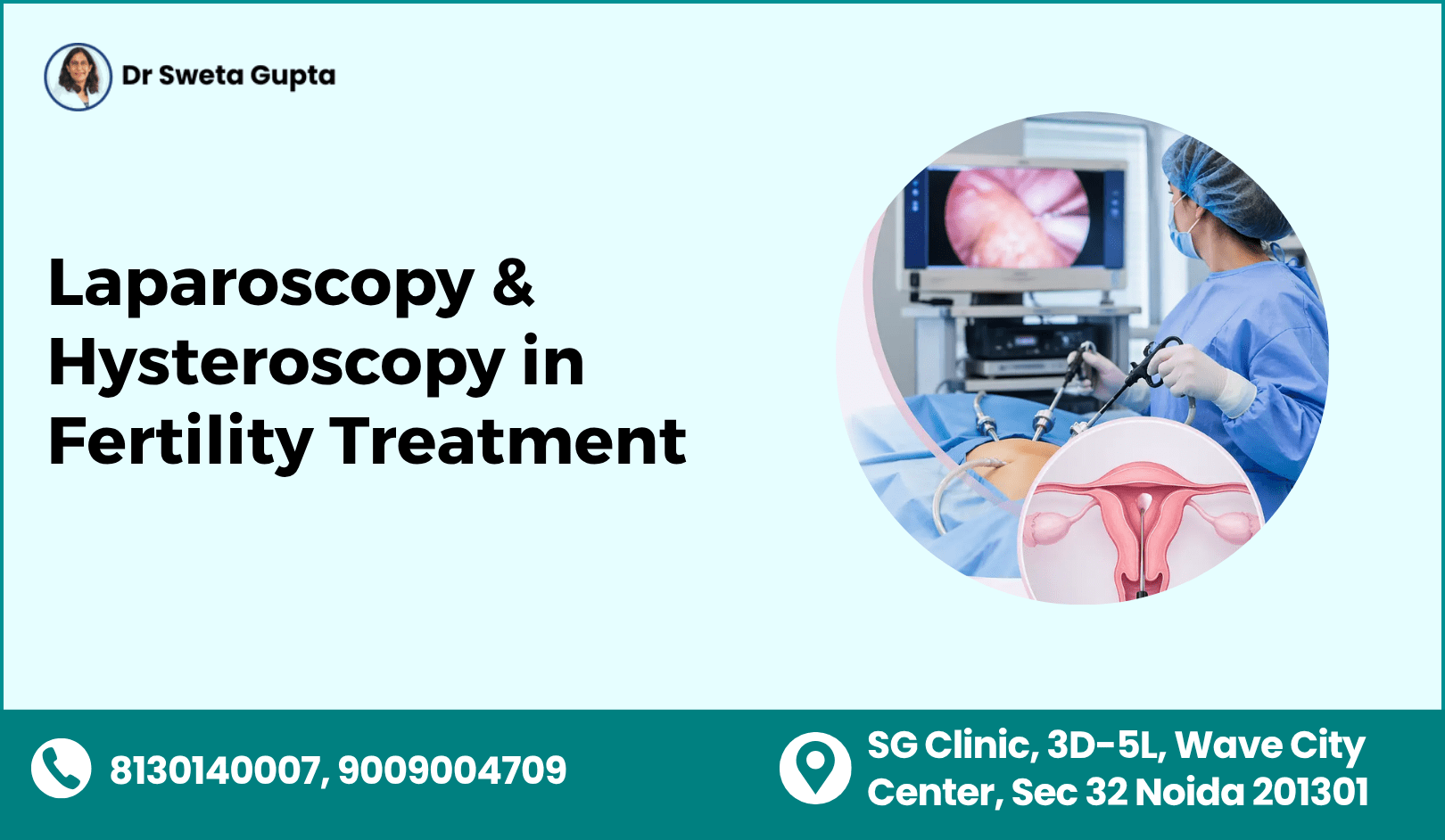
Infertility can be emotionally challenging for couples trying to start a family. While many fertility problems can be diagnosed through blood tests, ultrasounds, and semen analysis, some reproductive issues require a deeper internal examination. This is where laparoscopy and hysteroscopy in fertility treatment play a major role.
These advanced minimally invasive procedures help fertility specialists identify hidden reproductive problems that may affect conception. They also allow doctors to treat certain conditions during the same procedure, improving the chances of natural pregnancy or IVF success.
If you are searching for the best fertility specialist for laparoscopy and hysteroscopy in Noida, understanding when these procedures are needed can help you make informed decisions about your fertility journey. Under the expert guidance of Dr. Sweta Gupta, couples receive accurate diagnosis, personalized treatment, and advanced fertility care for better pregnancy outcomes.
This detailed guide explains everything about laparoscopy and hysteroscopy, their importance in infertility treatment, when they are recommended, benefits, recovery, and frequently asked questions.
What is Laparoscopy in Fertility Treatment?
Laparoscopy is a minimally invasive surgical procedure used to examine the reproductive organs inside the abdomen and pelvis.
A small incision is made near the navel, and a thin instrument called a laparoscope (a small camera) is inserted to view the uterus, fallopian tubes, ovaries, and surrounding pelvic organs.
This helps detect fertility-related conditions that may not be visible on ultrasound or routine scans.
Laparoscopy helps diagnose:
- Endometriosis
- Blocked fallopian tubes
- Ovarian cysts
- Fibroids
- Pelvic adhesions
- Pelvic inflammatory disease
- Tubal damage
- Unexplained infertility
It is often recommended when infertility remains unexplained after basic investigations.
What is Hysteroscopy in Fertility Treatment?
Hysteroscopy is another minimally invasive procedure used to examine the inside of the uterus.
A thin telescope-like instrument called a hysteroscope is inserted through the cervix into the uterus. This allows the fertility specialist to directly view the uterine cavity without making external cuts.
Hysteroscopy helps detect abnormalities inside the uterus that may interfere with implantation or pregnancy.
Hysteroscopy helps diagnose:
- Uterine polyps
- Fibroids inside the uterus
- Uterine septum
- Scar tissue (Asherman’s syndrome)
- Abnormal uterine bleeding
- Recurrent implantation failure
- Recurrent miscarriage causes
This procedure is especially important before IVF treatment.
Why Are Laparoscopy and Hysteroscopy Important in Fertility Treatment?
Many fertility problems remain hidden during routine fertility testing.
Blood reports may be normal. Ultrasound may appear fine. But conception may still not happen.
In such cases, laparoscopy and hysteroscopy help identify the exact cause.
These procedures help by:
- Providing accurate diagnosis
- Detecting hidden infertility causes
- Treating problems immediately
- Improving natural conception chances
- Increasing IVF success rates
- Preventing repeated IVF failures
- Reducing pregnancy complications
This makes them powerful tools in modern fertility treatment.
When is Laparoscopy Needed in Fertility Treatment?
Laparoscopy is not required for every fertility patient. It is recommended only when specific symptoms or fertility concerns are present.
Laparoscopy may be needed in cases of:
Unexplained Infertility
When all reports are normal but pregnancy is not happening.
Severe Pelvic Pain
Especially during periods, which may indicate endometriosis.
Suspected Endometriosis
One of the most common causes of female infertility.
Blocked Fallopian Tubes
To confirm diagnosis and assess tubal damage.
Ovarian Cysts
Particularly endometriomas or large cysts affecting fertility.
Pelvic Infections
Previous infections may cause adhesions affecting conception.
Repeated IVF Failure
When IVF attempts fail without a clear reason.
History of Ectopic Pregnancy
To evaluate tubal health and future pregnancy safety.
Dr. Sweta Gupta carefully evaluates whether laparoscopy is necessary based on the patient’s fertility history.
When is Hysteroscopy Needed in Fertility Treatment?
Hysteroscopy is commonly recommended before IVF or when implantation issues are suspected.
Hysteroscopy may be needed in cases of:
Recurrent Miscarriages
To identify uterine abnormalities causing pregnancy loss.
Failed IVF Cycles
To check if implantation problems exist inside the uterus.
Abnormal Uterine Bleeding
Heavy bleeding, irregular periods, or spotting.
Suspected Uterine Polyps or Fibroids
Which may block embryo implantation.
Thin Endometrium
Poor uterine lining affecting pregnancy success.
Uterine Septum
A structural abnormality that affects fertility.
Scar Tissue Inside Uterus
Which may prevent successful implantation.
This procedure helps create the best possible uterine environment for pregnancy.
Can Laparoscopy and Hysteroscopy Be Done Together?
Yes, in many fertility cases both procedures are performed together.
This gives a complete assessment of both:
- Inside the uterus (hysteroscopy)
- Outside reproductive organs (laparoscopy)
Doing both together improves diagnosis and saves treatment time.
This approach is often recommended before advanced IVF treatment.
Procedure Duration and Hospital Stay
Most laparoscopy and hysteroscopy procedures are short and safe.
Laparoscopy
- Procedure time: 30–60 minutes
- Usually requires short hospital stay
- Done under general anesthesia
Hysteroscopy
- Procedure time: 15–30 minutes
- Often day-care procedure
- Usually minimal recovery time
Most patients return home the same day or within 24 hours.
Recovery After Laparoscopy and Hysteroscopy
Recovery is generally quick because both are minimally invasive procedures.
Common mild symptoms include:
- Mild abdominal discomfort
- Light spotting
- Temporary bloating
- Mild fatigue
- Shoulder pain (after laparoscopy due to gas used)
Most women recover within a few days.
Dr. Sweta Gupta provides complete post-procedure care instructions for safe recovery.
Benefits of Laparoscopy in Fertility Treatment
Accurate diagnosis of infertility causes
Treatment during the same procedure
Better natural conception chances
Improved IVF planning
Reduced risk of repeated treatment failure
Helps preserve fertility earlier
This improves overall fertility treatment success.
Benefits of Hysteroscopy in Fertility Treatment
Direct view of uterine cavity
Higher implantation success
Better IVF outcomes
Treatment of polyps and fibroids
Reduced miscarriage risk
Improved embryo transfer success
This makes hysteroscopy highly valuable before IVF.
Laparoscopy and Hysteroscopy Cost in Noida
Cost depends on:
- Type of procedure
- Hospital facility
- Complexity of the condition
- Whether treatment is done during surgery
- Specialist expertise
Average estimated cost in Noida:
| Procedure | Approximate Cost |
|---|---|
| Diagnostic Hysteroscopy | ₹15,000 – ₹30,000 |
| Diagnostic Laparoscopy | ₹30,000 – ₹60,000 |
| Combined Procedure | ₹45,000 – ₹90,000+ |
Exact cost depends on the medical condition and treatment required.
Why Choose Dr. Sweta Gupta for Fertility Laparoscopy and Hysteroscopy in Noida?
Choosing the right fertility specialist is extremely important for successful outcomes.
Expertise in Advanced Fertility Treatment
Dr. Sweta Gupta is known for:
- Personalized infertility diagnosis
- Advanced reproductive treatment planning
- IVF expertise
- Ethical fertility care
- Compassionate patient support
Accurate Diagnosis with Minimal Delay
The goal is not just treatment—but finding the real reason behind infertility.
Better IVF and Pregnancy Success
Correct diagnosis leads to stronger treatment planning and better results.
This makes fertility treatment more effective and less stressful.
Common Myths About Laparoscopy and Hysteroscopy
Myth 1: These procedures are only for serious fertility problems
Reality: They are often used to diagnose common hidden infertility issues.
Myth 2: They are very painful
Reality: Both are minimally invasive and recovery is usually fast.
Myth 3: Surgery always delays pregnancy
Reality: In many cases, these procedures actually improve pregnancy chances.
Myth 4: IVF can replace these procedures
Reality: Sometimes diagnosis through laparoscopy or hysteroscopy is necessary before successful IVF.
Understanding the truth helps reduce fear and improves confidence.
Final Thoughts
Laparoscopy and hysteroscopy are not just surgical procedures—they are important tools for solving fertility problems with precision.
When pregnancy is delayed, IVF fails repeatedly, or hidden reproductive issues are suspected, these procedures help uncover the real cause and improve the path toward successful conception.
If you are looking for expert fertility care for laparoscopy and hysteroscopy in Noida, consulting Dr. Sweta Gupta can help you receive the right diagnosis, the right treatment, and the right guidance at the right time.
Because sometimes, the answer to infertility is not more treatment—it is the right diagnosis.
FAQs
1. Is laparoscopy necessary for infertility treatment?
Not for every patient. It is recommended when hidden fertility problems like endometriosis, blocked tubes, or unexplained infertility are suspected.
2. Is hysteroscopy required before IVF?
In many cases, yes—especially when IVF has failed before or uterine abnormalities are suspected.
3. Are laparoscopy and hysteroscopy painful?
Both are minimally invasive procedures done under anesthesia, so pain is minimal and recovery is usually quick.
4. How long does recovery take?
Most women recover within a few days depending on the procedure and treatment performed.
5. Can these procedures improve IVF success?
Yes, correcting uterine or pelvic issues before IVF can significantly improve implantation and pregnancy outcomes.
6. What is the cost of laparoscopy and hysteroscopy in Noida?
The cost usually ranges from ₹15,000 to ₹90,000+ depending on the procedure and treatment required.
7. Can both procedures be done together?
Yes, many patients undergo both together for a complete fertility evaluation.
8. Is hospitalization required?
Usually short hospital stay or day-care admission is sufficient.
9. Can fibroids affect fertility?
Yes, especially uterine fibroids can interfere with implantation and pregnancy.
10. Why should I consult Dr. Sweta Gupta for fertility treatment?
Because expert diagnosis and personalized treatment planning significantly improve your fertility journey and pregnancy success.