

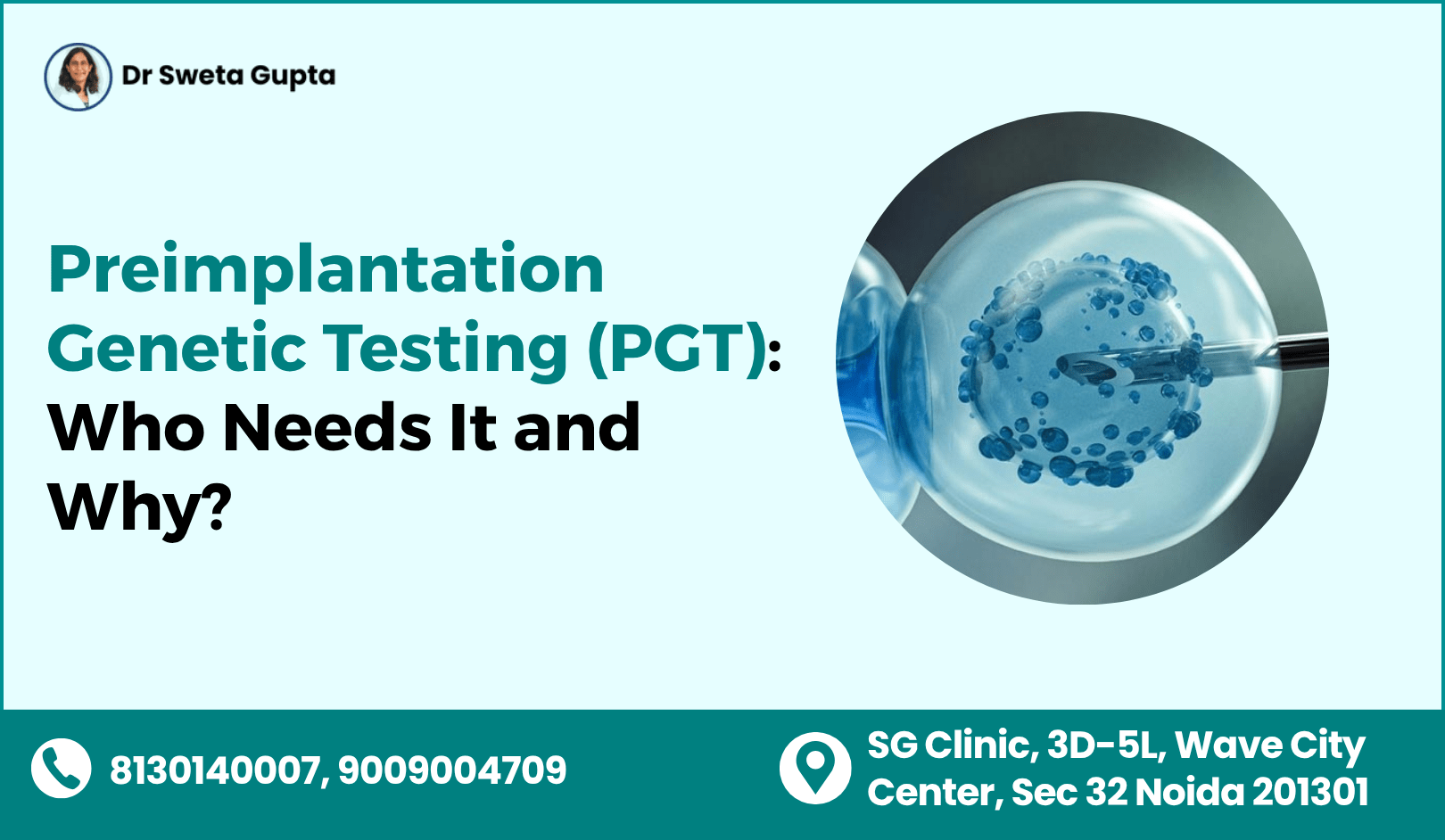
Infertility treatment has evolved dramatically over the past decade. Today, couples are no longer limited to traditional IVF outcomes—they now have access to advanced genetic technologies that improve success rates and reduce risks. One such breakthrough is Preimplantation Genetic Testing (PGT).
PGT allows fertility specialists to screen embryos for genetic abnormalities before implantation, significantly increasing the chances of a healthy pregnancy. For couples dealing with repeated IVF failures, miscarriages, or genetic concerns, PGT offers renewed hope.
At the forefront of advanced fertility care, Dr. Sweta Gupta, a leading IVF specialist, provides PGT testing in Noida with cutting-edge technology and personalized care.
In this detailed guide, we will explore:
- What PGT is
- Who needs PGT testing
- Types, benefits, and risks
- Success rates and real-world applications
- Why choosing the right specialist matters
What is Preimplantation Genetic Testing (PGT)?
Preimplantation Genetic Testing (PGT) is a laboratory technique used during IVF to analyze embryos for genetic abnormalities before transferring them into the uterus.
Instead of transferring embryos blindly, PGT ensures that only healthy embryos are selected, improving pregnancy outcomes.
How PGT Works in IVF
The process of PGT is integrated into the IVF cycle:
Step 1: IVF Cycle Begins
Eggs are retrieved and fertilized with sperm in a laboratory.
Step 2: Embryo Development
Embryos grow in the lab for 5–6 days (blastocyst stage).
Step 3: Embryo Biopsy
A few cells are carefully removed from each embryo.
Step 4: Genetic Testing
Cells are analyzed to detect chromosomal or genetic abnormalities.
Step 5: Embryo Freezing
Embryos are frozen while waiting for results.
Step 6: Transfer of Healthy Embryo
Only genetically normal embryos are selected for transfer.
Types of PGT
1. PGT-A (Aneuploidy Screening)
Detects abnormal chromosome numbers (e.g., Down syndrome).
2. PGT-M (Monogenic Disorders)
Identifies specific inherited diseases like:
- Thalassemia
- Cystic fibrosis
- Sickle cell anemia
3. PGT-SR (Structural Rearrangements)
Detects chromosomal structural abnormalities.
Who Needs PGT Testing?
PGT is not required for every couple, but it is highly recommended in certain cases:
1. Women Above 35 Years
Egg quality declines with age, increasing genetic risks.
2. Recurrent IVF Failures
PGT helps identify viable embryos.
3. Repeated Miscarriages
Often caused by chromosomal abnormalities.
4. Known Genetic Disorders
Prevents passing inherited diseases to the child.
5. Male Factor Infertility
Sperm abnormalities can affect embryo genetics.
6. Previous Child with Genetic Disorder
Ensures healthier future pregnancies.
Benefits of PGT Testing
1. Higher IVF Success Rates
Selecting healthy embryos increases implantation chances.
2. Reduced Miscarriage Risk
Abnormal embryos are excluded.
3. Healthy Baby Outcome
Minimizes risk of genetic disorders.
4. Fewer IVF Cycles Required
Improves efficiency and reduces emotional stress.
5. Better Family Planning
Helps couples make informed decisions.
PGT Testing in Noida – Why Choose Dr. Sweta Gupta
When it comes to PGT testing in Noida, expertise matters.
Why Dr. Sweta Gupta?
- Advanced IVF & genetic testing protocols
- High success rates
- Personalized treatment plans
- State-of-the-art laboratory support
- Patient-centric approach
Her clinic provides accurate, safe, and reliable PGT services, ensuring the best outcomes.
Success Rate of PGT in IVF
PGT significantly improves IVF outcomes:
- Women under 35: 60–70% success
- Age 35–40: 50–60%
- Above 40: 40–50%
Success depends on:
- Embryo quality
- Lab technology
- Specialist expertise
PGT vs Traditional IVF
| Feature | PGT IVF | Traditional IVF |
|---|---|---|
| Embryo Selection | Genetic screening | Visual selection |
| Success Rate | Higher | Moderate |
| Miscarriage Risk | Lower | Higher |
| Cost | Higher initially | Lower initially |
Risks of PGT Testing
While generally safe, PGT may involve:
- Slight embryo damage (rare)
- Additional cost
- Emotional stress during waiting period
Cost of PGT Testing in Noida
The cost varies depending on:
- Type of PGT
- Number of embryos
- Clinic expertise
Though it increases initial IVF cost, it reduces long-term expenses by avoiding repeated failures.
Emotional and Psychological Aspects
PGT can be emotionally intense due to:
- Waiting for results
- Decision-making stress
Proper counseling is essential.
Latest Advances in PGT Technology
- AI-based embryo selection
- Next-generation sequencing (NGS)
- Improved cryopreservation
Lifestyle Tips to Improve IVF & PGT Success
- Maintain healthy weight
- Avoid smoking/alcohol
- Reduce stress
- Follow doctor’s guidance
Common Myths About PGT
❌ Myth: PGT guarantees pregnancy
✔ Fact: It improves chances but does not guarantee success
❌ Myth: PGT is only for older women
✔ Fact: It benefits many cases
Future of PGT in Fertility Treatment
PGT is becoming a standard in IVF due to:
- Higher success rates
- Reduced genetic risks
- Better patient outcomes
FAQs – Preimplantation Genetic Testing (PGT)
1. What is PGT testing?
PGT is a genetic test performed on embryos during IVF to detect abnormalities.
2. Is PGT safe?
Yes, it is a safe and widely used procedure.
3. Does PGT guarantee success?
No, but it significantly improves success rates.
4. Who should consider PGT?
Couples with IVF failures, miscarriages, or genetic risks.
5. How long does PGT take?
Results usually take 1–2 weeks.
6. Is PGT expensive?
It adds to IVF cost but improves outcomes.
Conclusion: Is PGT Right for You?
Preimplantation Genetic Testing is a powerful tool that enhances IVF success and ensures healthier pregnancies. However, it should be considered based on individual medical needs.
With expert guidance from Dr. Sweta Gupta, couples can make informed decisions and improve their chances of parenthood.