

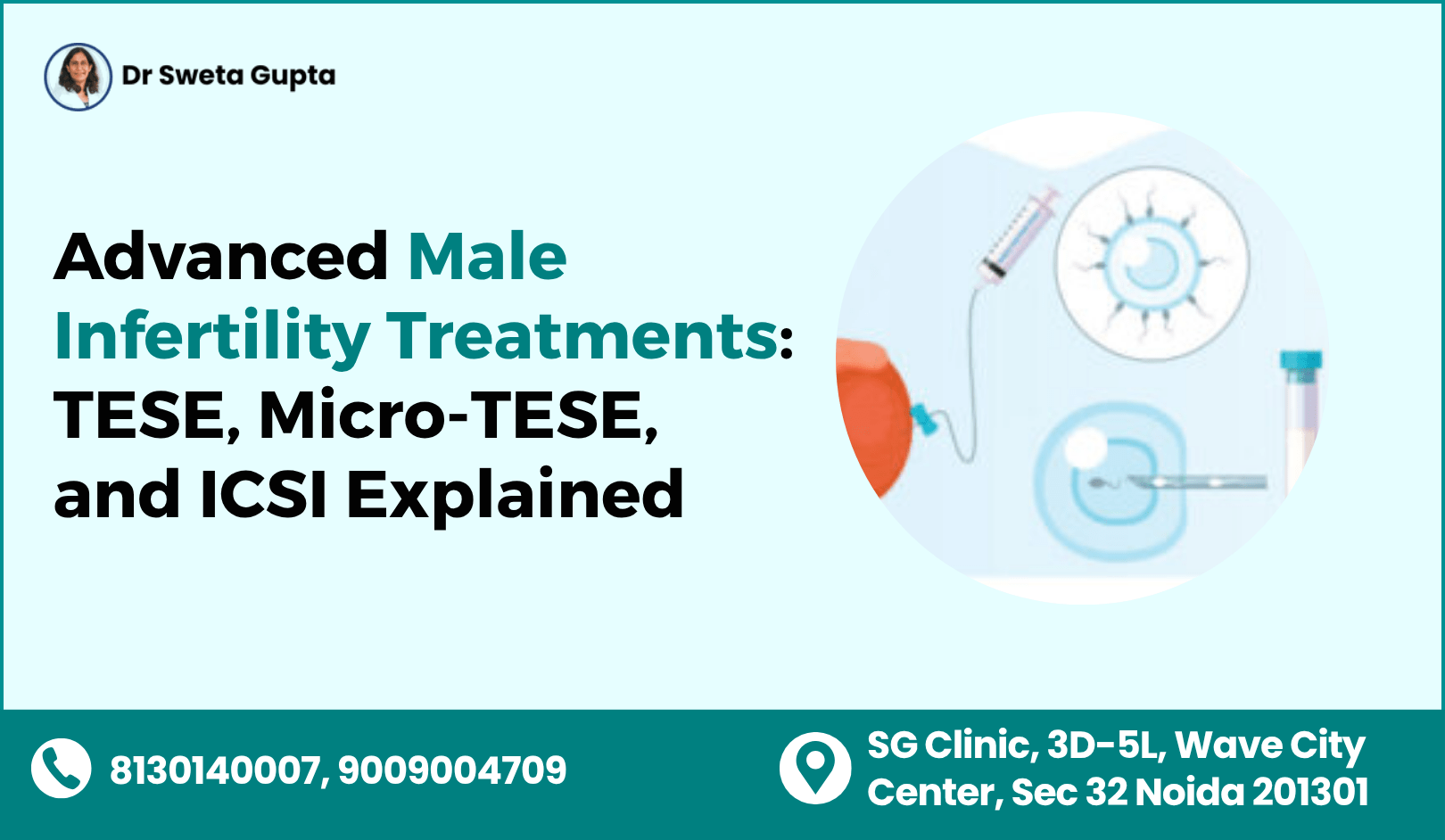
Infertility is often misunderstood as a female-only concern, but in reality, male factors contribute to nearly 40–50% of infertility cases worldwide. Despite this, awareness around male infertility remains limited, and many couples struggle silently without exploring the full range of advanced treatment options available today.
With rapid advancements in reproductive medicine, procedures like TESE (Testicular Sperm Extraction), Micro-TESE, and ICSI (Intracytoplasmic Sperm Injection) have revolutionized the treatment of male infertility, offering hope even in complex cases.
According to renowned fertility expert Dr. Sweta Gupta, Delhi NCR,
“Modern reproductive techniques have made it possible for men with even severe infertility conditions to achieve biological fatherhood.”
This comprehensive guide explains these advanced techniques in detail, helping couples make informed decisions on their journey toward parenthood.
Understanding Male Infertility
Male infertility refers to a man’s inability to cause pregnancy in a fertile female partner. It is typically diagnosed after one year of unprotected intercourse without conception.
Common Causes of Male Infertility
- Low sperm count (Oligospermia)
- No sperm production (Azoospermia)
- Poor sperm motility
- Abnormal sperm morphology
- Hormonal imbalances
- Genetic disorders
- Blockages in reproductive tract
- Lifestyle factors (smoking, alcohol, stress)
Types of Azoospermia: The Key Condition
Azoospermia (absence of sperm in semen) is one of the most critical conditions treated using TESE and Micro-TESE.
1. Obstructive Azoospermia
- Sperm is produced but blocked from reaching semen
2. Non-Obstructive Azoospermia
- Problem with sperm production in testes
Advanced techniques are especially useful in these cases.
What is TESE (Testicular Sperm Extraction)?
TESE is a surgical procedure used to retrieve sperm directly from the testicular tissue.
How TESE Works
- A small tissue sample is taken from the testis
- The sample is examined in a lab
- Sperm is extracted for use in IVF
Who Needs TESE?
- Men with azoospermia
- Blocked sperm ducts
- Previous vasectomy
- Failed sperm retrieval in semen
Benefits of TESE
- Enables biological parenthood
- Useful in severe infertility cases
- Can be combined with IVF/ICSI
What is Micro-TESE? (Advanced Version of TESE)
Micro-TESE is a more advanced and precise version of TESE.
How Micro-TESE Works
- Performed under high-powered microscope
- Identifies areas producing sperm
- Extracts minimal tissue with maximum results
Advantages of Micro-TESE
- Higher sperm retrieval success
- Less damage to testicular tissue
- Ideal for non-obstructive azoospermia
Why Micro-TESE is Preferred
Micro-TESE offers better outcomes in complex cases where sperm production is very limited.
What is ICSI (Intracytoplasmic Sperm Injection)?
ICSI is a specialized IVF technique where a single sperm is directly injected into an egg.
How ICSI Works
- Egg is retrieved from female partner
- A single sperm is selected
- Sperm is injected into the egg
- Embryo is formed and transferred
When is ICSI Recommended?
- Low sperm count
- Poor sperm motility
- Sperm retrieved via TESE/Micro-TESE
- Previous IVF failures
TESE vs Micro-TESE vs ICSI: Key Differences
| Procedure | Purpose | Method | Best For |
|---|---|---|---|
| TESE | Sperm retrieval | Tissue extraction | Obstructive azoospermia |
| Micro-TESE | Advanced retrieval | Microscope-guided | Non-obstructive azoospermia |
| ICSI | Fertilization | Direct injection | Severe male infertility |
Combined Approach: TESE + ICSI
In many cases, sperm retrieved through TESE or Micro-TESE is used in ICSI.
This combination:
- Maximizes fertilization chances
- Improves IVF success rate
- Enables pregnancy even in severe cases
Success Rates of Advanced Treatments
Success depends on:
- Cause of infertility
- Age of female partner
- Quality of sperm retrieved
Micro-TESE + ICSI has shown significantly improved outcomes in challenging cases.
Role of Technology in Male Infertility Treatment
Modern fertility clinics use:
- High-resolution microscopes
- Advanced sperm selection techniques
- Genetic screening
- Cryopreservation
These technologies enhance accuracy and success rates.
Dr. Sweta Gupta’s Expertise in Male Infertility
As a leading fertility expert in Delhi NCR, Dr. Sweta Gupta offers:
- Advanced diagnostic evaluation
- Personalized treatment plans
- Expertise in TESE, Micro-TESE, and ICSI
- State-of-the-art fertility solutions
Her patient-centric approach ensures the best possible outcomes.
Emotional & Psychological Impact
Male infertility can affect:
- Confidence
- Relationships
- Mental well-being
Seeking timely treatment and counseling is crucial.
Myths About Male Infertility
❌ Myth: Only women are responsible
✔ Reality: Male factors are equally significant
❌ Myth: No sperm means no chance
✔ Reality: TESE & Micro-TESE offer solutions
Preparation for Treatment
- Medical evaluation
- Hormone testing
- Lifestyle changes
- Avoid smoking and alcohol
Post-Treatment Care
- Follow medical advice
- Maintain healthy lifestyle
- Regular follow-ups
Future of Male Infertility Treatments
Emerging advancements include:
- Stem cell research
- Artificial sperm development
- AI-based embryo selection
Why Choose Dr. Sweta Gupta in Delhi NCR?
- 27+ years of experience
- International training (UK)
- Expertise in advanced fertility treatments
- High success rates
- Personalized patient care
Conclusion: Hope Beyond Challenges
Male infertility is no longer a barrier to parenthood. With advanced techniques like TESE, Micro-TESE, and ICSI, couples can achieve their dream of having a biological child.
Under expert guidance from Dr. Sweta Gupta, fertility treatment becomes a journey of hope, science, and success.
👉 If you are facing infertility challenges, consult a specialist today and explore advanced solutions.